
A 1920s dress of the finest silk chiffon, shimmering with glass beads, rhinestones and silver embroidery—and a label reading simply “French Hand Made”?
I never expected to find such a dress in a box of family things in Spokane.
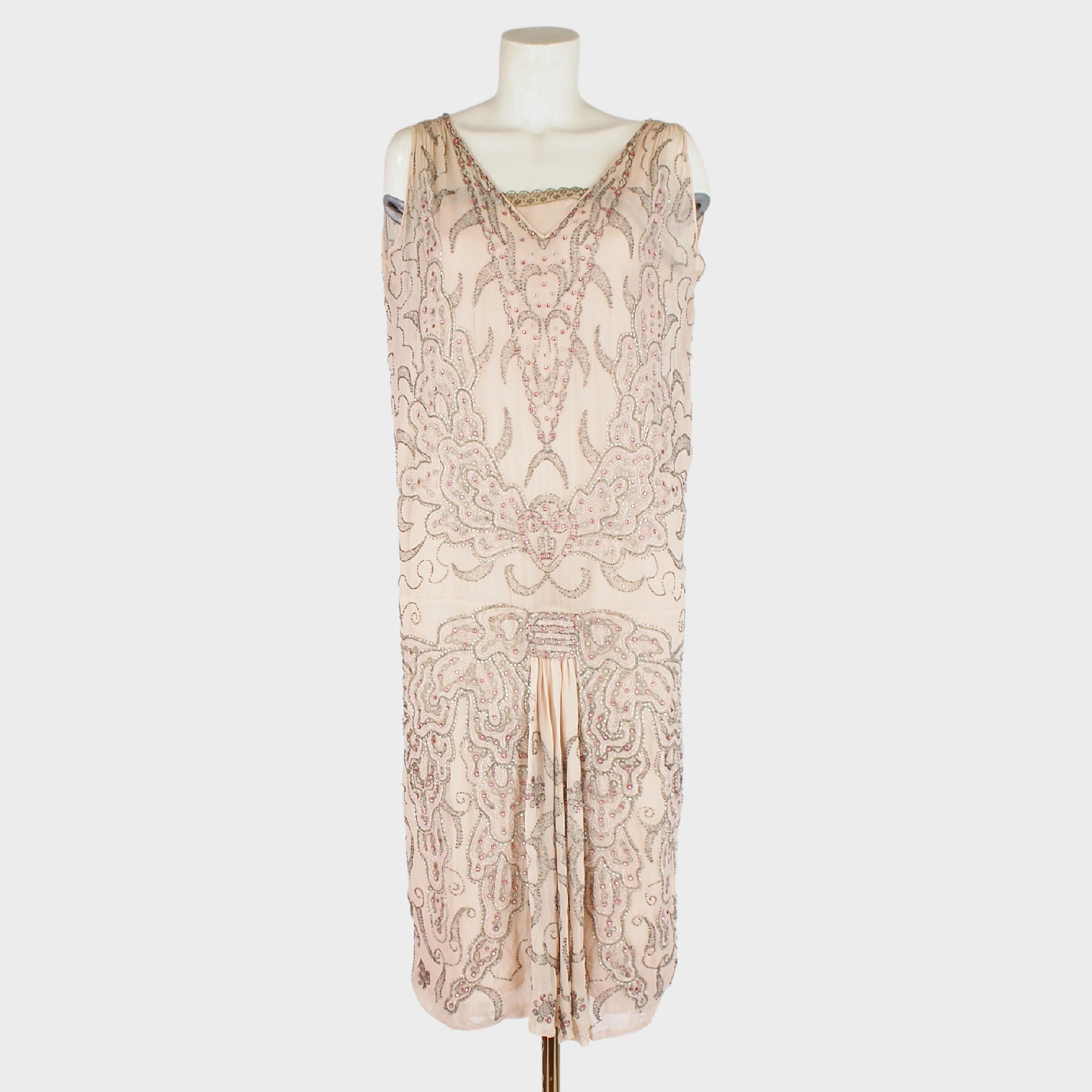
A year ago, when my dear friend Linda was preparing to leave Spokane, she gave me a number of items she had kept from her family’s history.
Among them was a box containing remnants of one woman’s 1920s wardrobe.
I opened the box, and there it was: a beaded silk dress, its blush pink chiffon glittering with embellishments. There was its original silk slip, a pair of silver brocade shoes, a long chiffon scarf, gloves, and a little box from Spokane’s Davenport Hotel.
The woman who wore them was Laura Martin Hartwell.
Laura was born in 1879 and married William G. Hartwell in 1906. Their marriage license appeared in the newspaper under the wonderfully straightforward heading “Six More Weddings,” listing them both as residents of Northport, Washington.
William would go on to serve as mayor of Colville and later represent northeastern Washington in the state legislature.
But what interests me just as much is the life that can still be glimpsed in the things Laura left behind.
A woman in the 1920s
Laura would have been in her forties during most of the decade—not the young “flapper” we’ve come to associate with the 1920s, but a grown woman embracing the extraordinary fashions of her time.
And what a dress she chose.
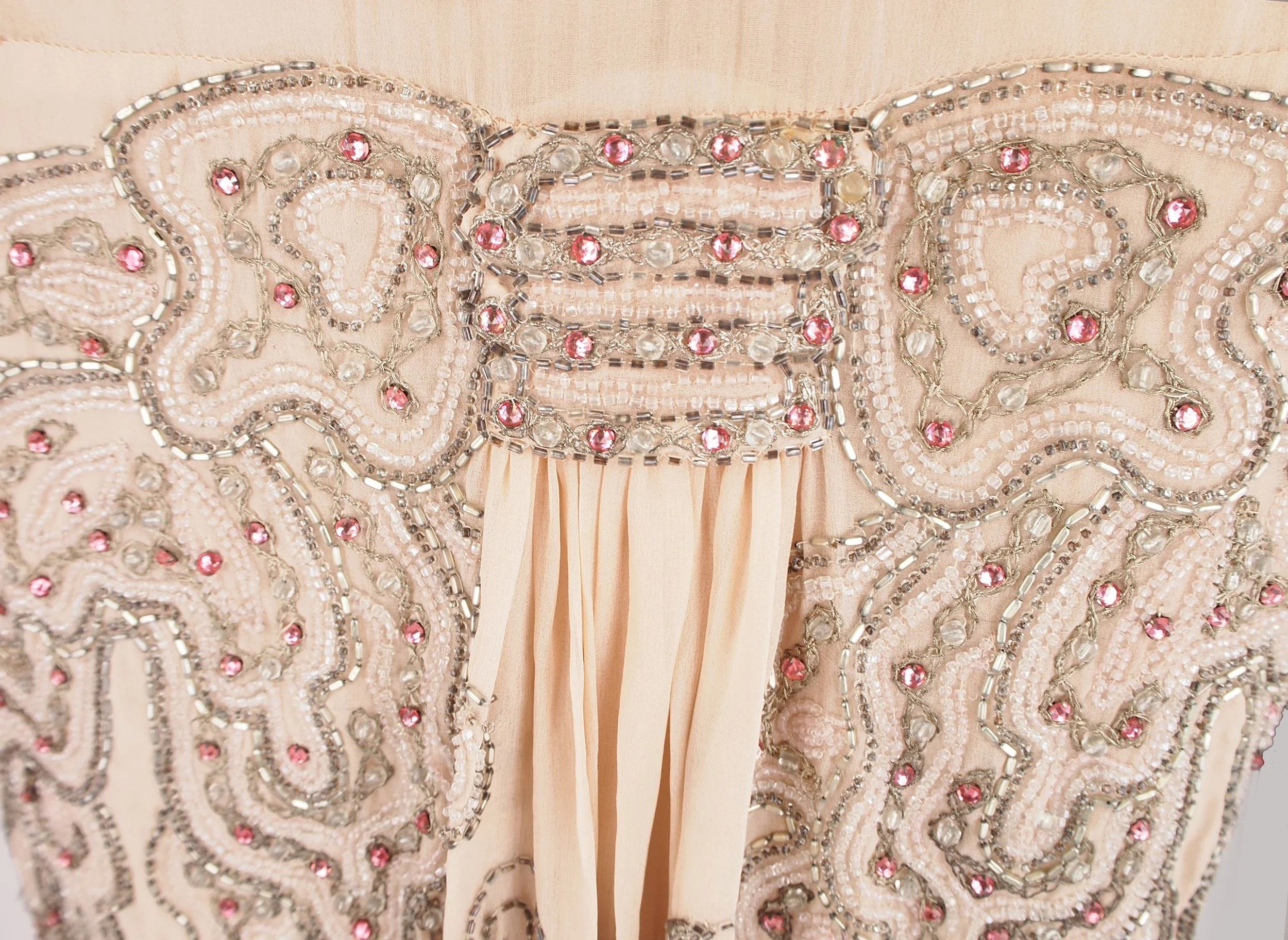
The palest blush silk chiffon is covered with hand-sewn glass beads and rhinestones in silver, pink, clear and white. Metallic silver embroidery curls among flowers, scrolls, arcs and other Art Deco flourishes. The beading becomes particularly elaborate around the dropped waist, where the chiffon gathers beneath it.
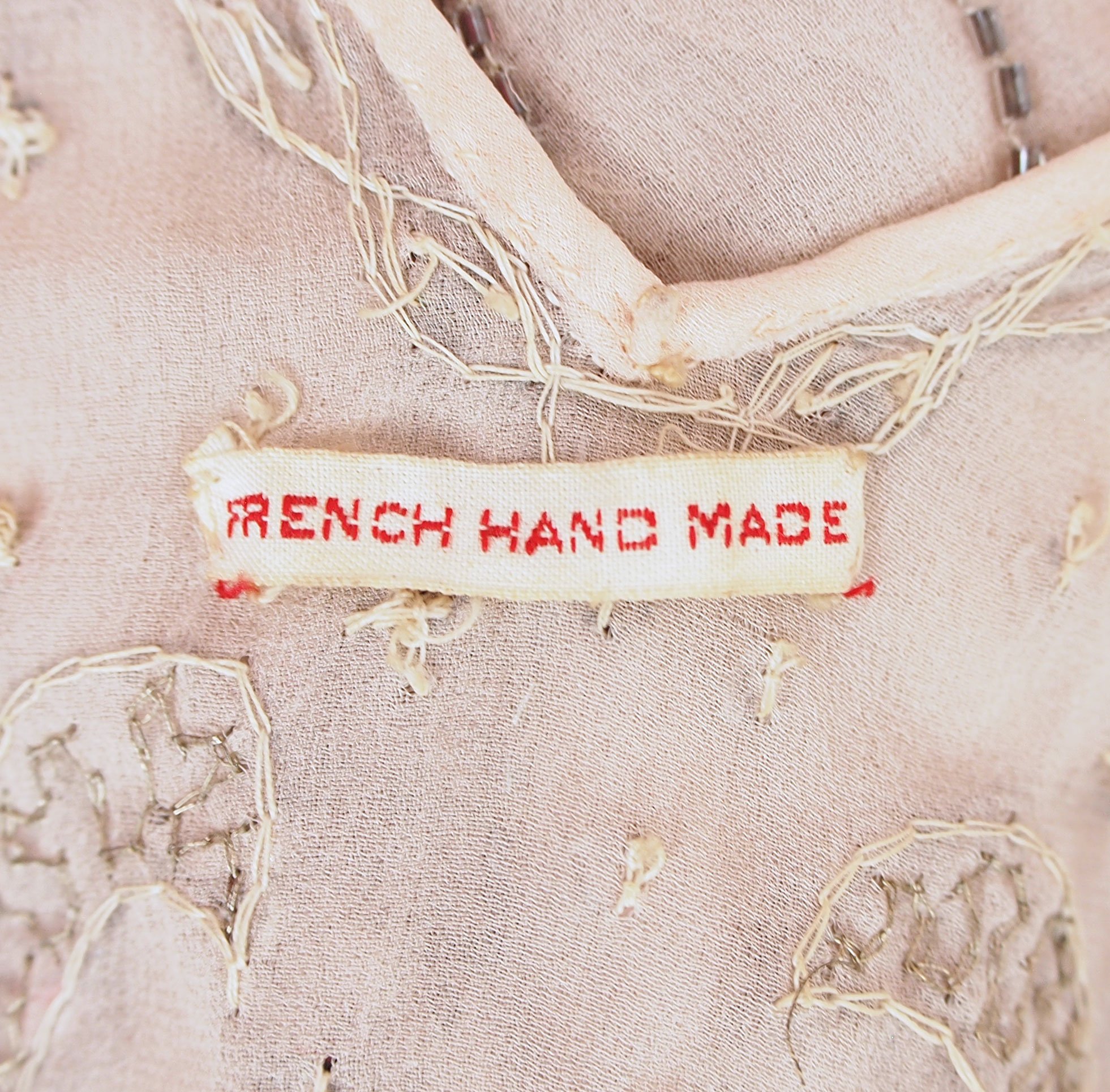
Inside is that tantalizing little label:
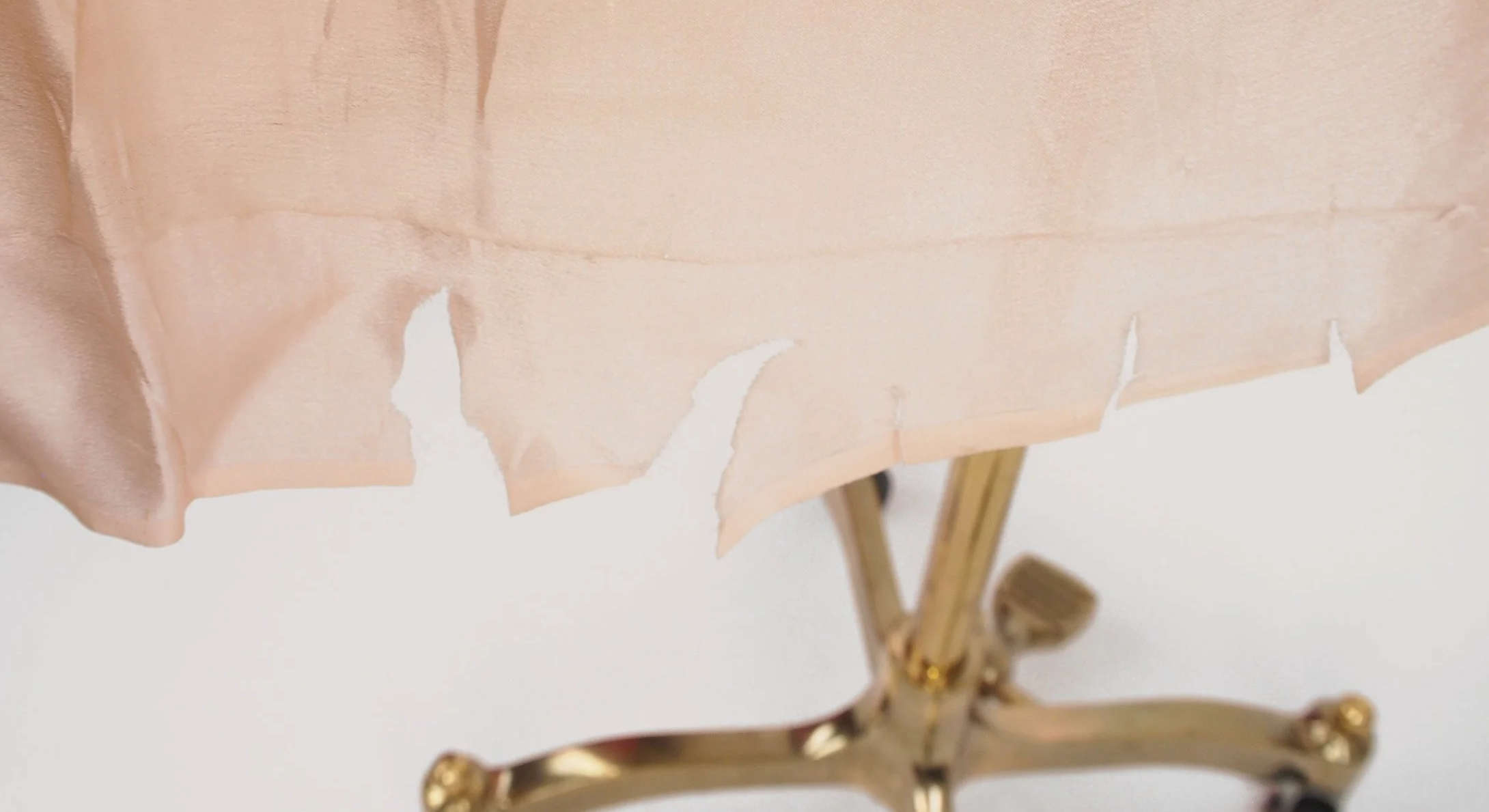
The original silk slip survives too. At some point Laura cut vertical slits into either side of its hem. I can’t tell you why. But I can’t help wondering if a little more freedom of movement was called for.
It was, after all, the 1920s.
(And as it happens, Laura’s great-granddaughter Susanne was a serious ballet dancer for a time.)
The house on West 13th
Laura eventually lived in a house on West 13th Avenue in Spokane. The house remained in her family for generations: Laura left it to her daughter Sue, and Sue later left it to her niece, Laura’s great-granddaughter Susanne.
I’ve been inside that house myself.
There is something about that connection that collapses the distance of a century for me. This isn’t simply a beautiful old dress whose history has disappeared. I know who wore it. I know something of her family. And I have stood inside the Spokane house that she called home.
Eventually, some of the things Laura had kept found their way to Linda, and Linda entrusted them to me.
And now Spokane is hurting.
Entire neighborhoods have been devastated by fire. Thousands of people and their animals have been displaced. Organizations throughout our community are doing everything they can to help.
I kept asking myself what I could possibly do.
Vintage clothing is what I know. Its stories are what I have.
And it seems right that one of these beautiful things, preserved here through generations, might now do something for the place that became its home.
From Spokane. For Spokane.
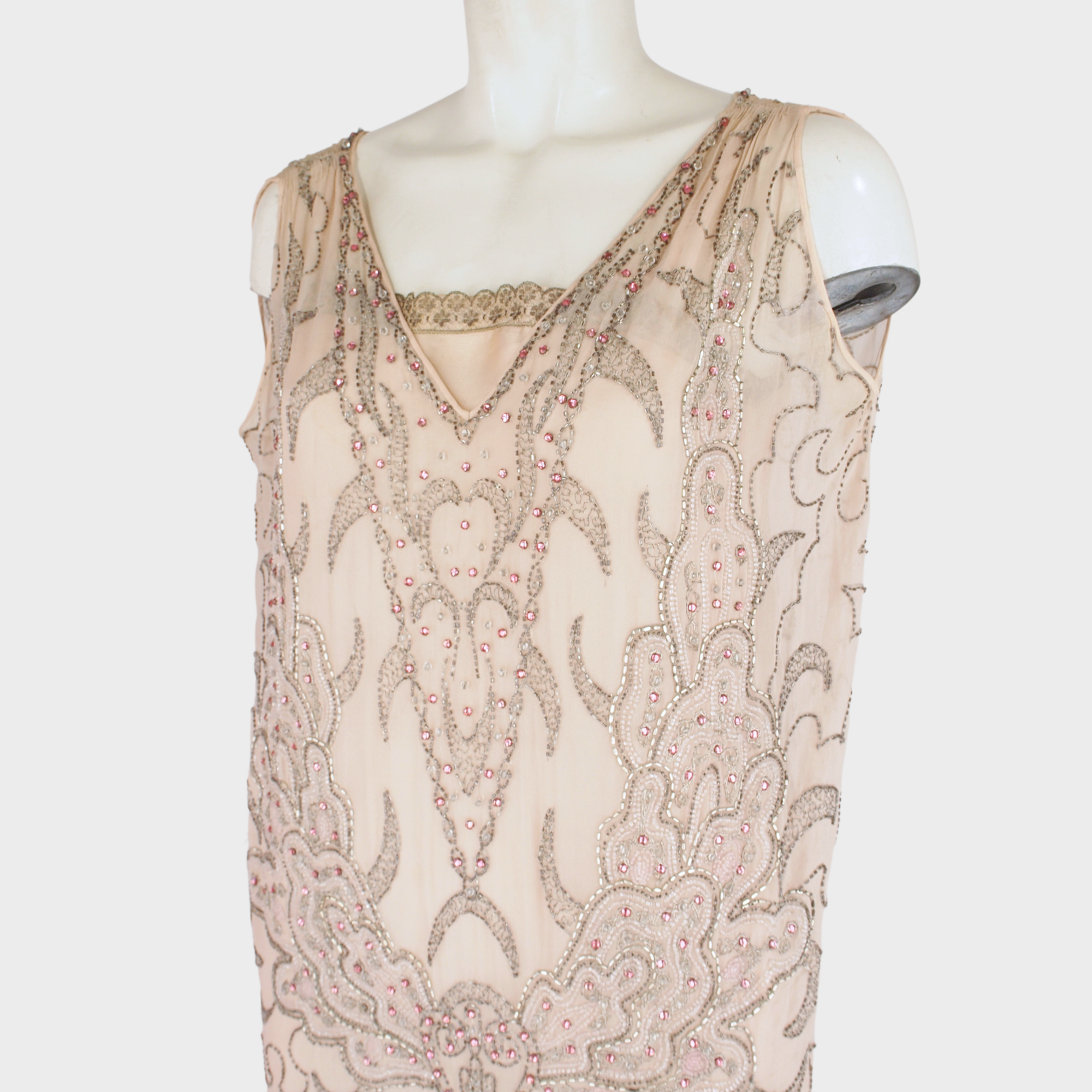
So Laura’s beaded dress is the first major auction in my Vintage for Spokane: From Spokane. For Spokane. fire-relief fundraiser.
100% of the proceeds from Laura’s dress will go to Project Beauty Share, which is distributing essential personal-care supplies to displaced families and first responders, including through local tribes and other emergency-relief partners.
→ See the Vintage for Spokane auctions and offerings
I’m not dispersing everything at once. There are other Hartwell pieces that I’ll share later, including another extraordinary embroidered 1920s ensemble.
For now, I want Laura’s dress to have its moment—and perhaps, after a hundred years, another chapter.