
Ritzville, Washington
I recently revisited a memory from eighteen years ago, when I drove to a small town to see a collection belonging to a woman named Shirley.
It started with a notice in my local newspaper for a massive family-downsizing sale in Ritzville, sixty miles away. The ad mentioned vintage clothing, so I called to see if I could preview the collection the next day. The woman on the line cheerfully agreed, and on a sweltering summer morning, my husband and I hit the road.
When we arrived, we found a large building with its doors flung wide open. Bright light flooded the room, giving it the feel of a gymnasium.
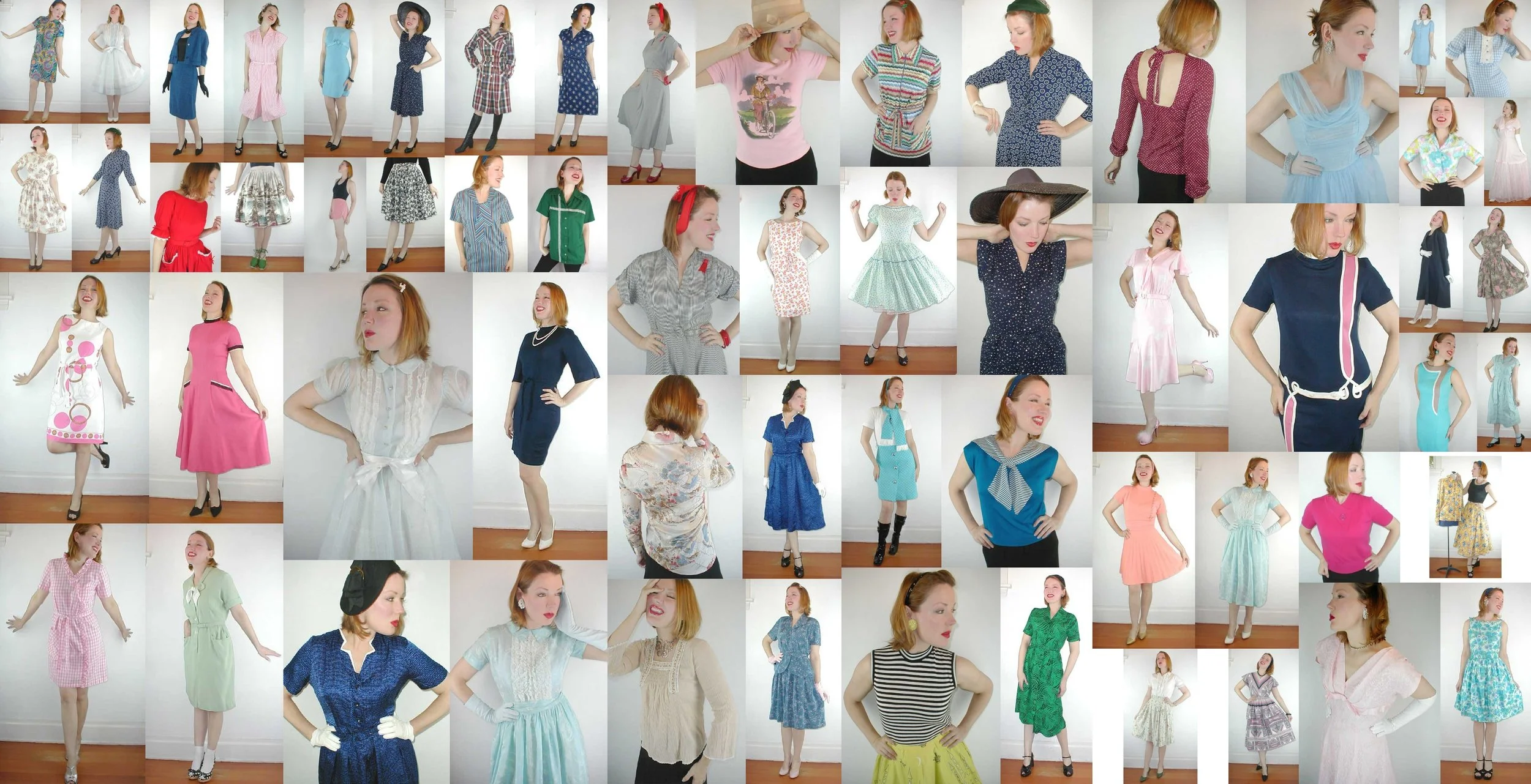
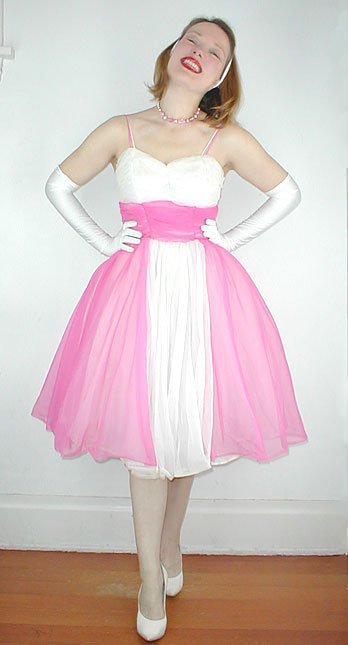
Tables of housewares filled the center, while racks of clothing lined every wall. My eyes darted from frothy pastel prom dresses to mod, bright prints, from tailored 1940s wools to kitschy square-dance outfits. These were pieces that had spanned generations. I remember thinking that you could open a well-stocked vintage clothing store using only the inventory in that room.
We were greeted by Shirley and her fiancé—a middle-aged couple embarking on their second marriage. Often, the events that bring me to these collections are heavy: a death, a move, an ending. But there is a lightness to people clearing the slate for a new beginning. Shirley and her partner were warm and welcoming, and though our conversation was brief, I felt like I caught a genuine glimpse of who they were.
There were very few things in that collection that didn’t interest me. There were endless well-made, stylish pieces—including wonderful novelty-print rayons by Mode O’Day—a staple of small-town main streets for decades—alongside sturdy cotton daywear and an array of Westernwear. I could trace the lives of the family’s children through the 1960s and ’70s by the cute tees, mini dresses, and bell bottoms. The collection spanned from a late-1940s his-and-hers square dance set to a quintessential disco-era dress, with sizes ranging from extra-small to extra-large.
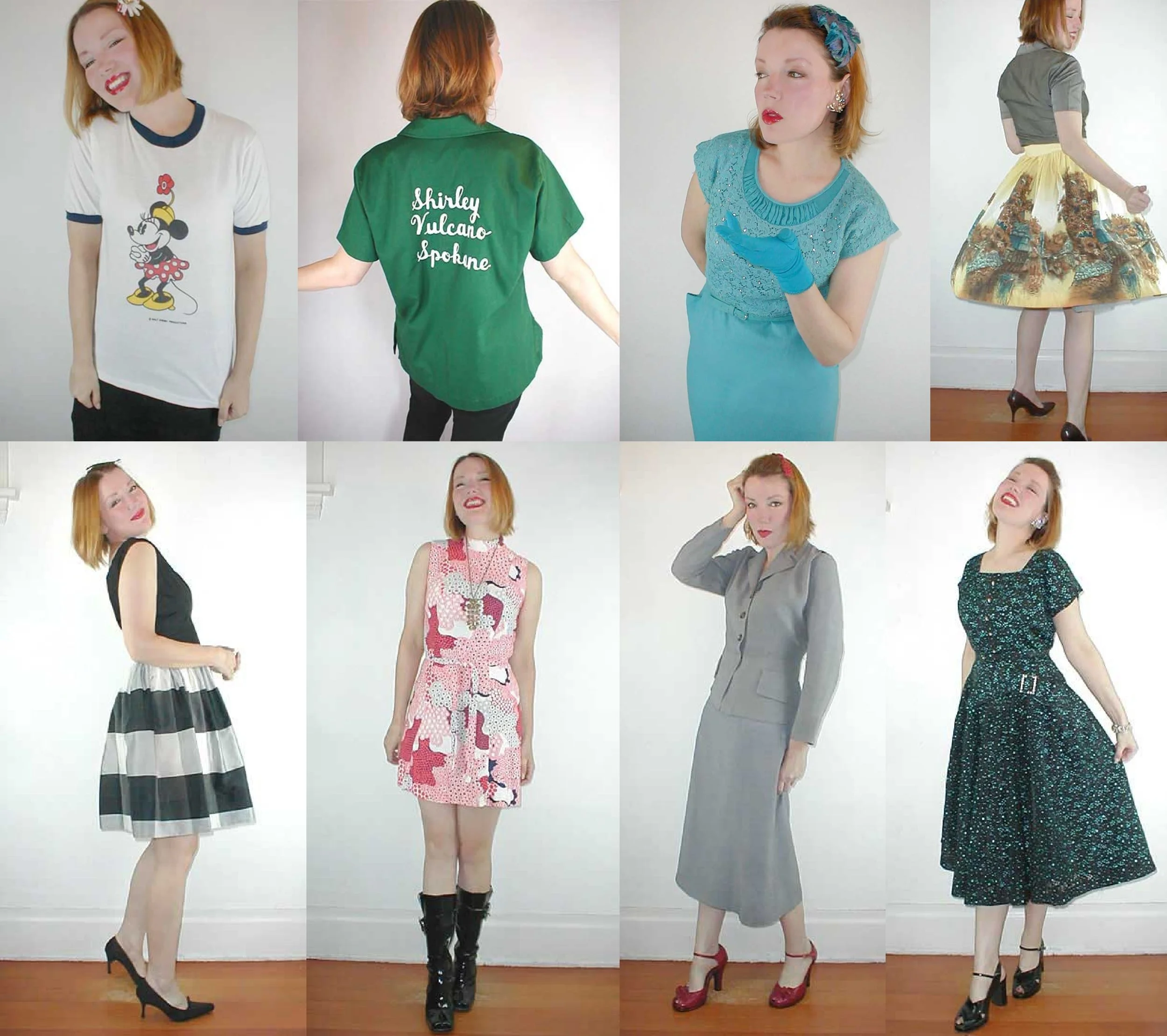

Before long, the clothes stopped feeling like mere inventory. Instead, they felt like a family that took joy in life—a family that loved bright colors, sturdy fabrics, and clothes for every occasion, from bowling to dancing, school, work, and play.
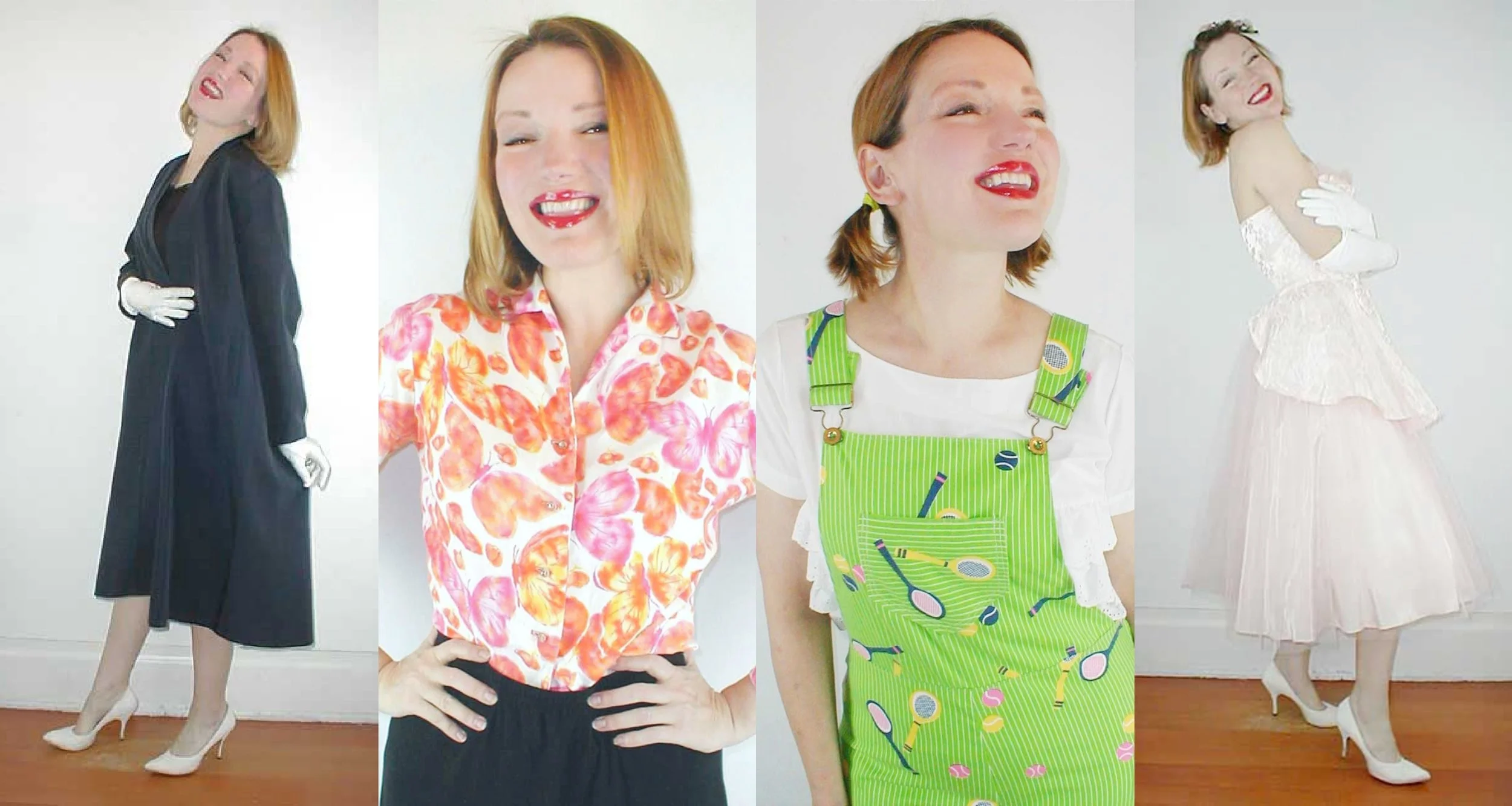
Some of those pieces found new homes almost immediately. Others waited patiently, sometimes for years, until exactly the right person finally came along to claim them.
Over the last eighteen years, I have measured, photographed, researched, packed, and shipped Shirley’s dresses across the country and far beyond. I hope each one has begun another story. I only recently stopped to count the total: 571 pieces came home with me that day.
Five hundred and seventy-one pieces. What an honor to have been the steward of such a beautiful family archive.