
Comment

Denisebrain best of 2023

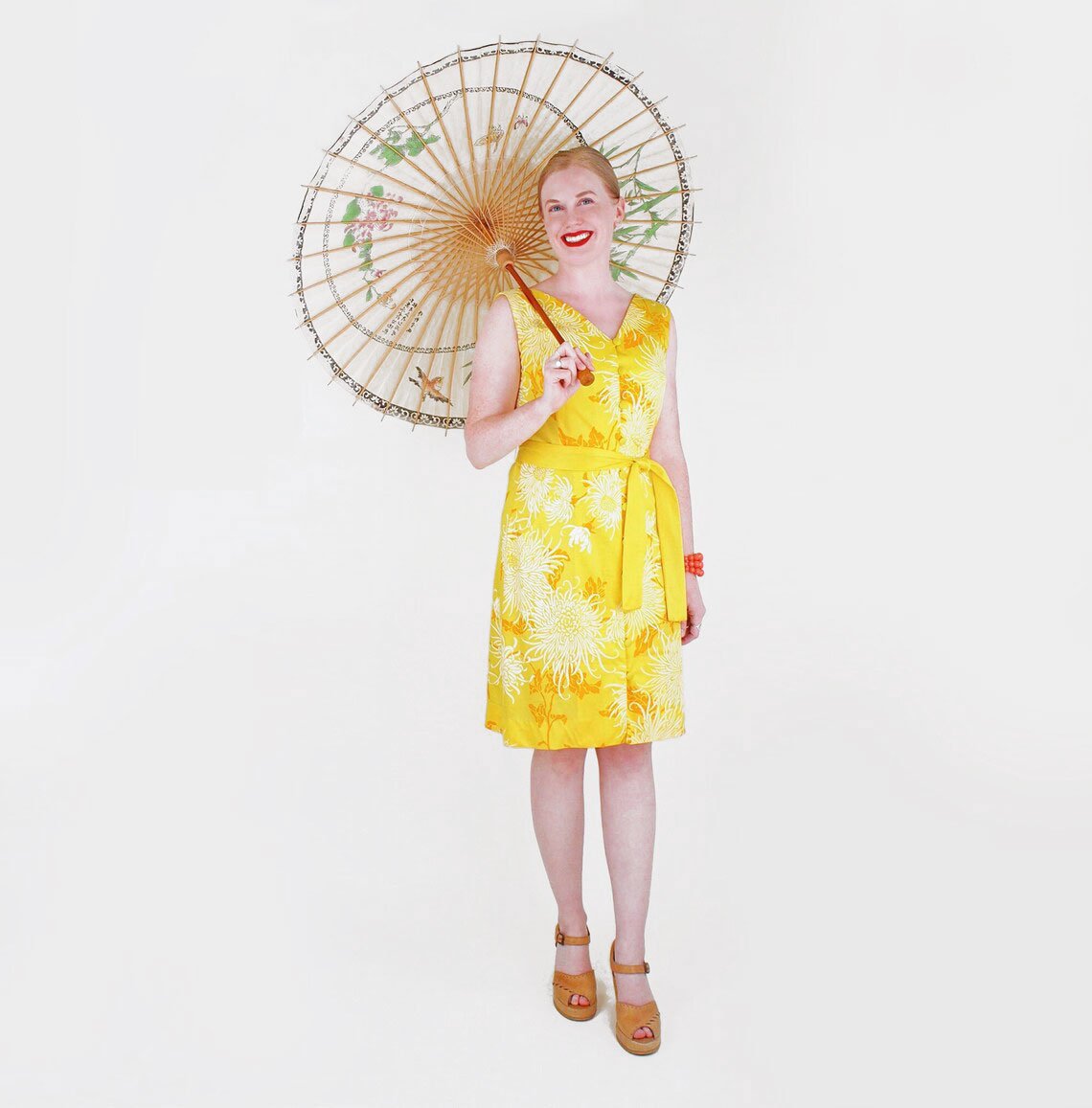
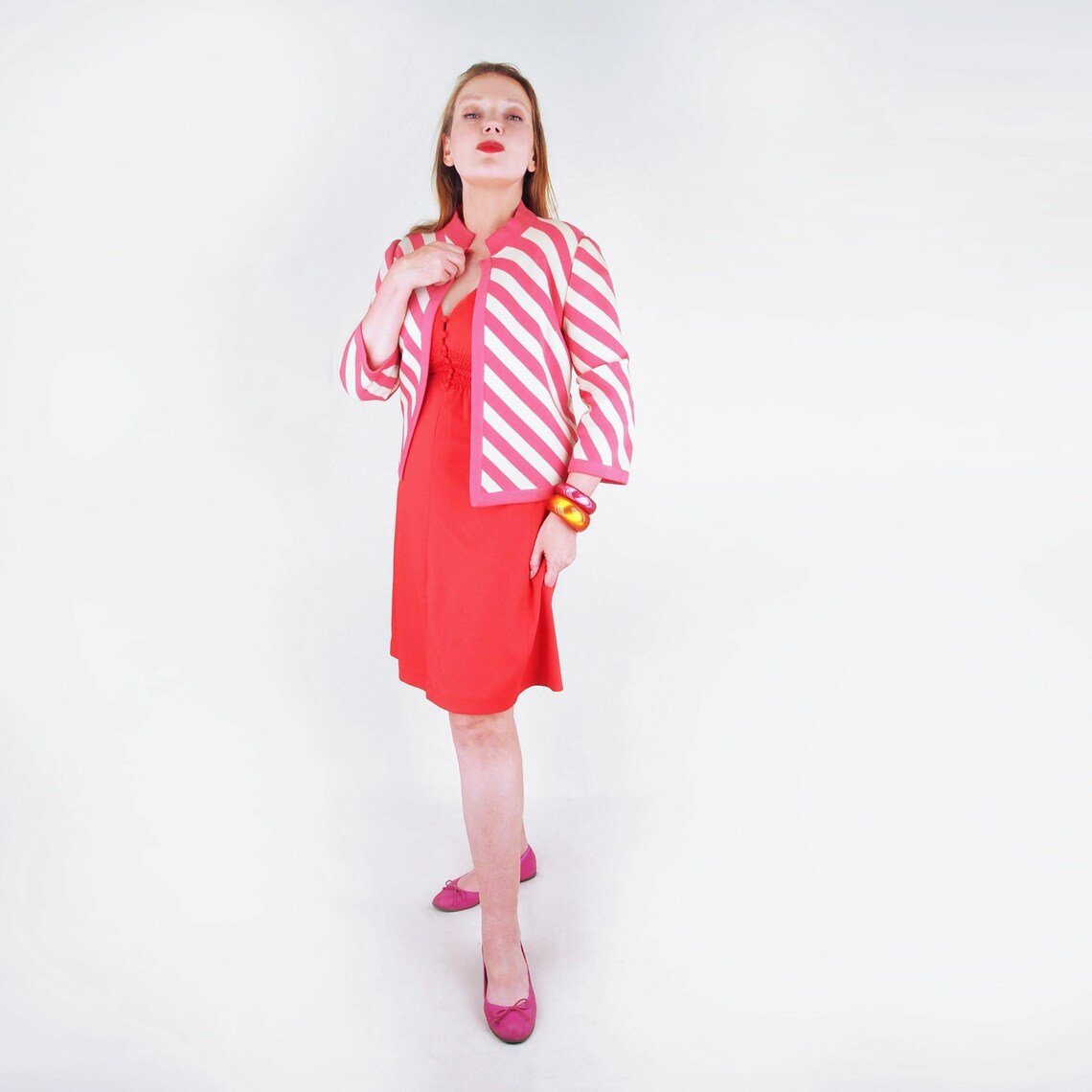
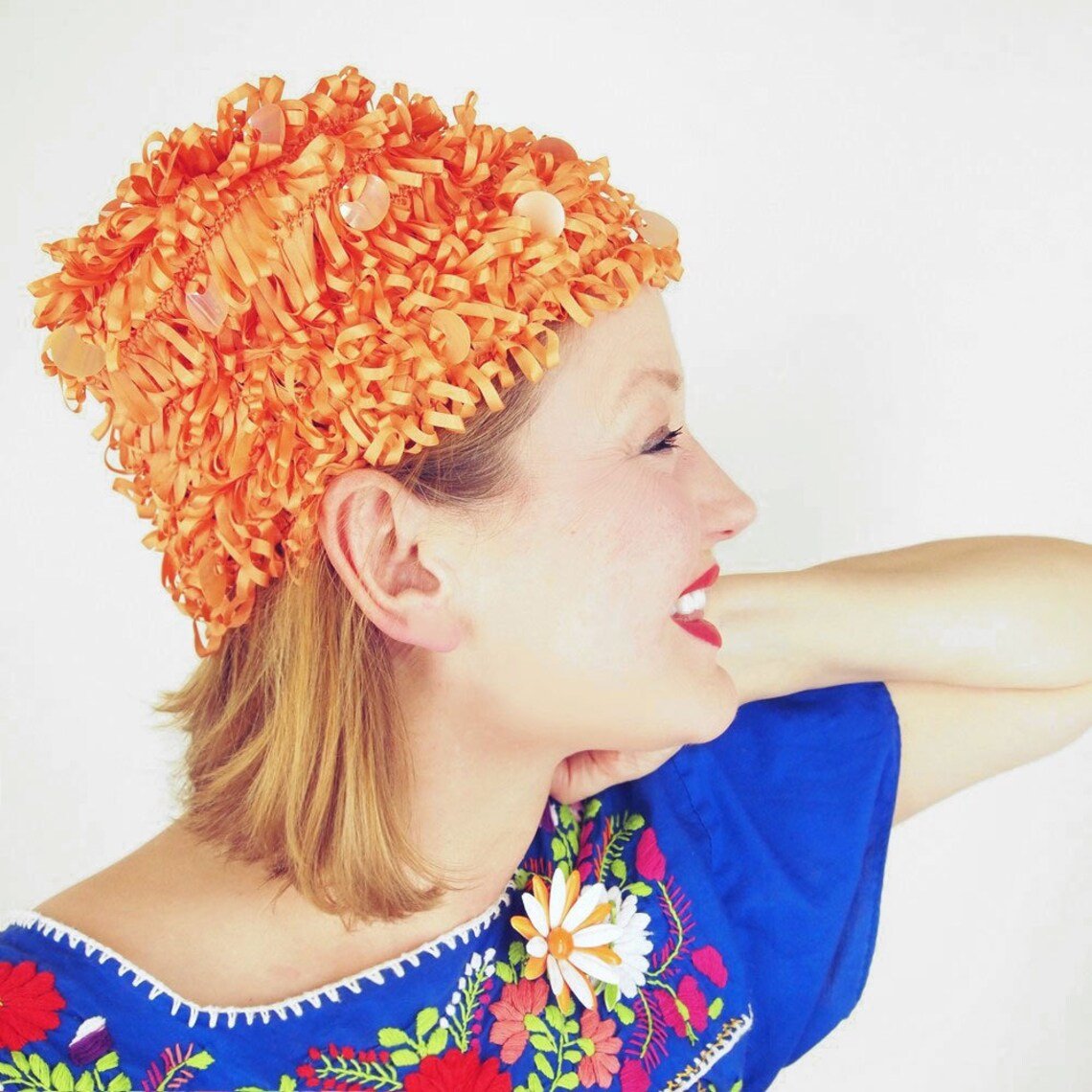
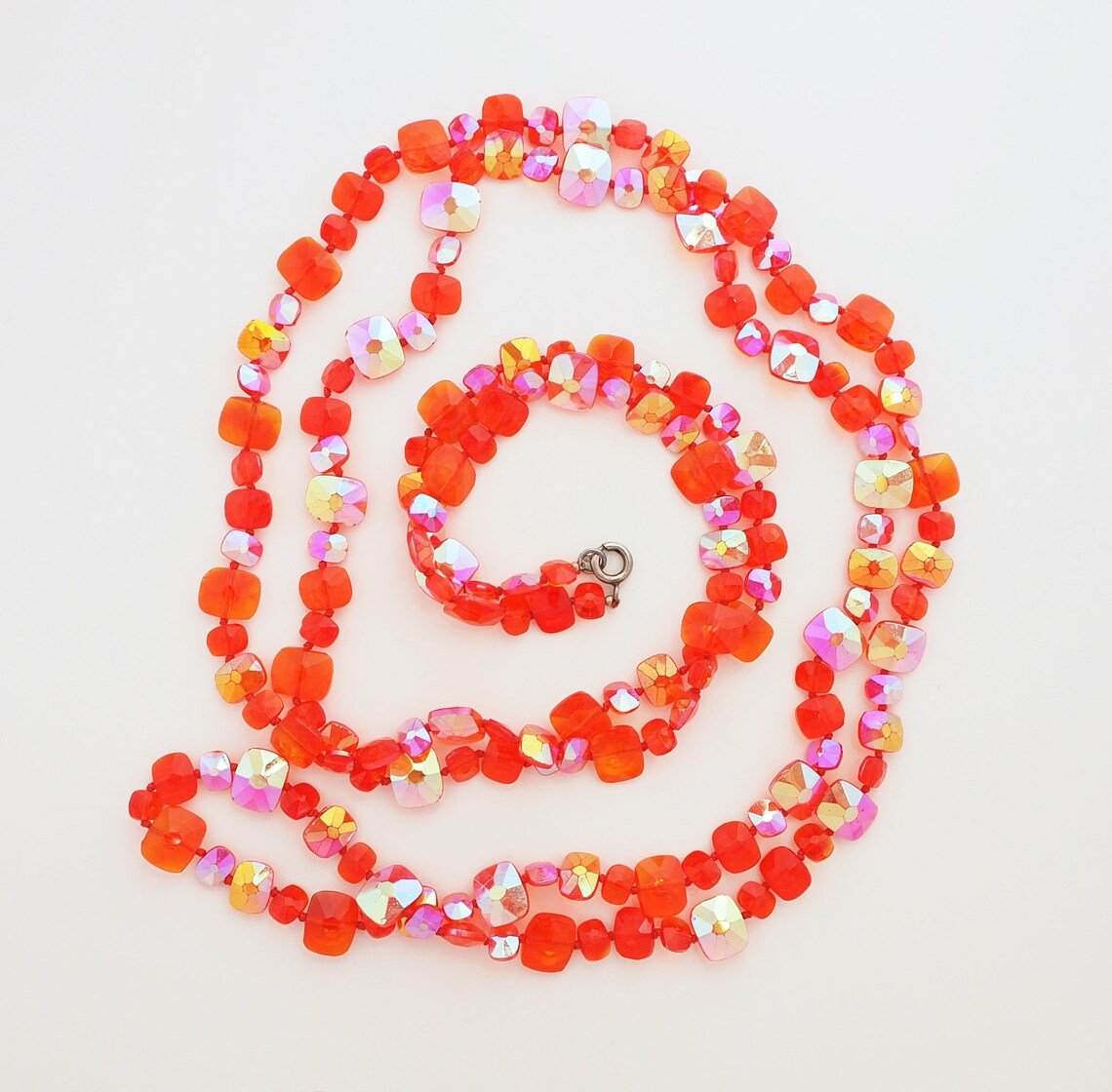
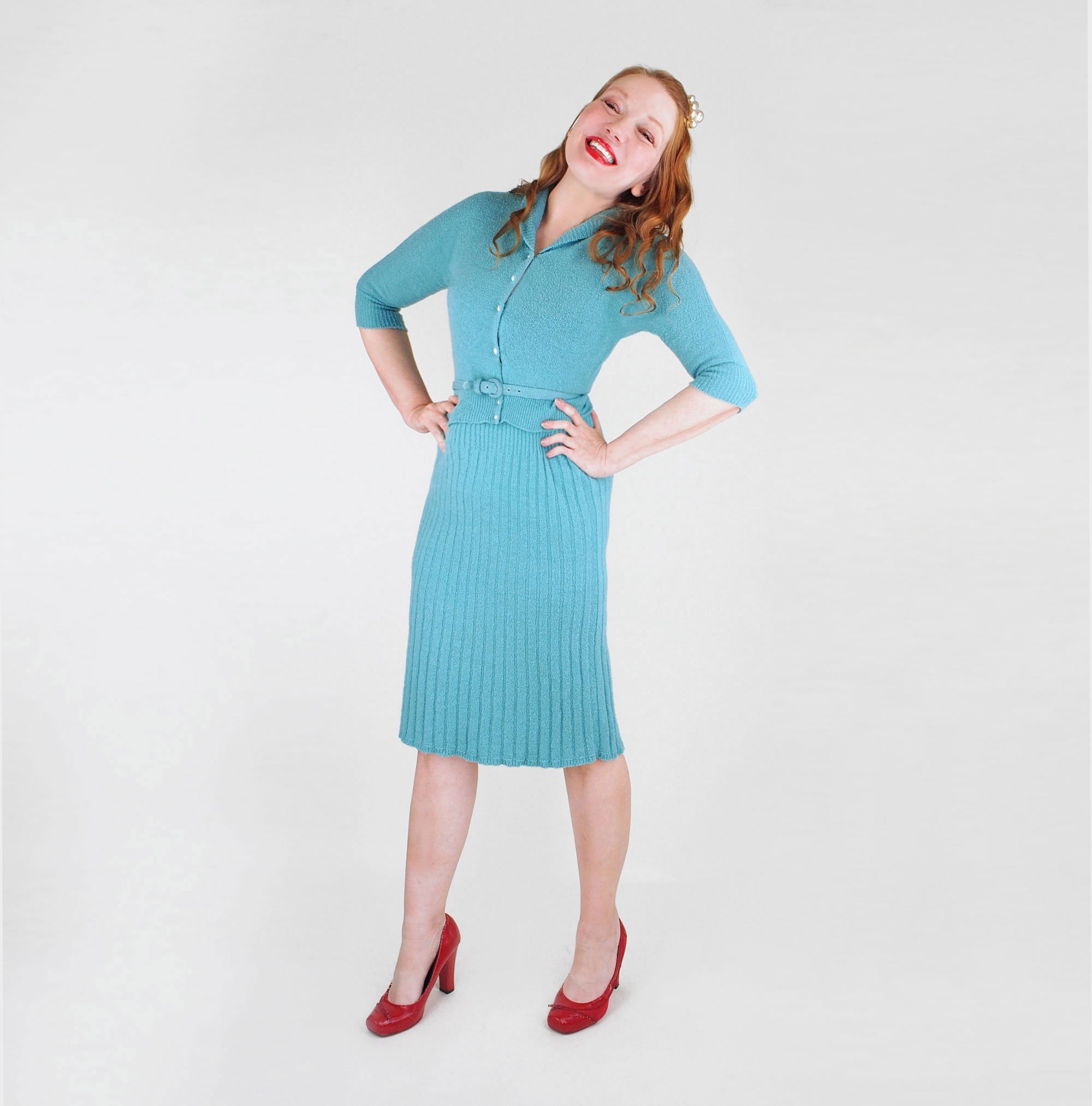
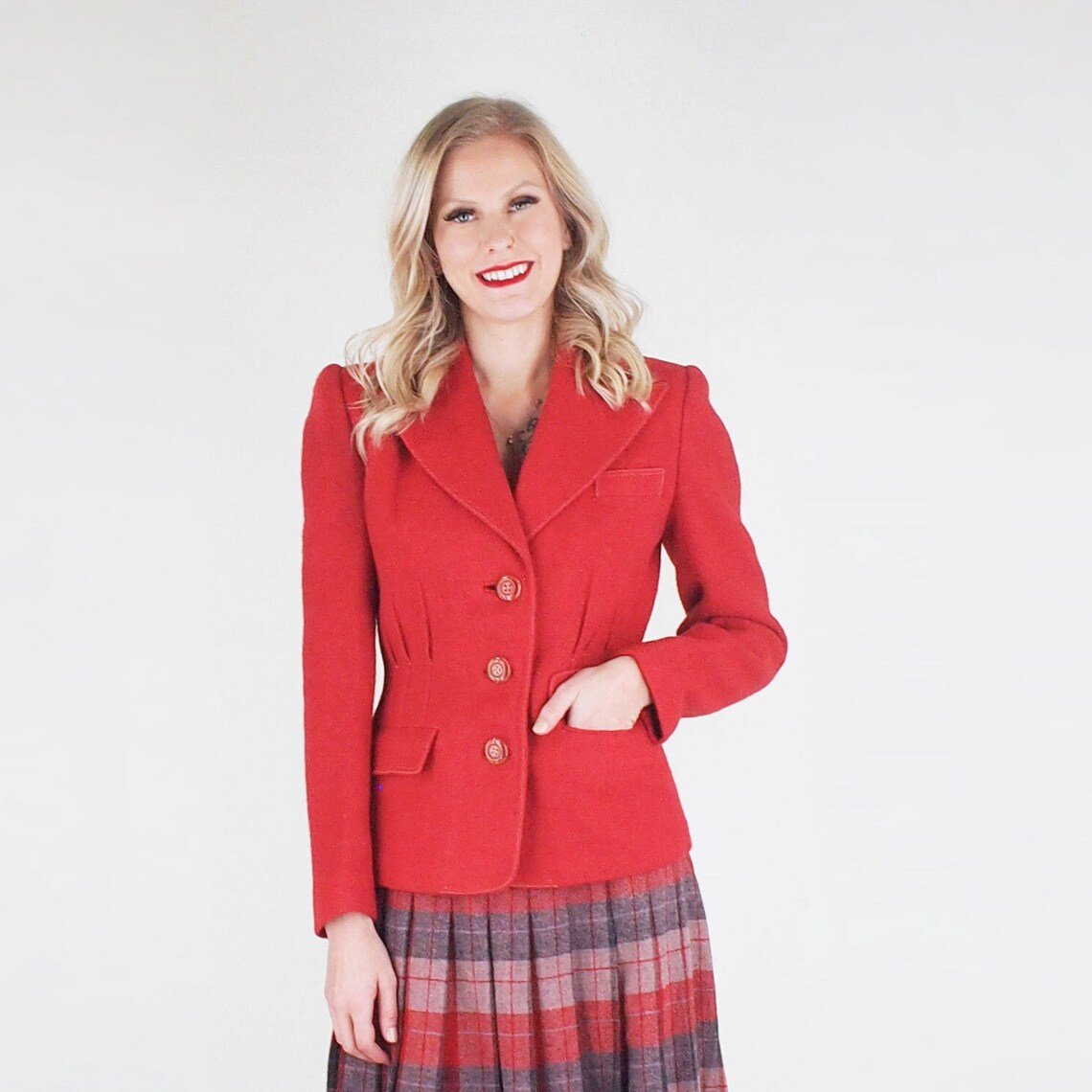
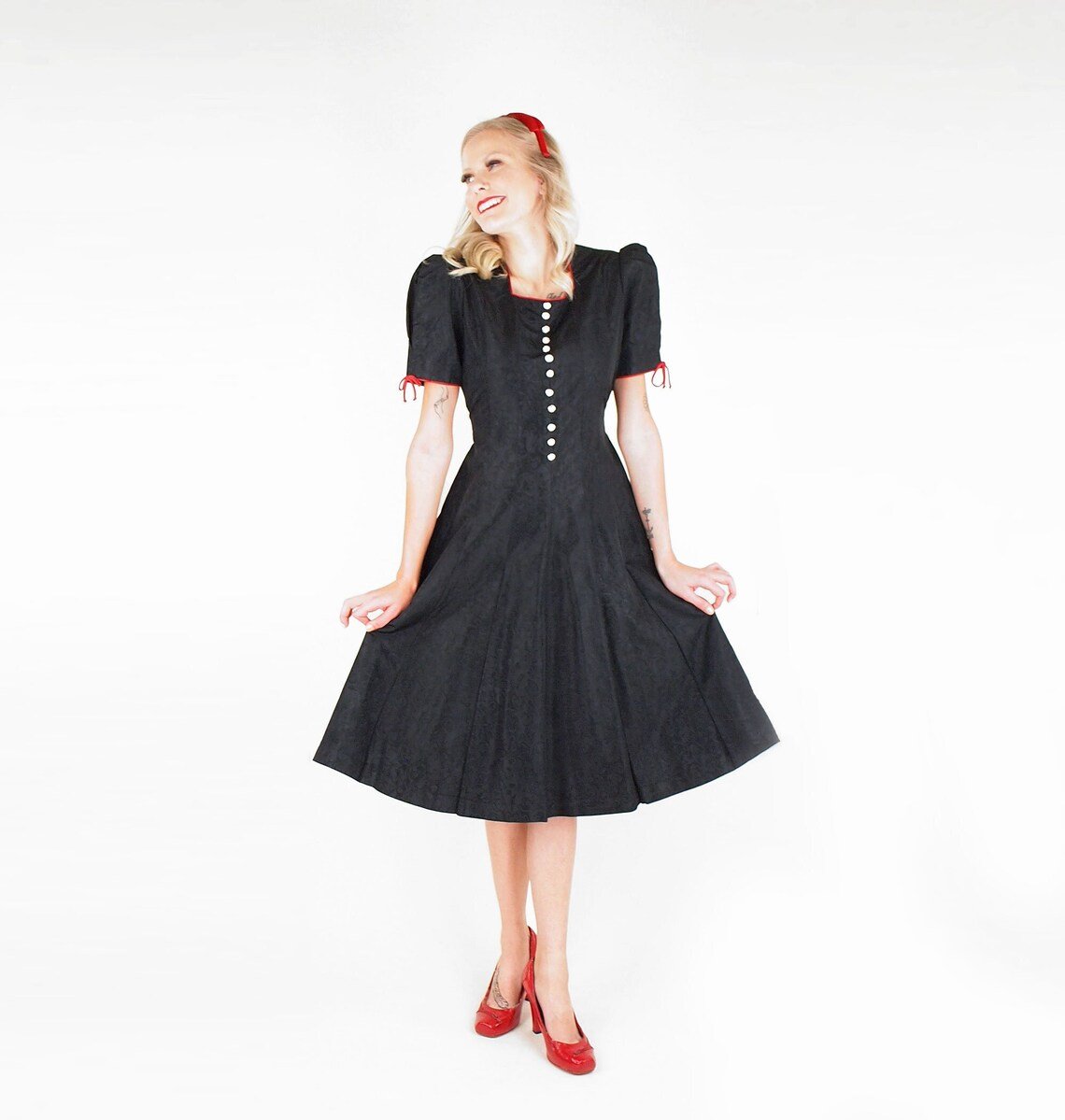
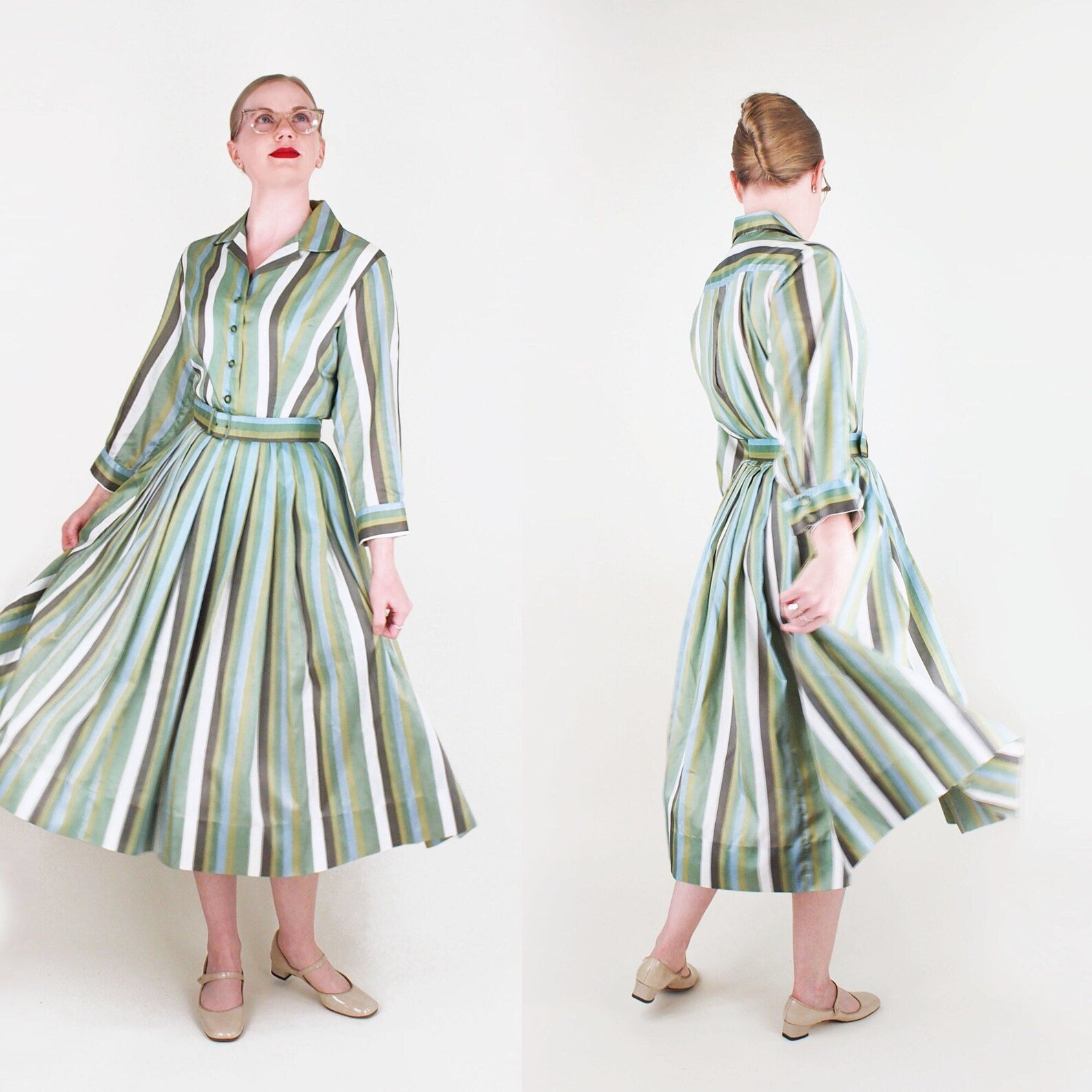
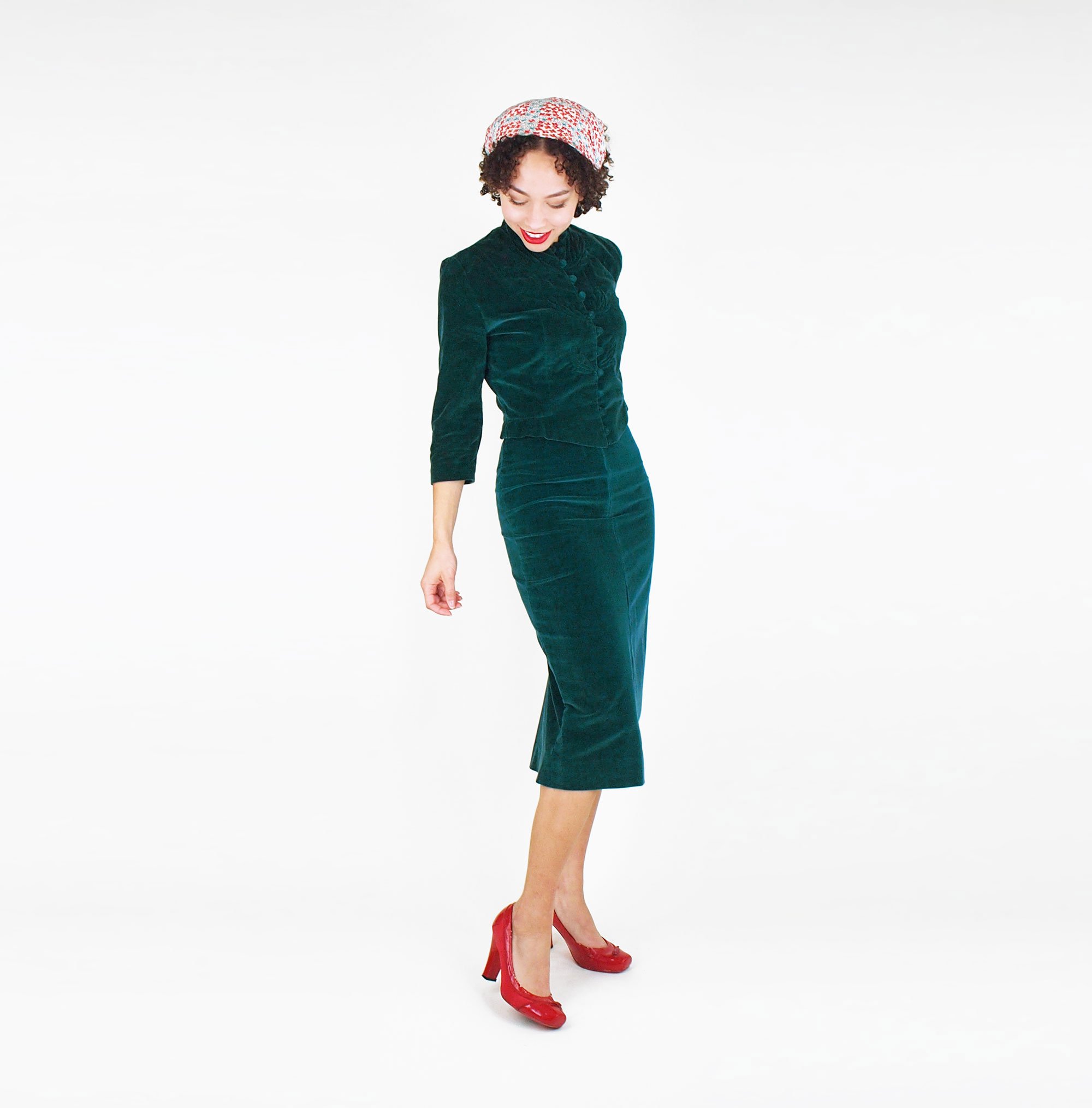
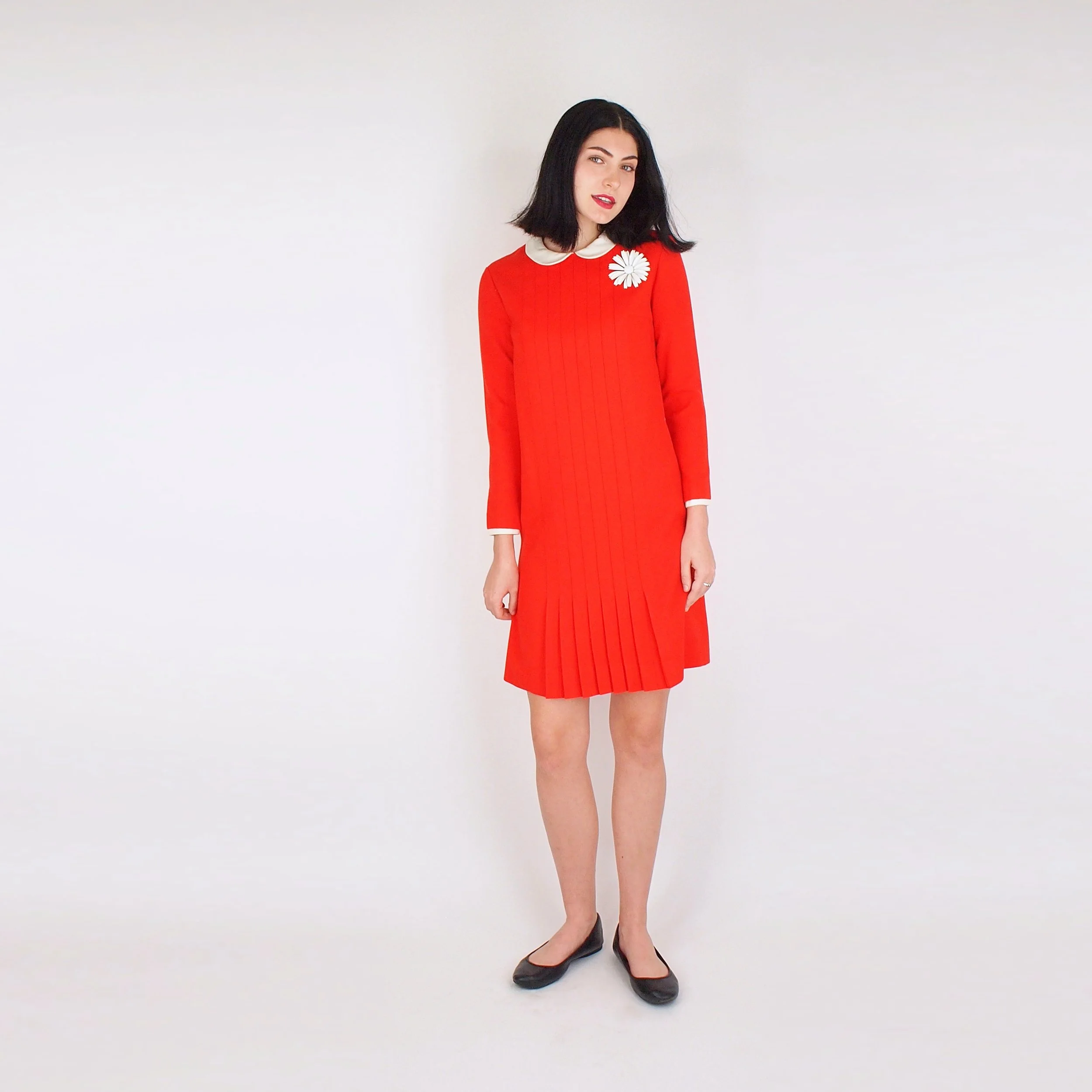
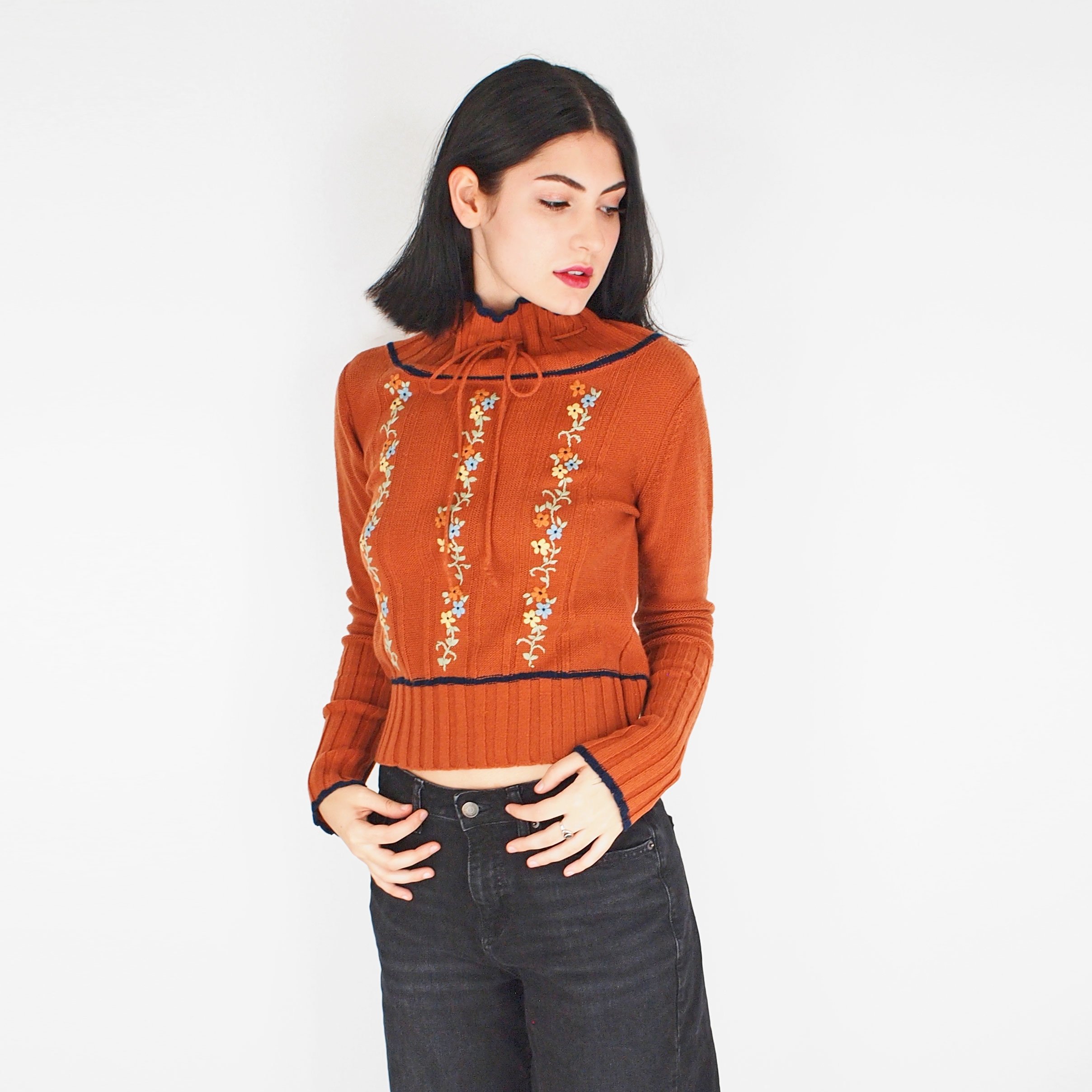
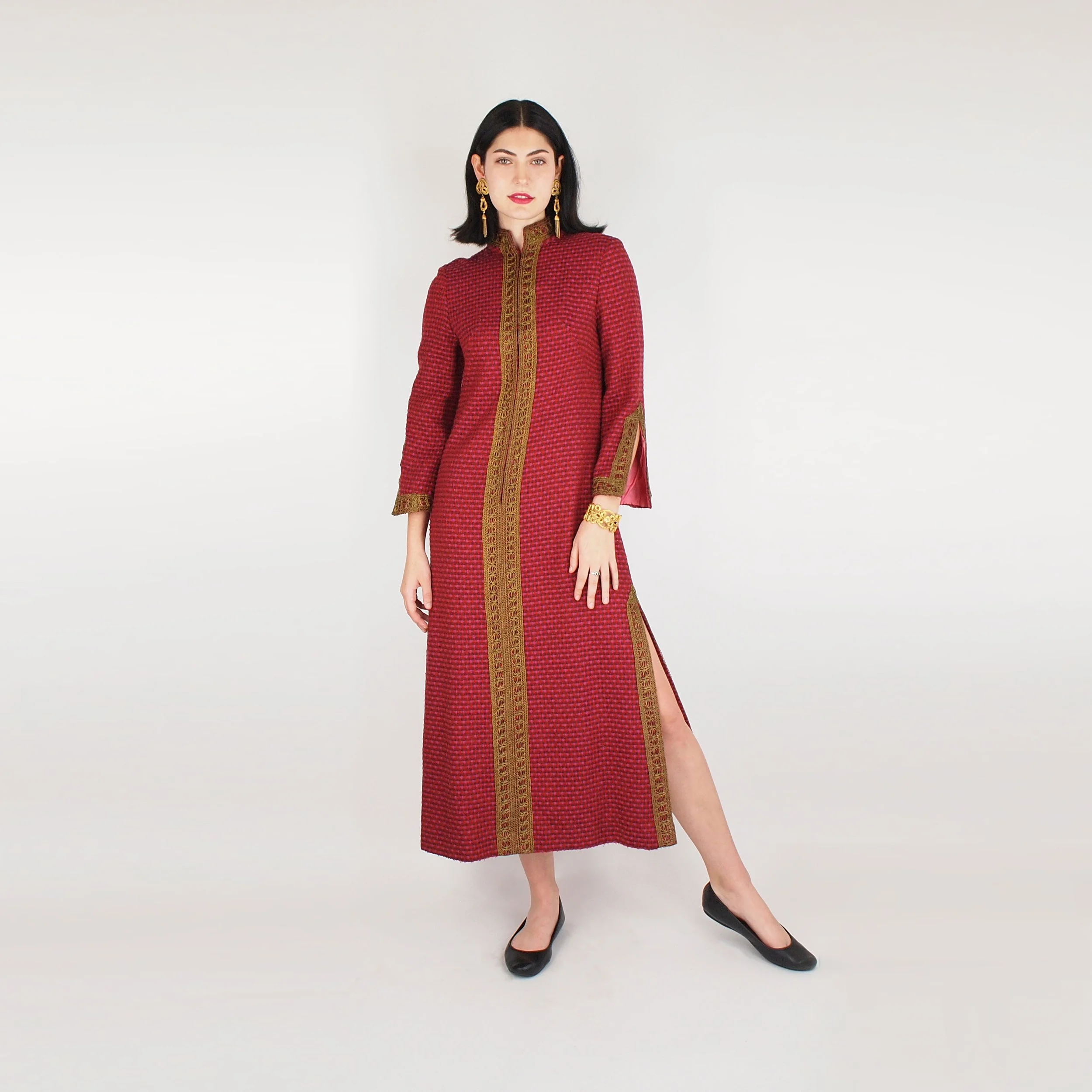
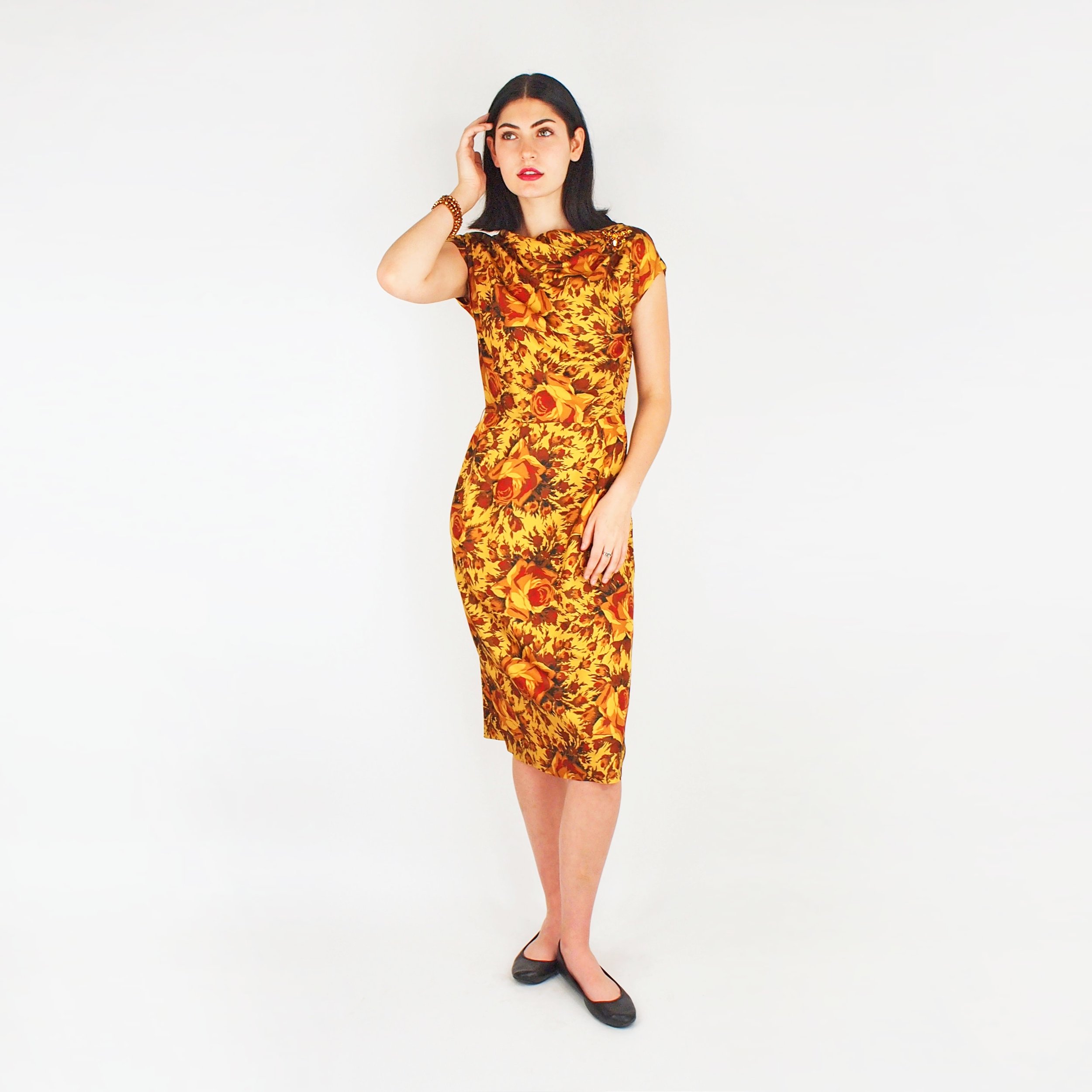
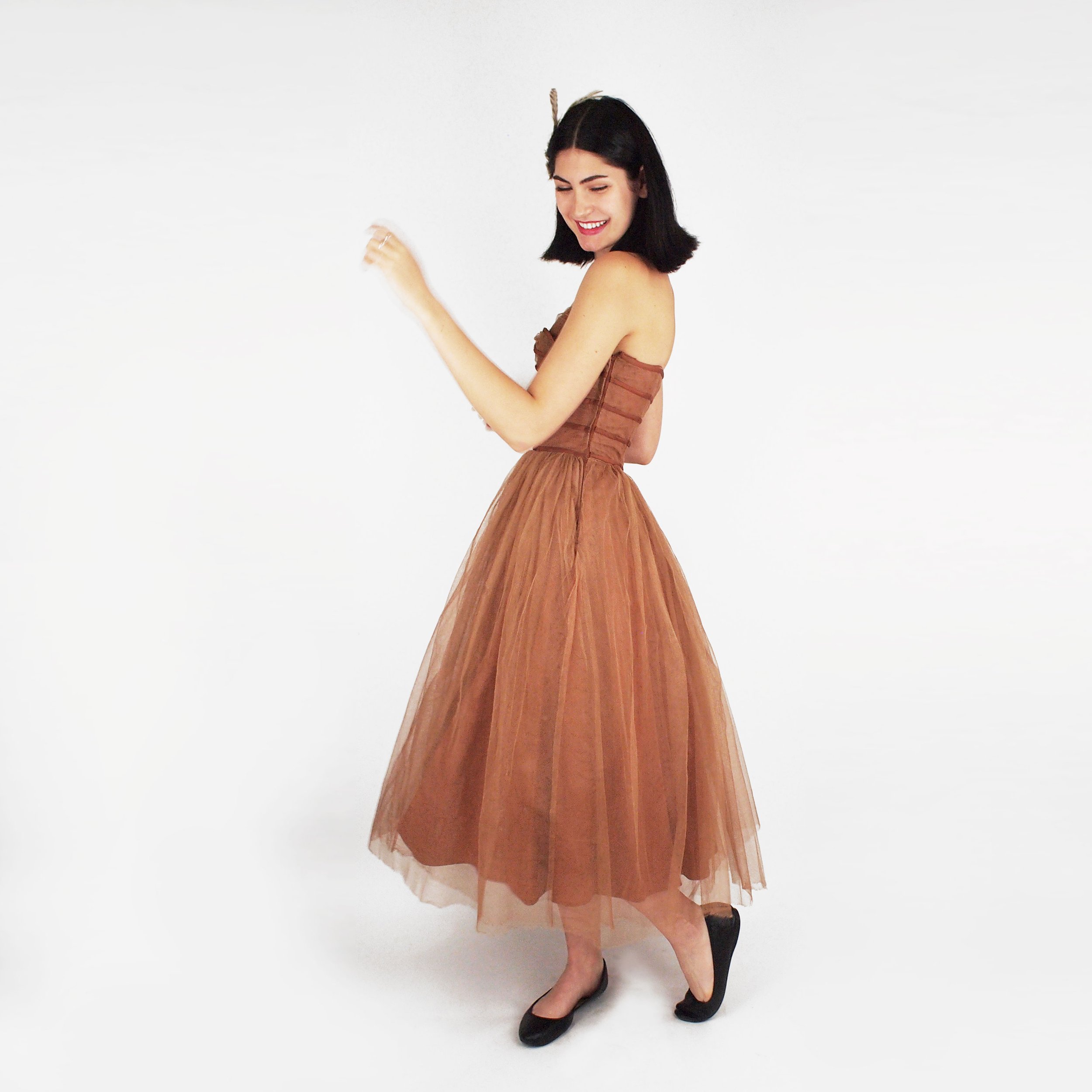
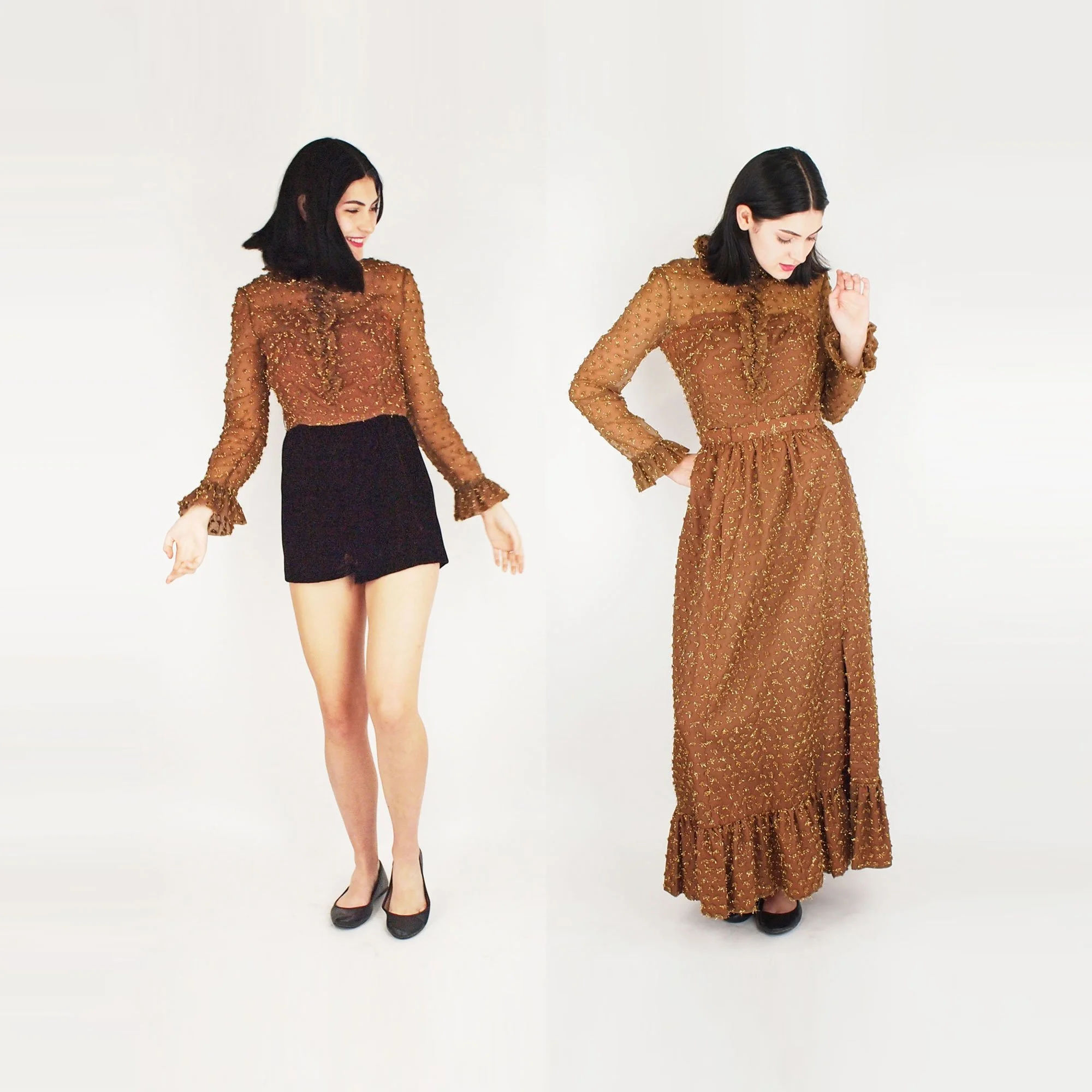
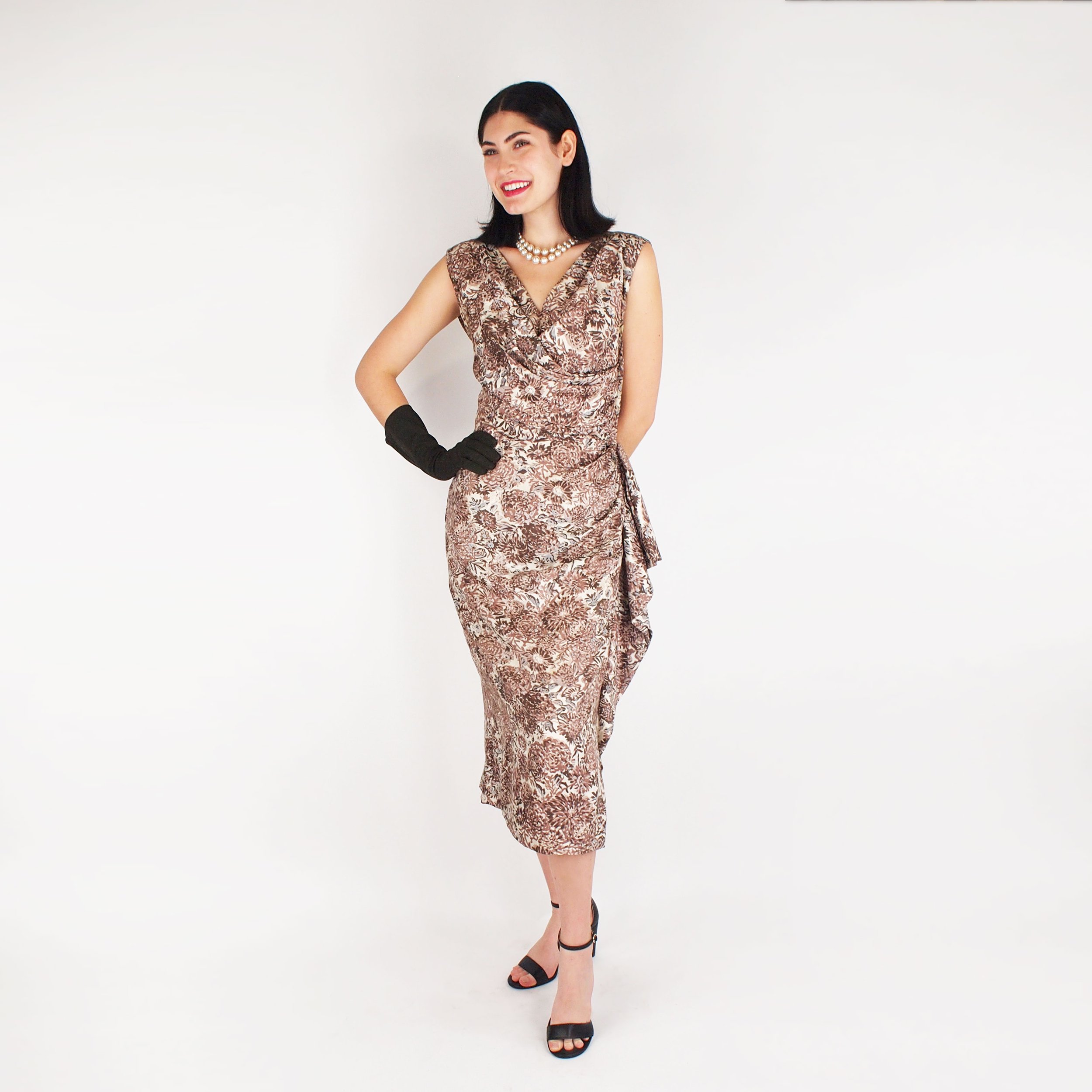
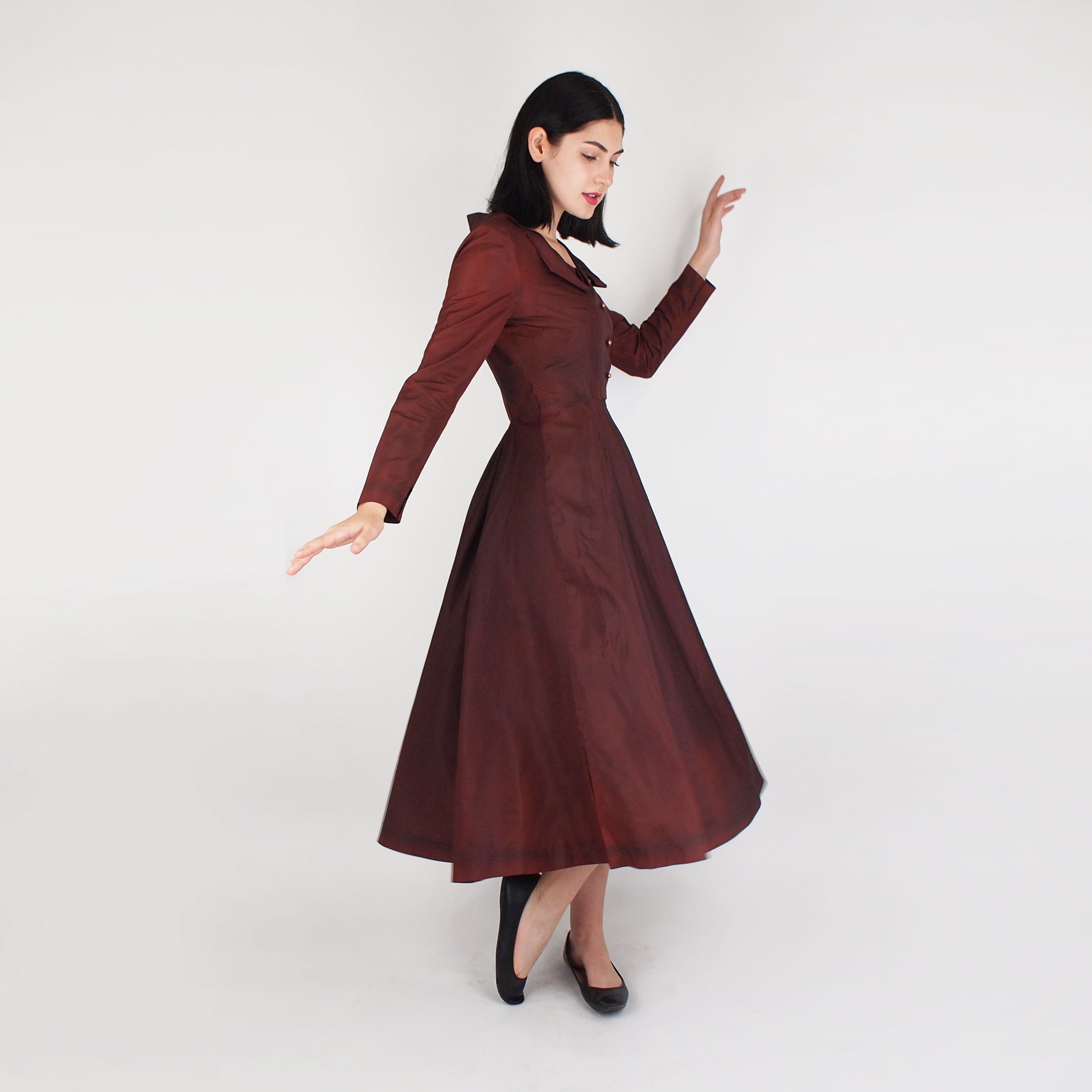
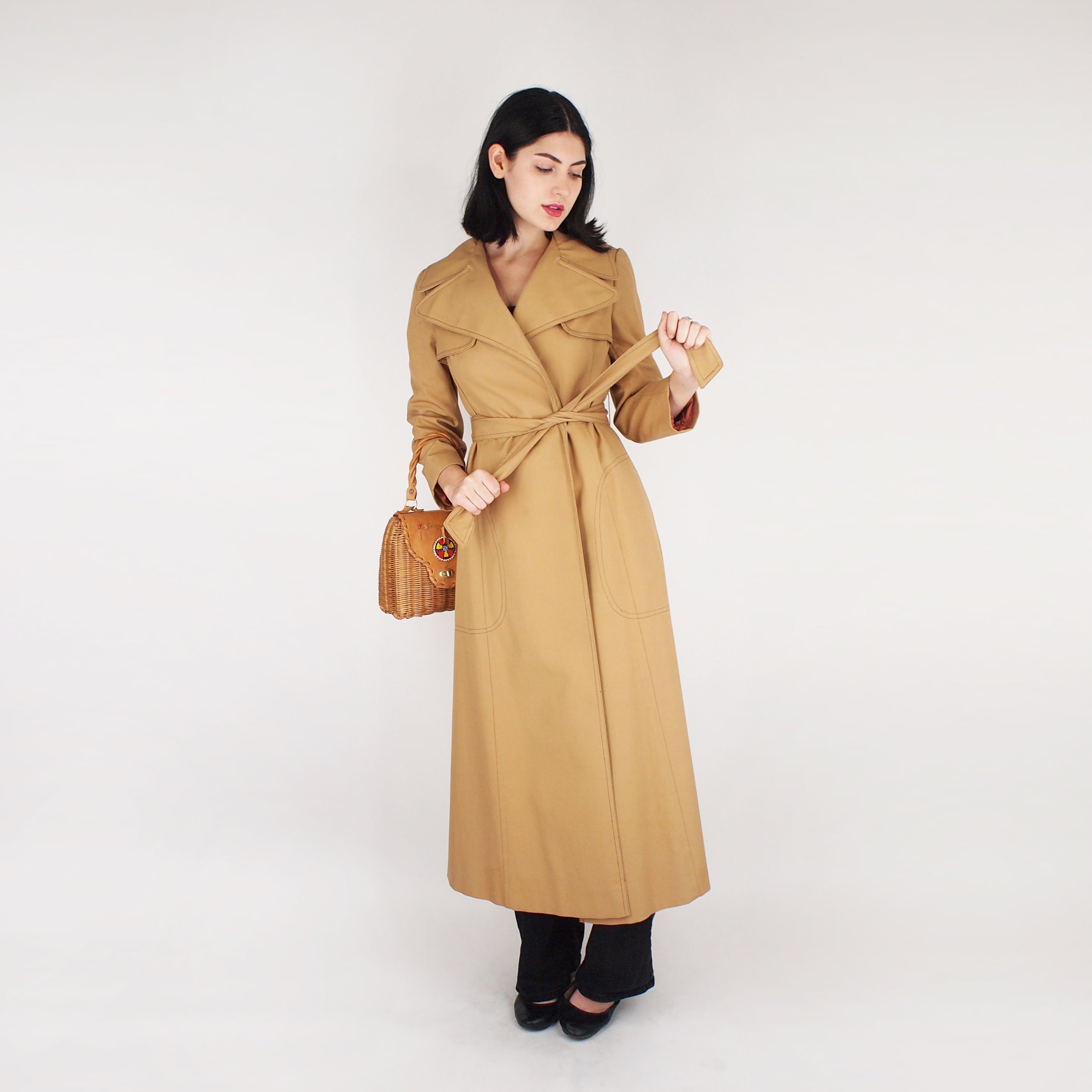
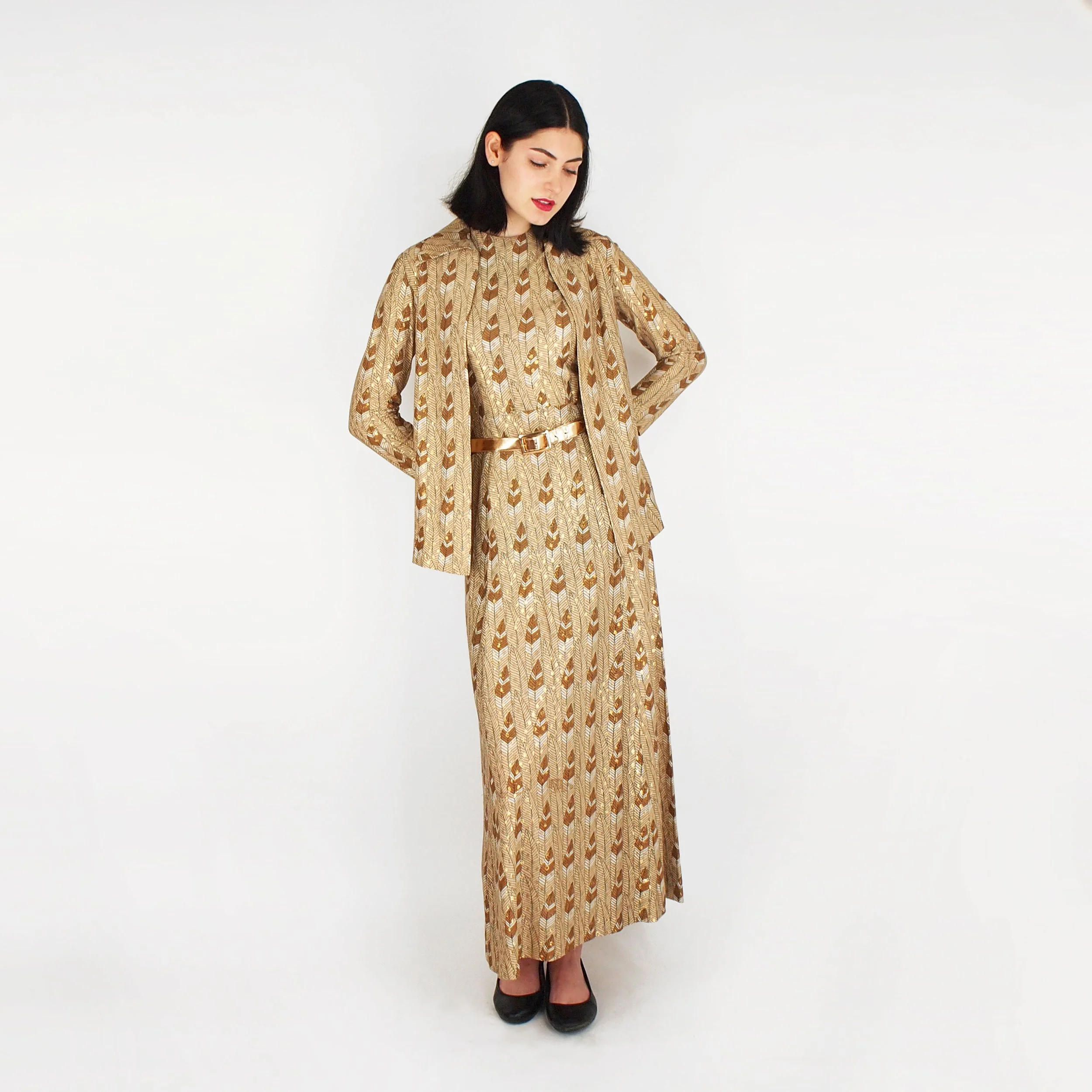
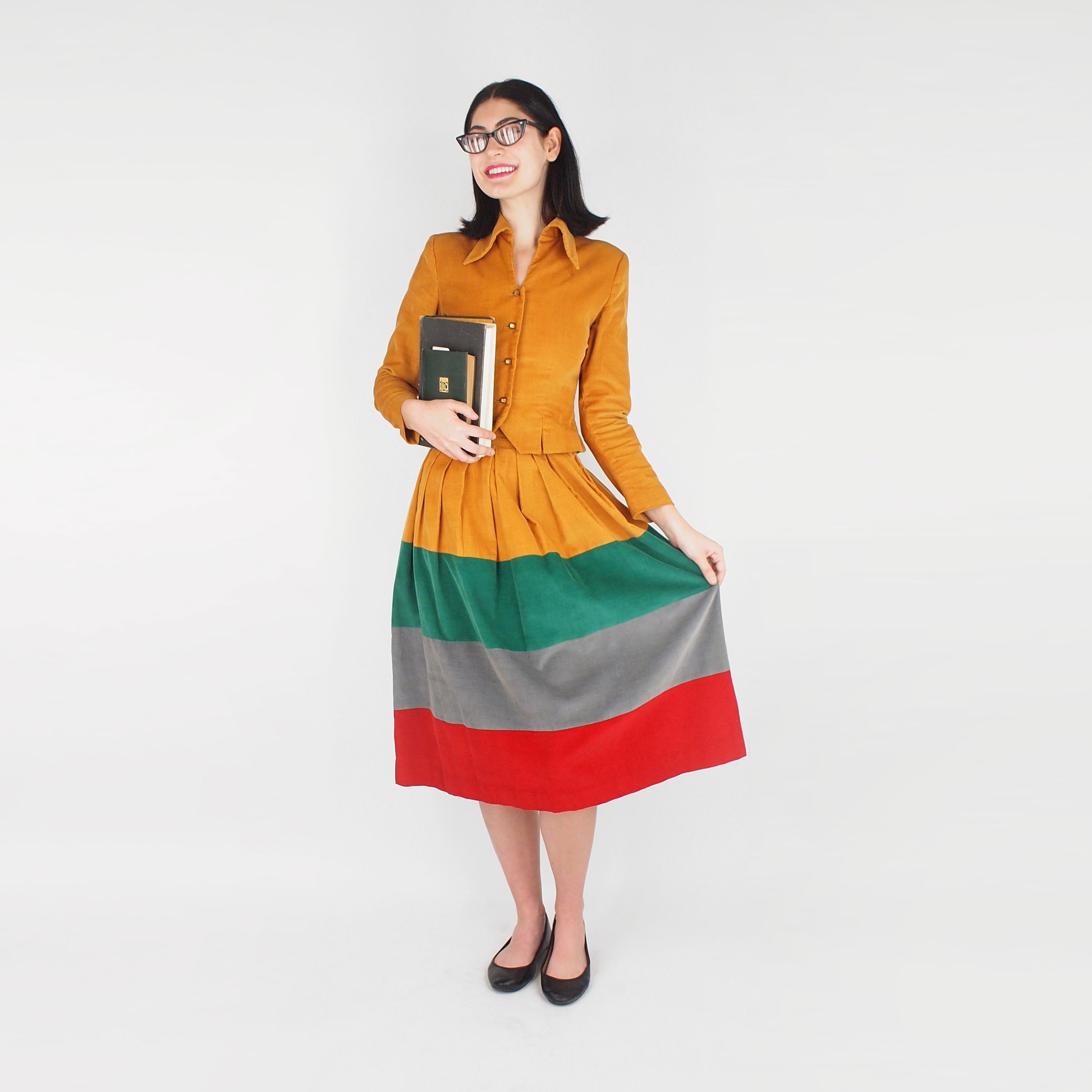
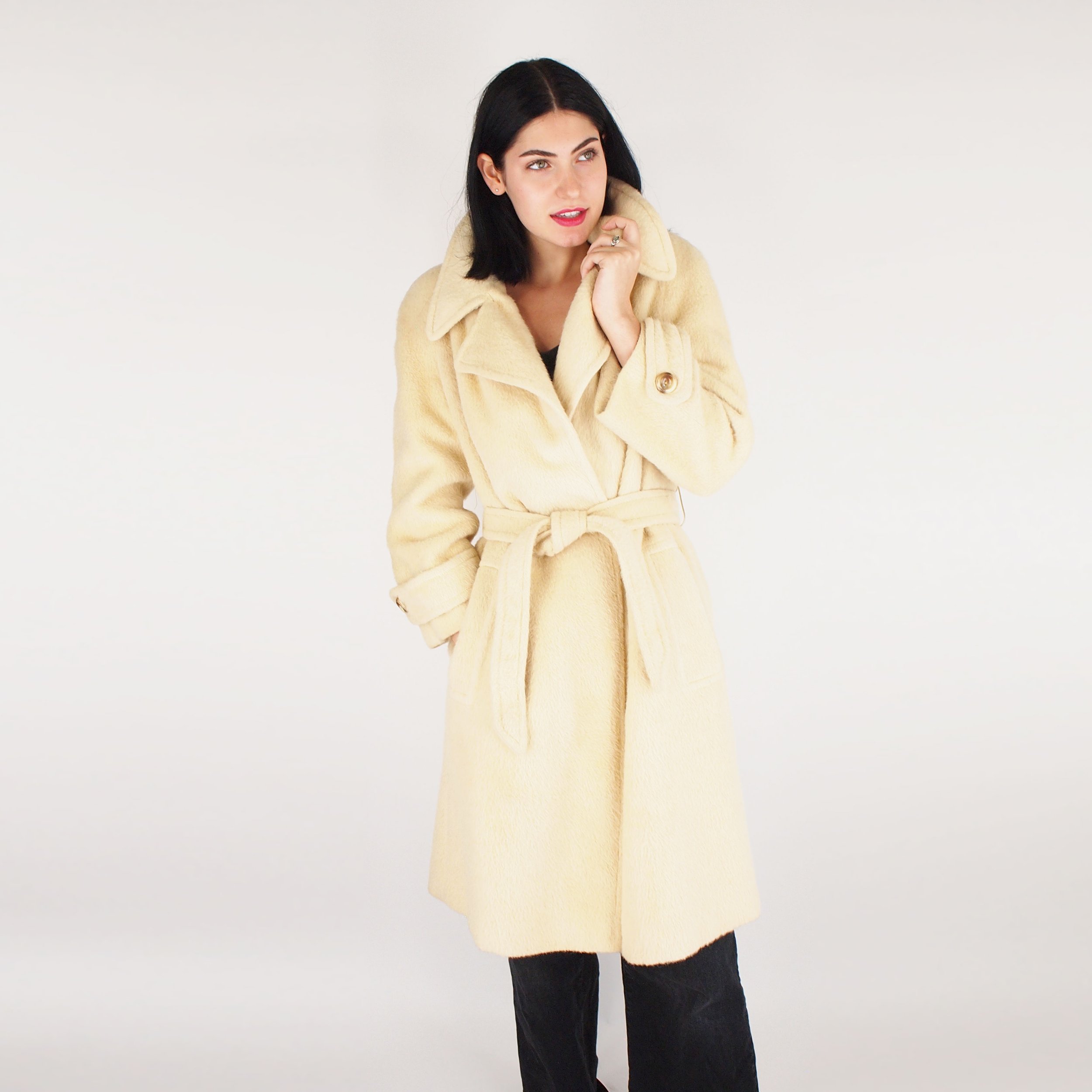
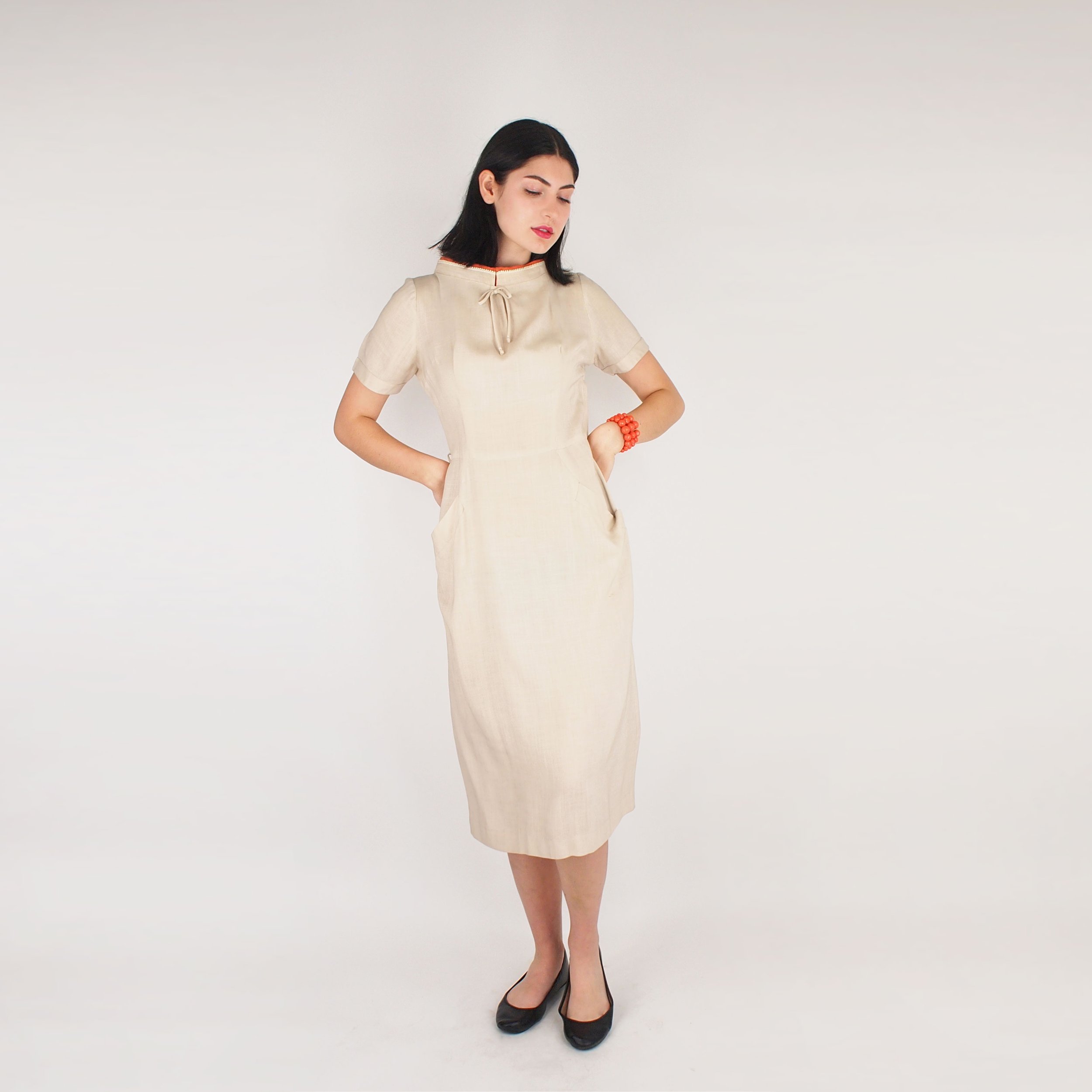
Once again, I’m back to share some favorite items sold in the year just past. Some sold somewhat before I could blink, some took a little while but thrilled their new owners.

Those of you who know me from some time ago may wonder why I’m not doing more modeling of my vintage finds. I have psoriatic disease which has made many things more challenging. Occasionally, the frustration of trying various medications and treatments wears me down, but this year, 2024, is my year to focus on doing as much as I can for my health. I want to feel more like myself again.

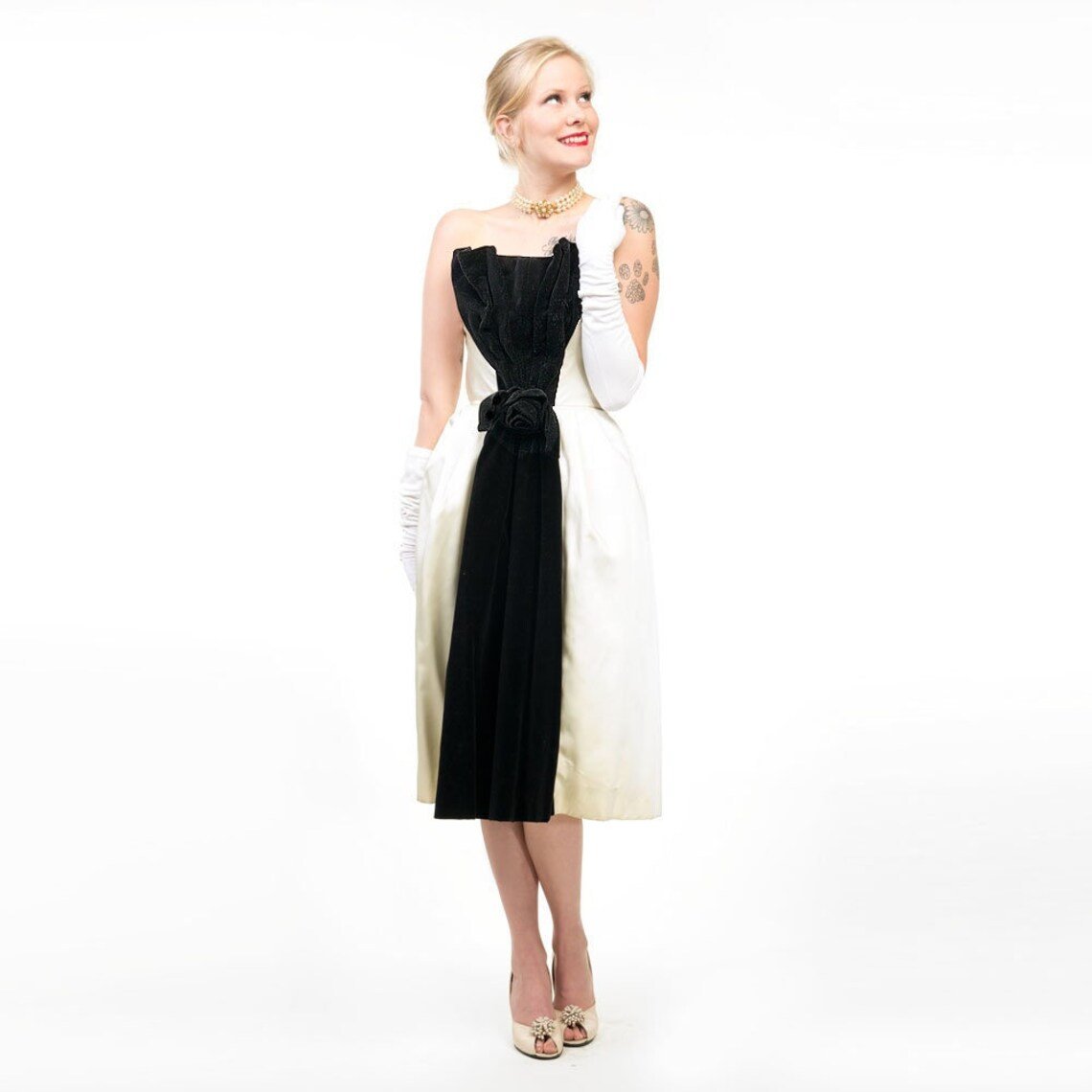
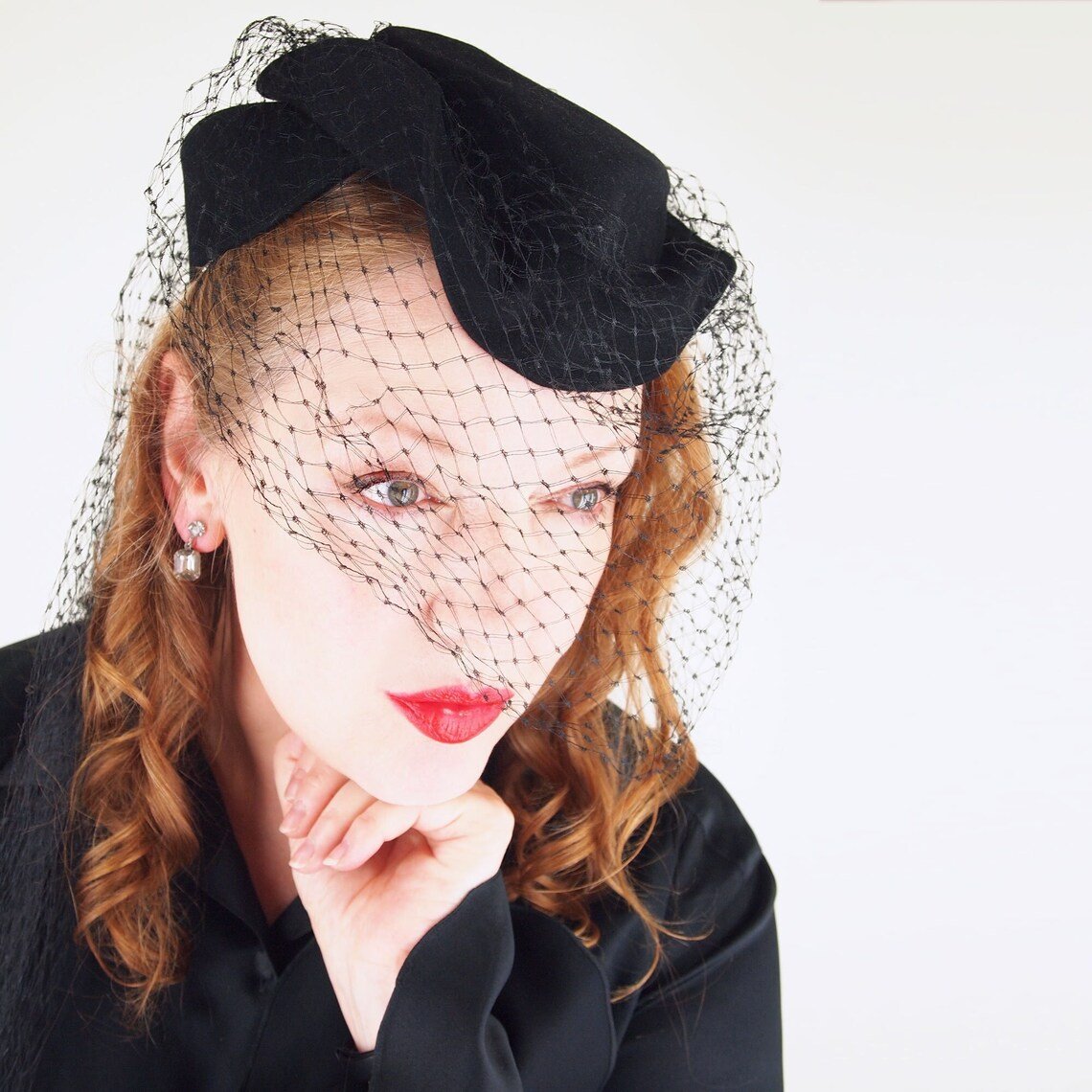
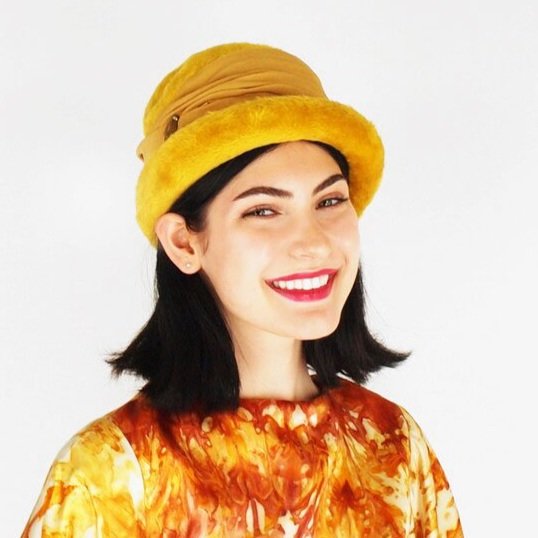
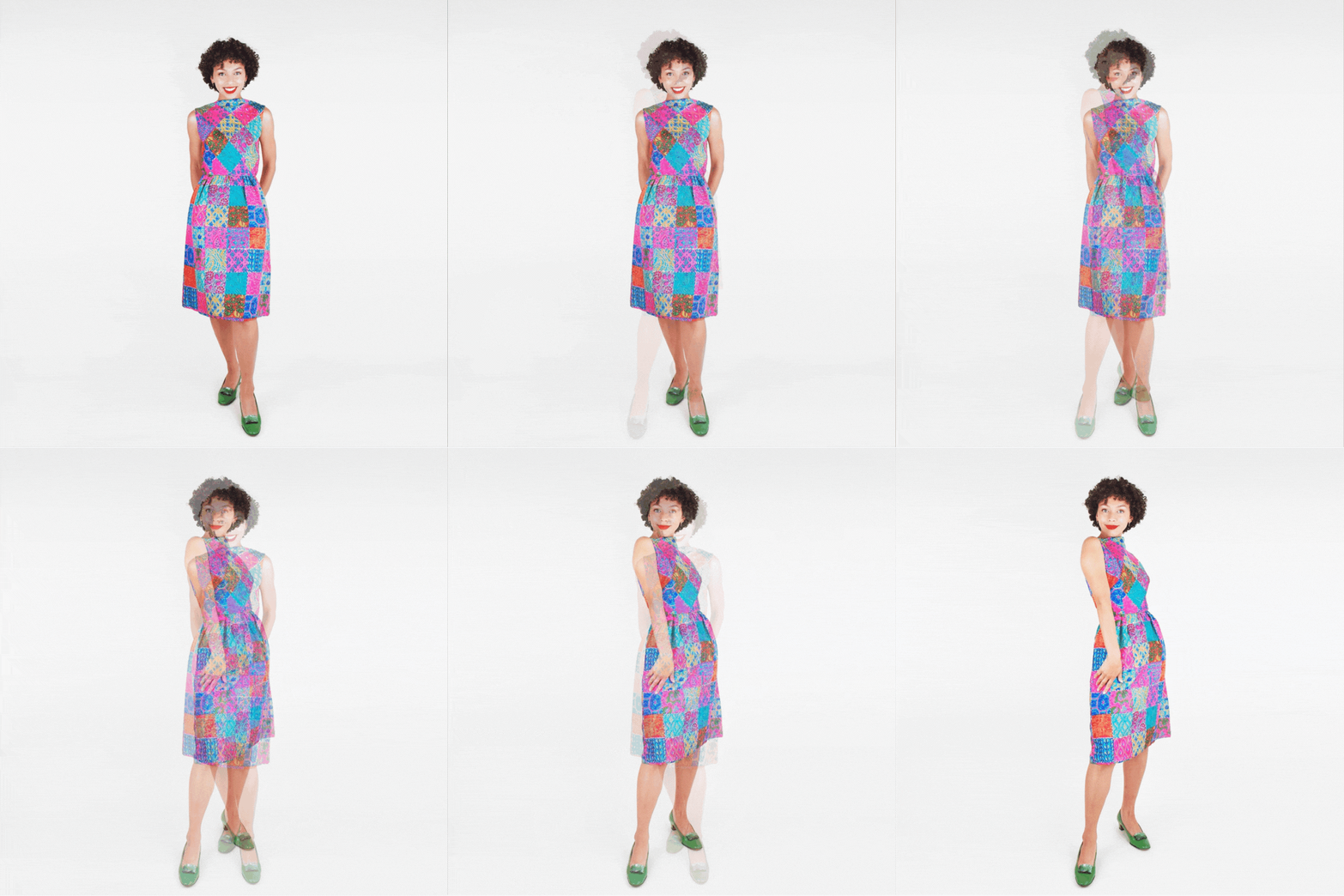
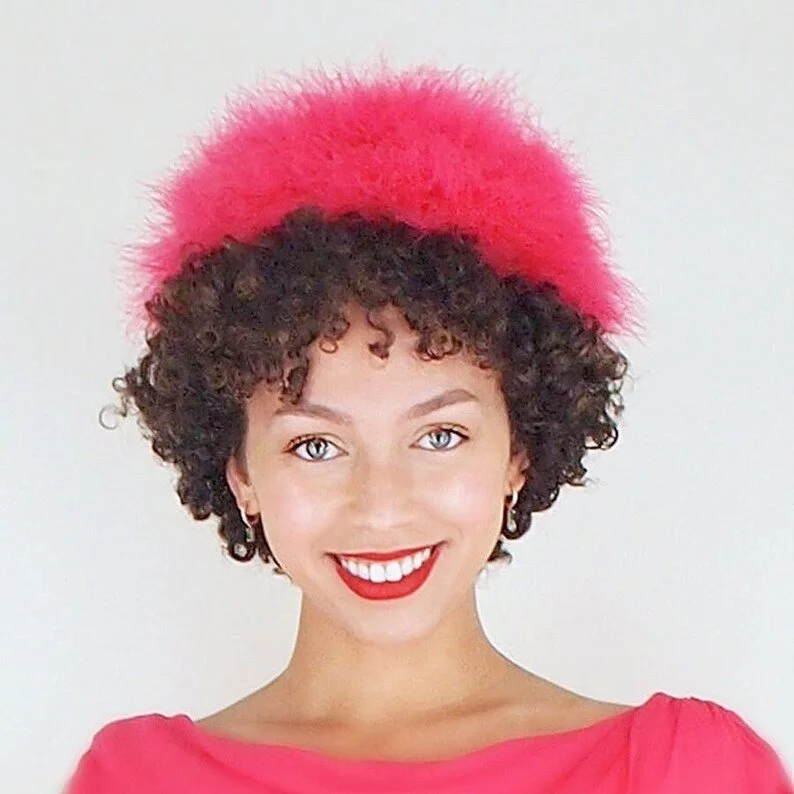
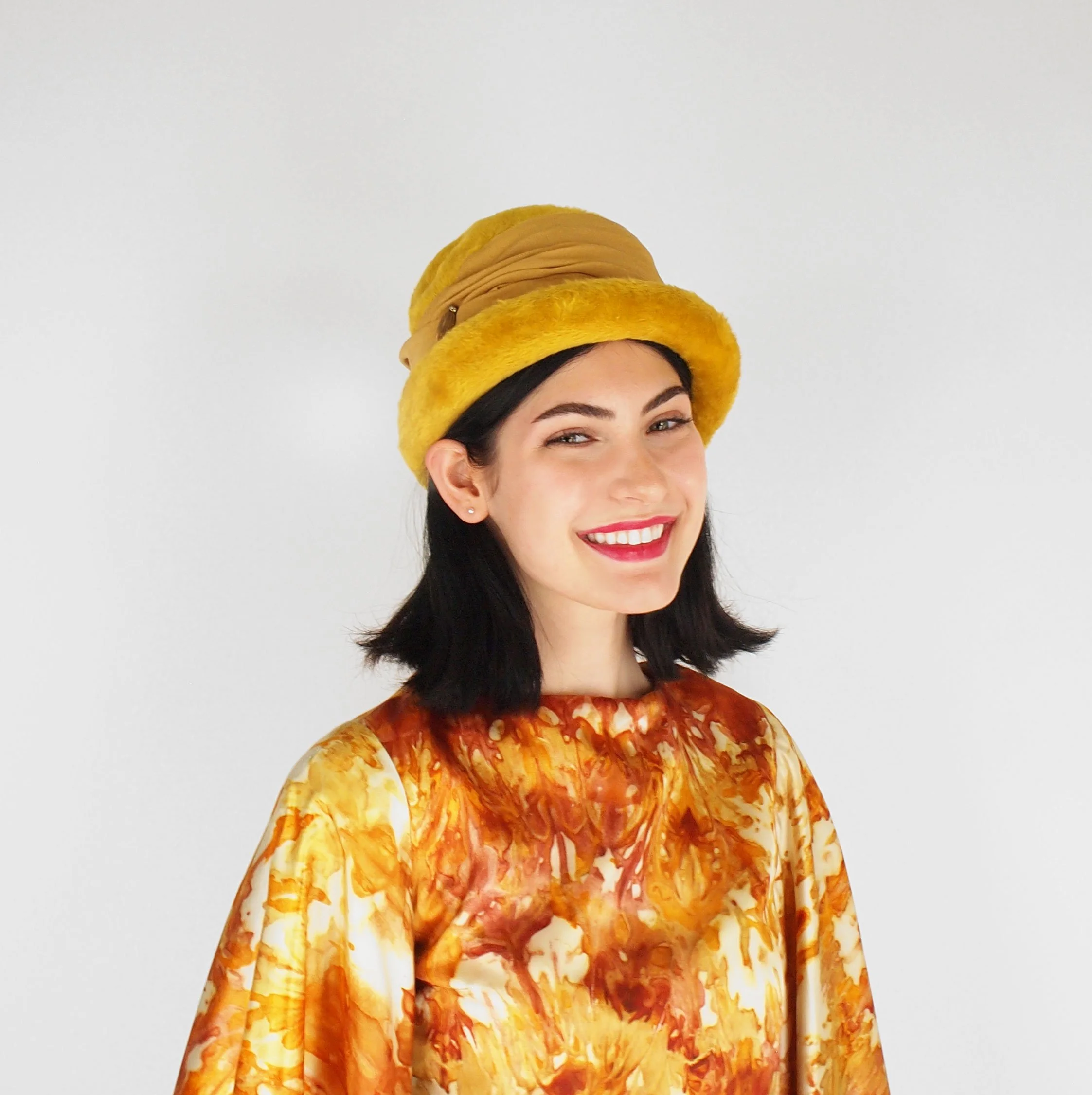
In the meantime, I can’t thank these models enough for bringing my vintage clothing to life! (Shown in this blog are Ceydar, Sarah, Roxy, Selah and Gianna.)

And to my customers and followers, THANK YOU—it’s black and white: You love vintage fashion! I am so grateful for your continued support.
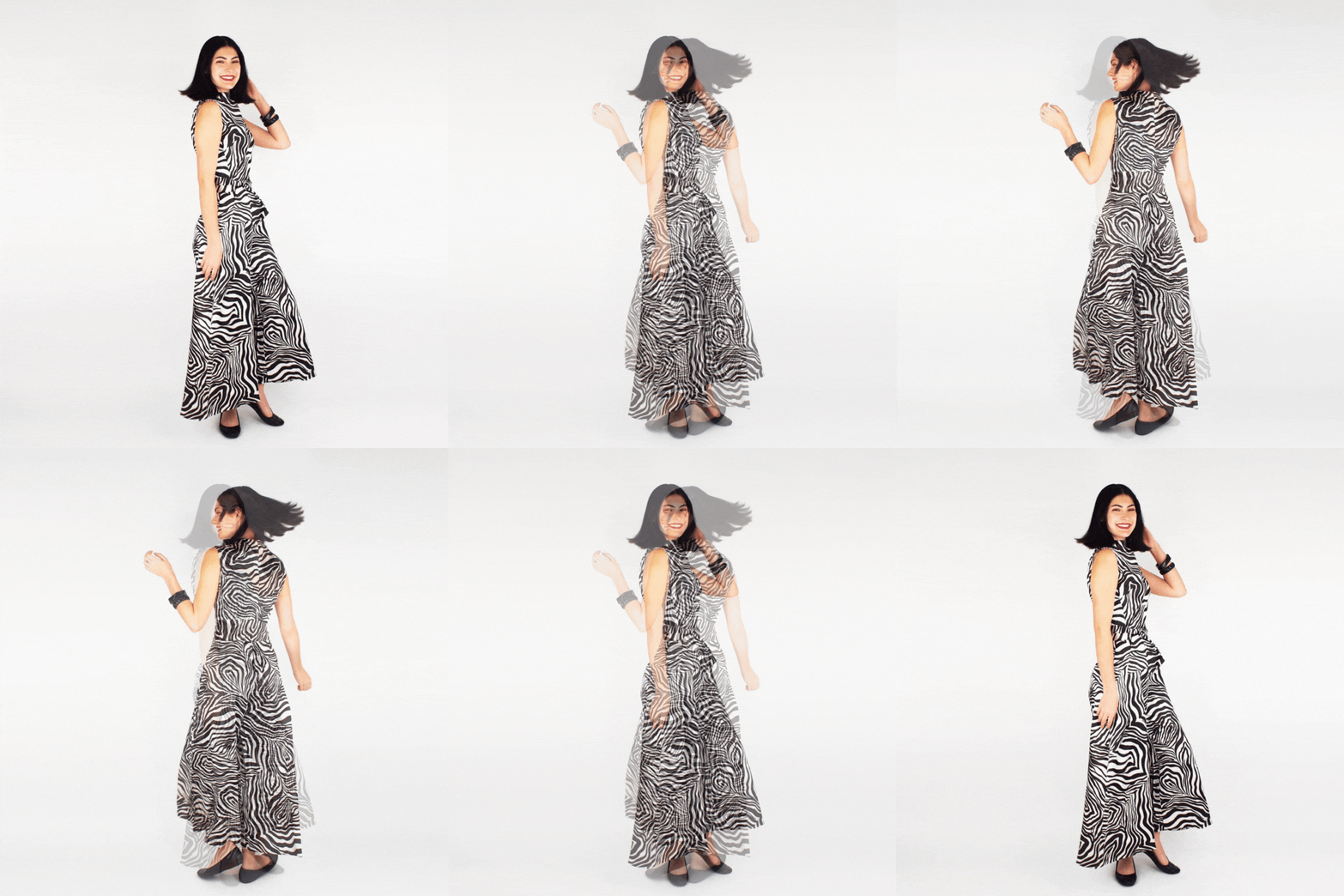
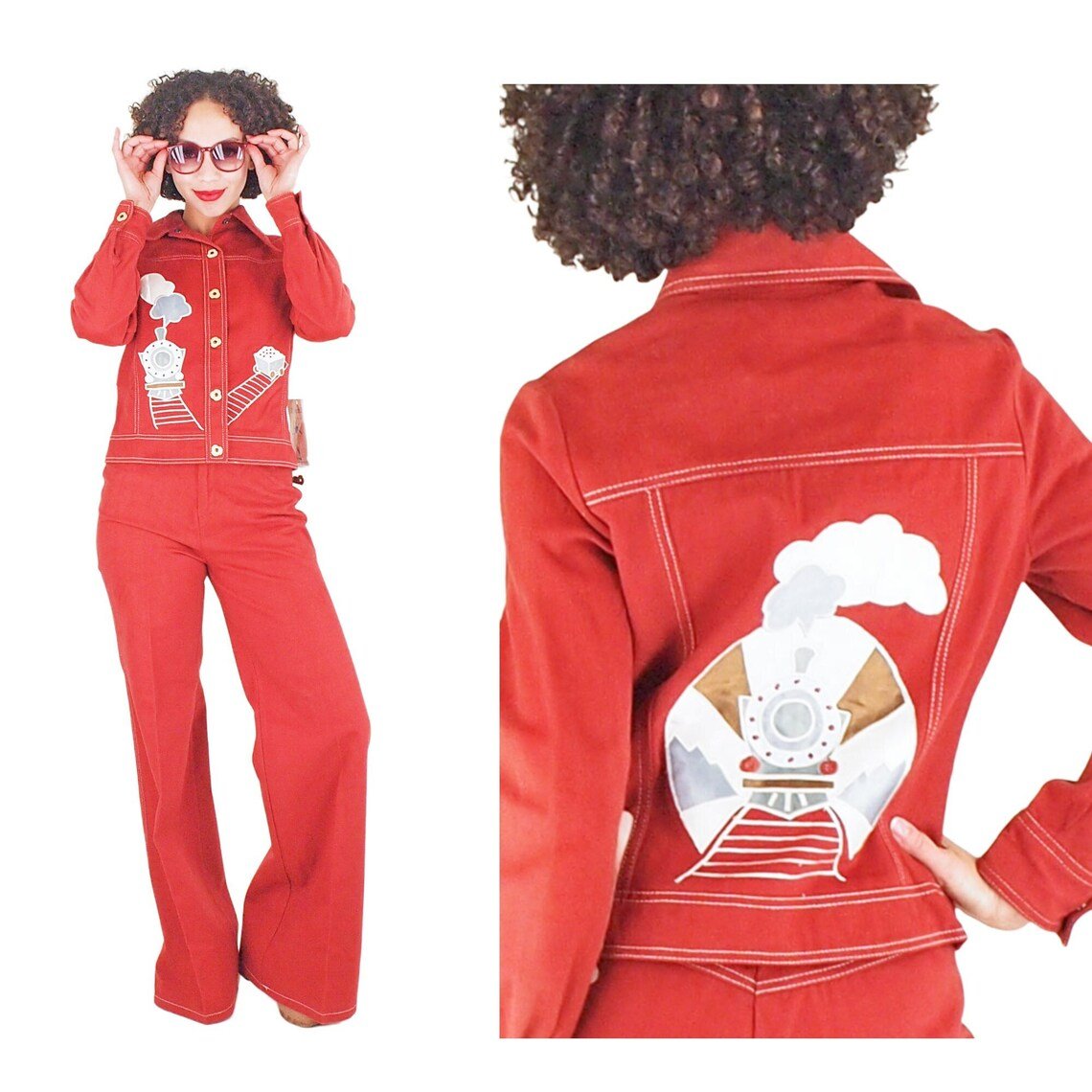
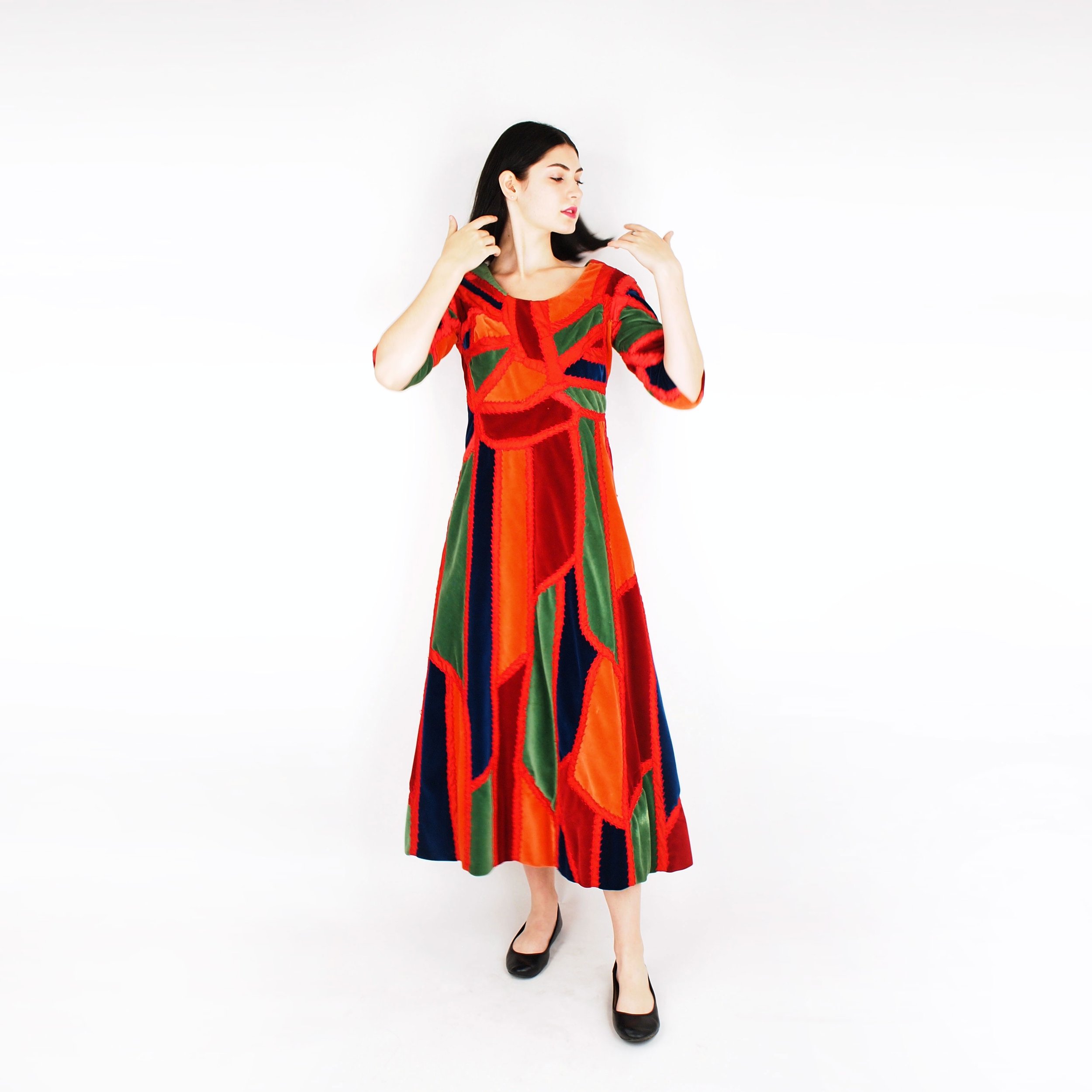
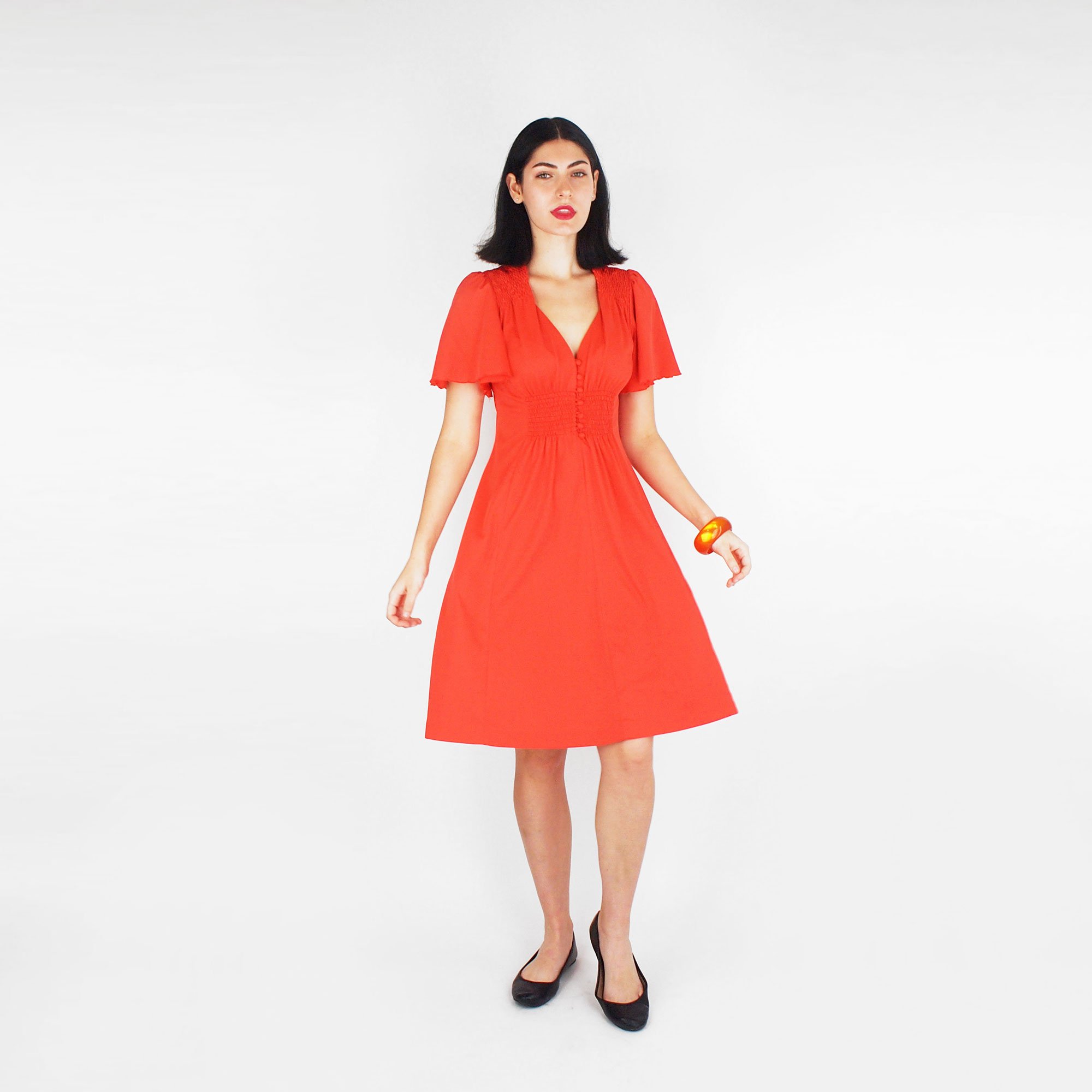
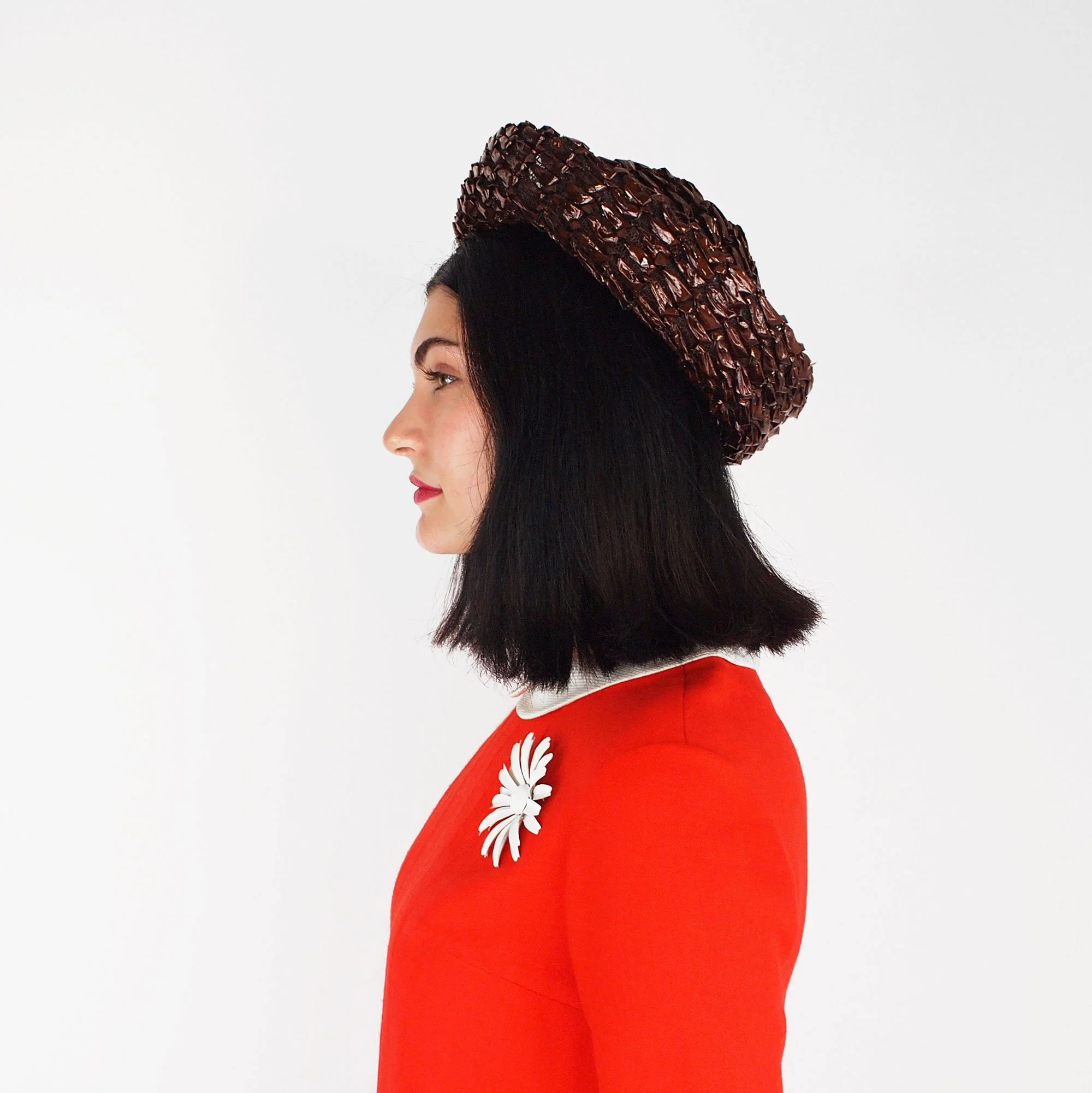
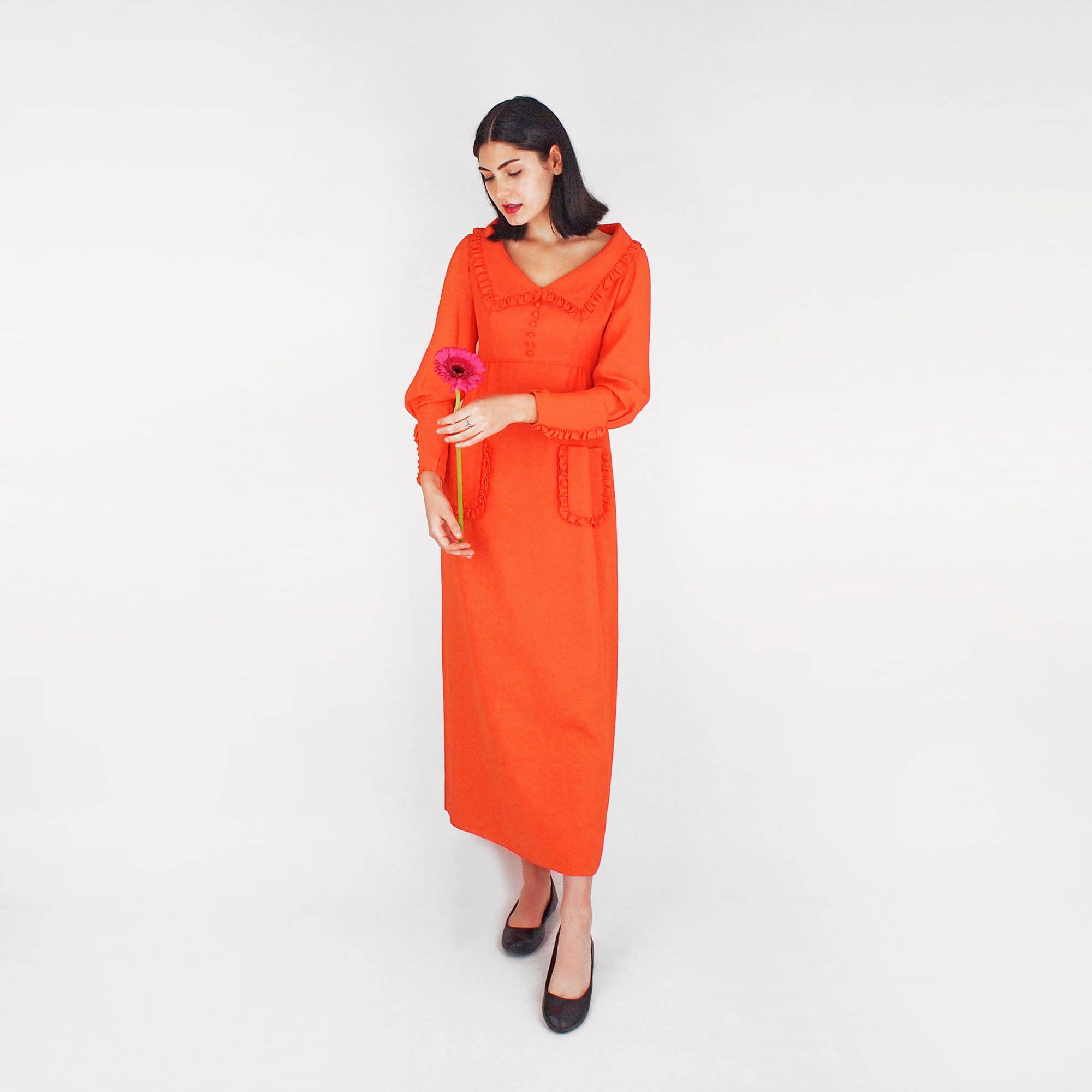
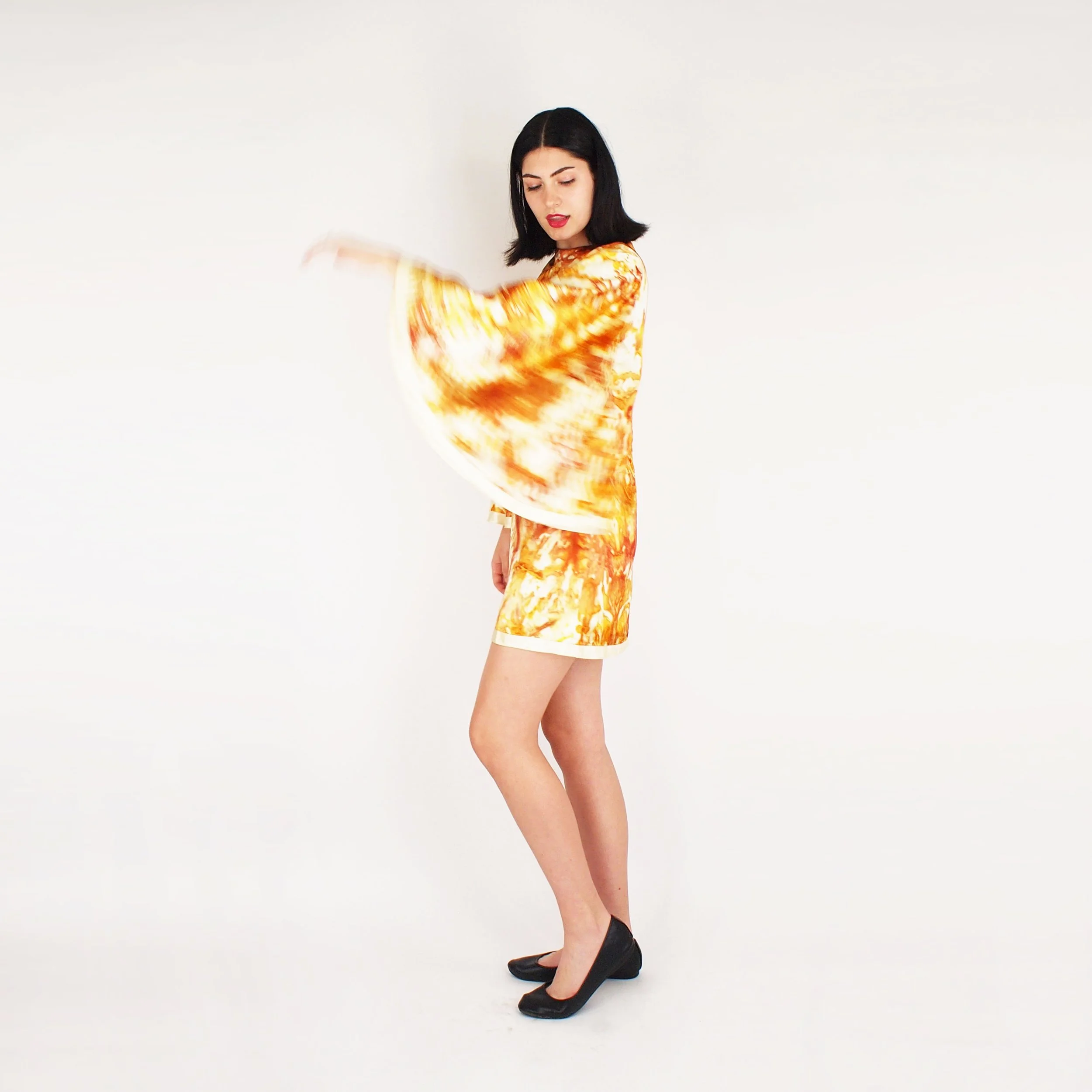
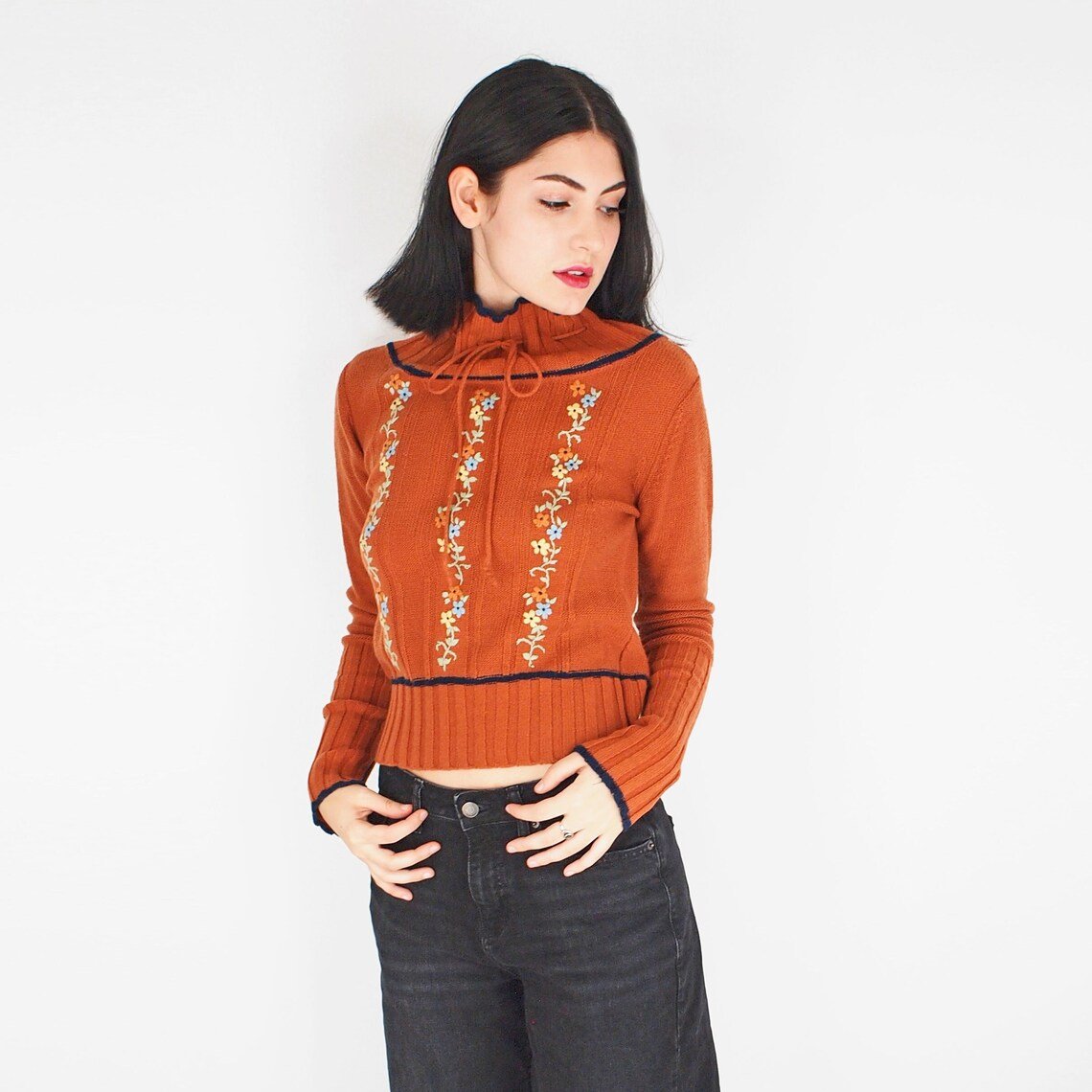
Two favorites from the 1970s in verrrrry 70s brick and burnt orange: The Roncelli set with train still had its tags on! Be still my vintage-loving heart!
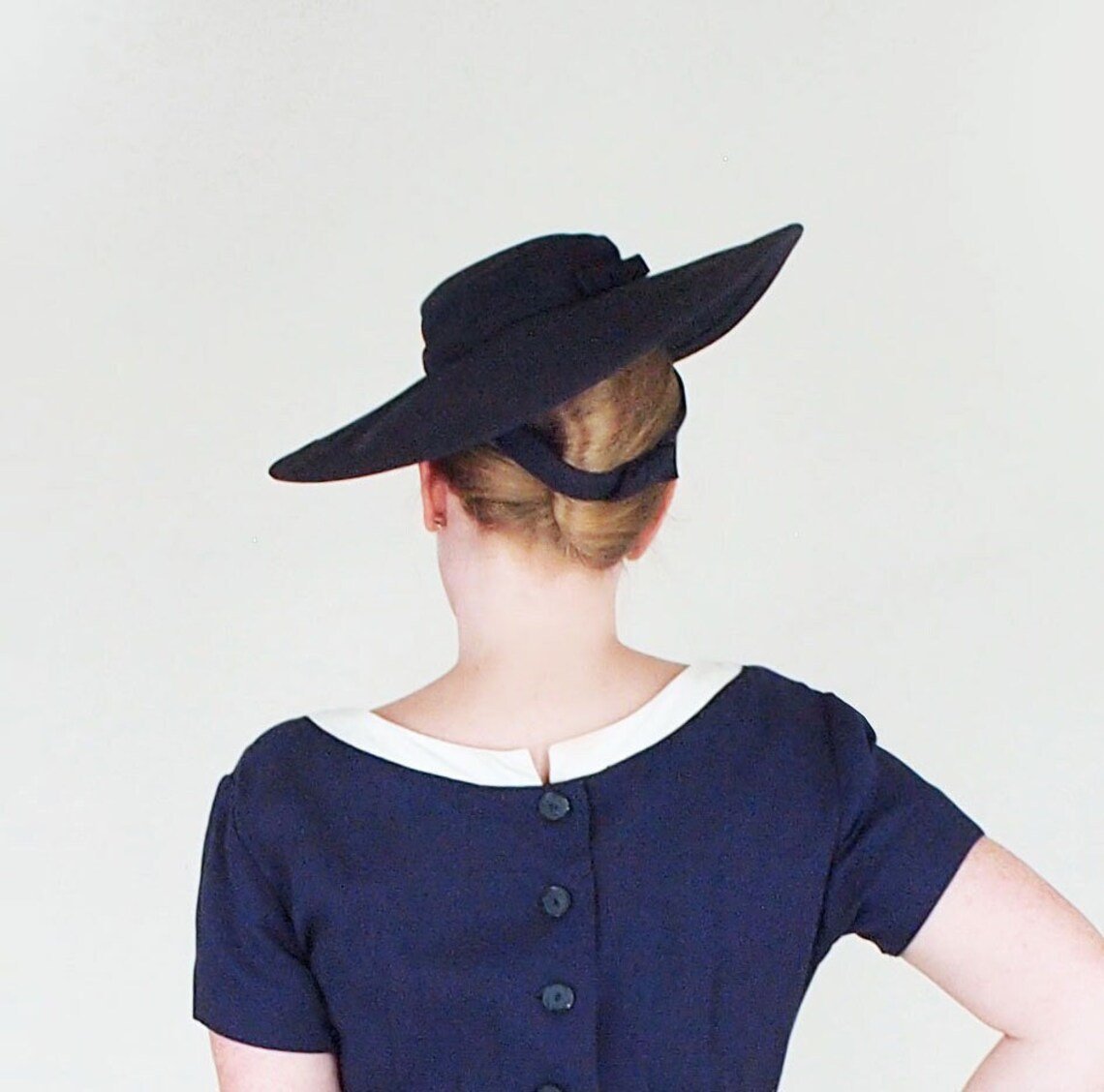
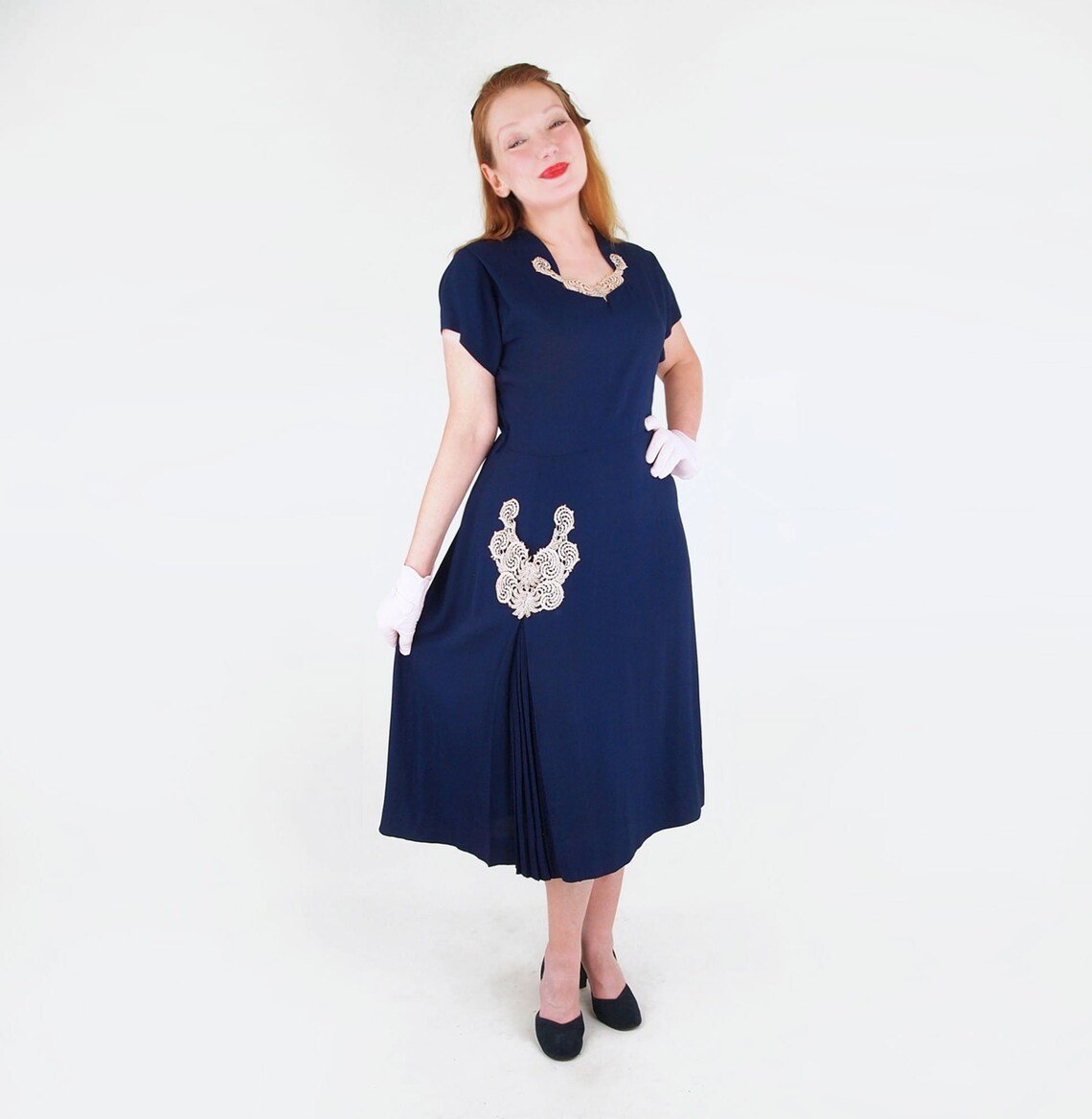
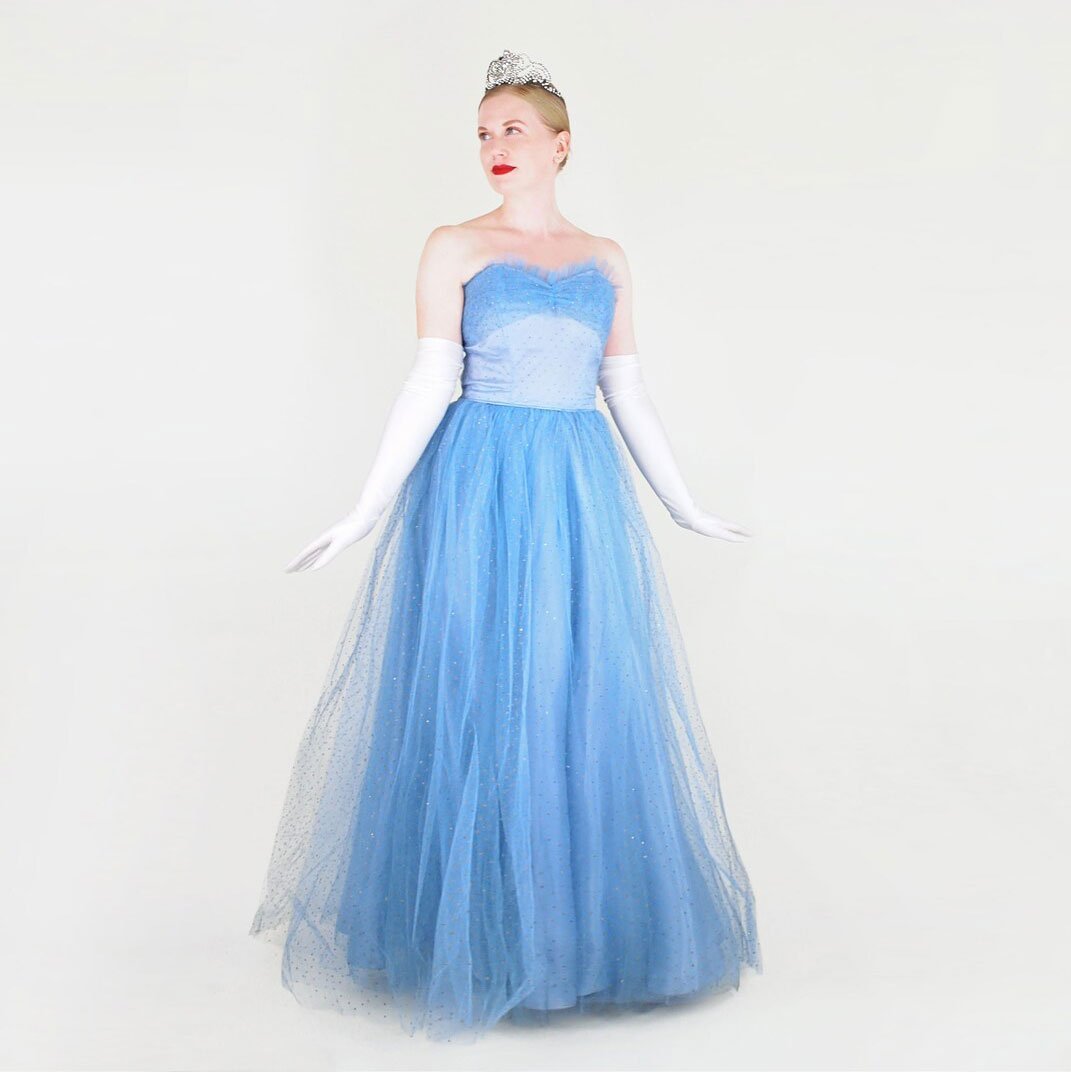
I was trying to find some help with modeling during the summer when out of the blue I thought of a wonderful vintage-loving local weekly newspaper writer, Chey, who looked like a princess in shades of blue. You can meet her in my blog.
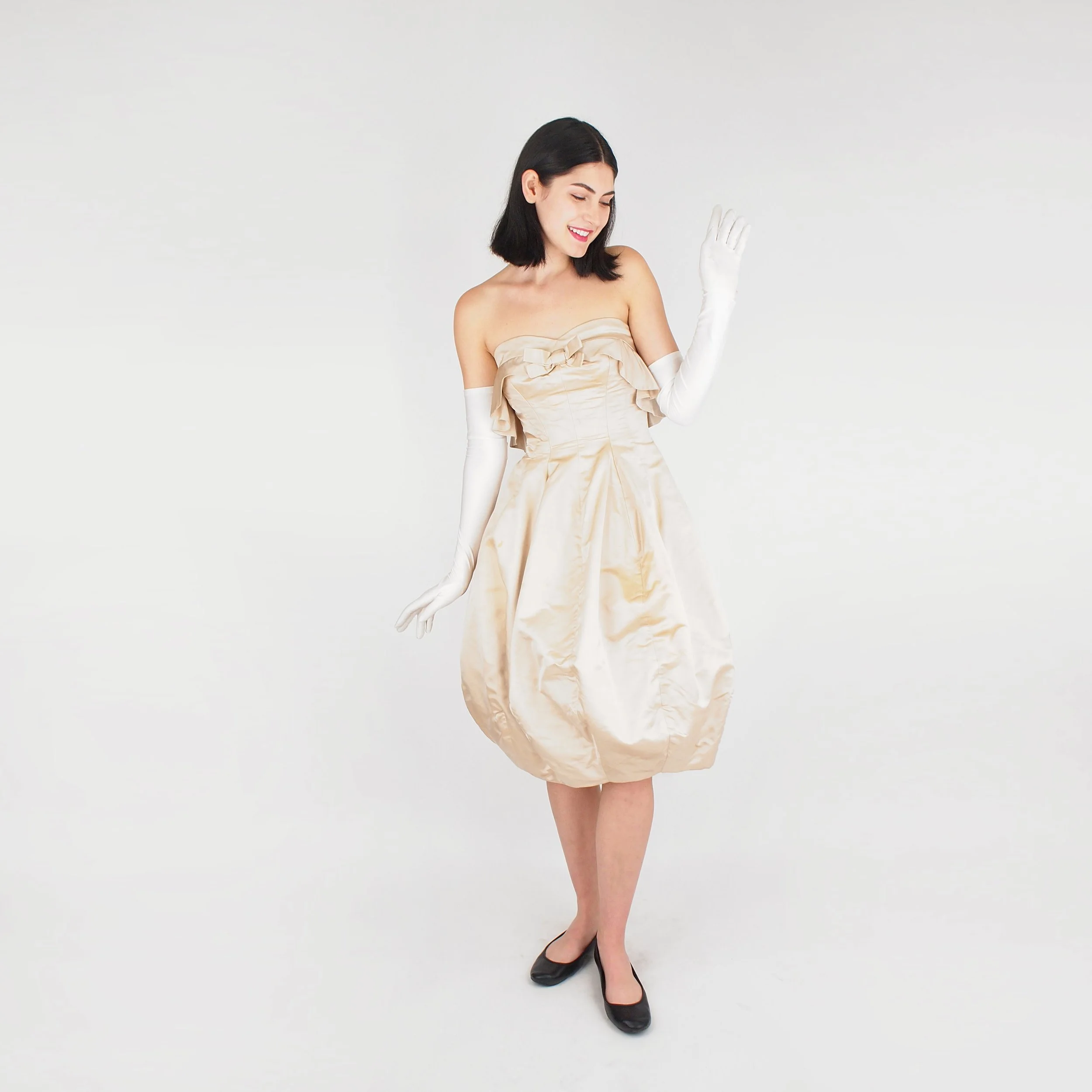
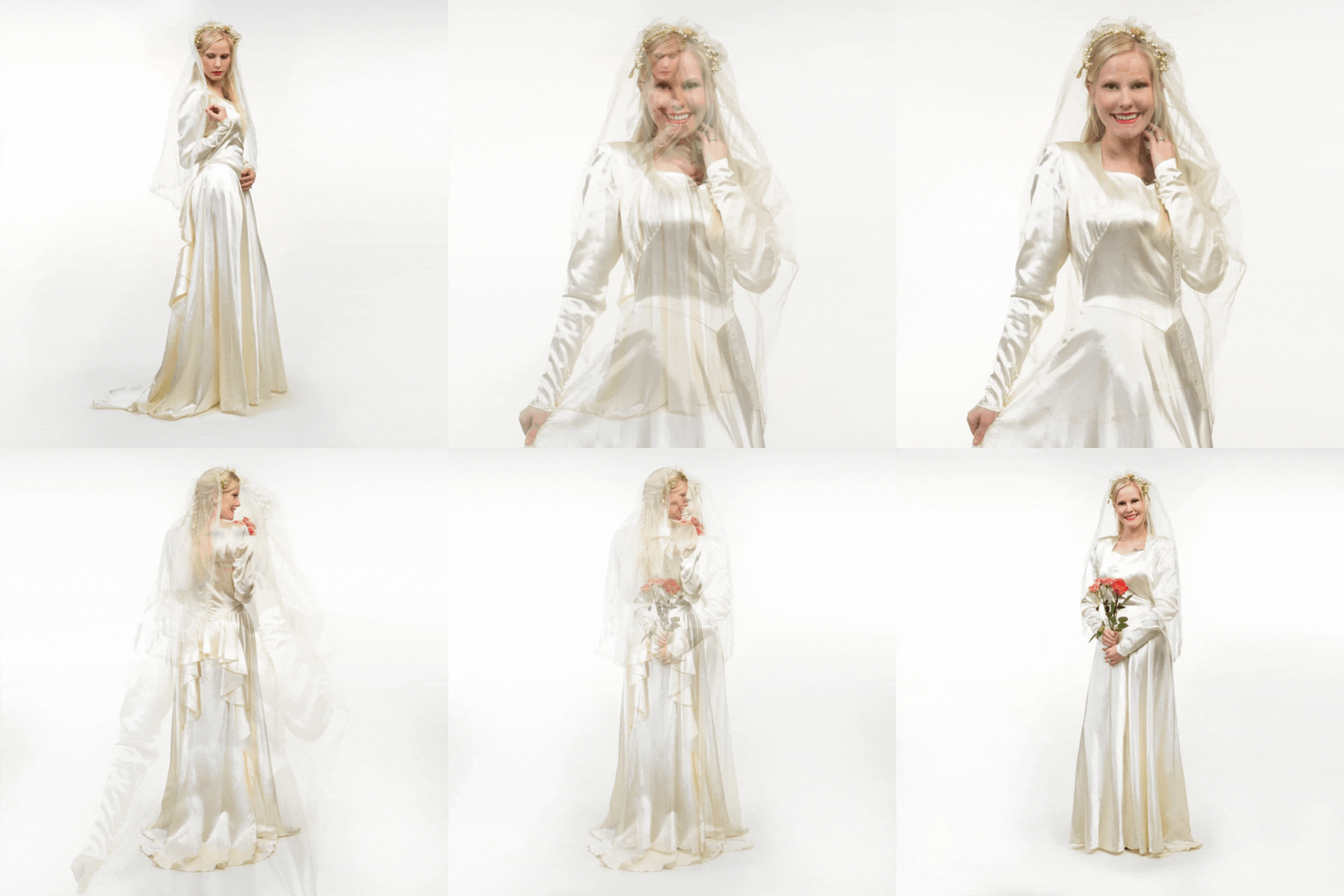
For me, it is difficult to sell vintage wedding dresses. I have collected very few to sell, and usually only if they are in absolutely excellent shape, not extra-small, and quite interesting. This dress is all of these. Dating from the late 1940s by my estimate, it became a bride’s gown in Japan this year. I wish her every happiness! 結婚おめでとう!
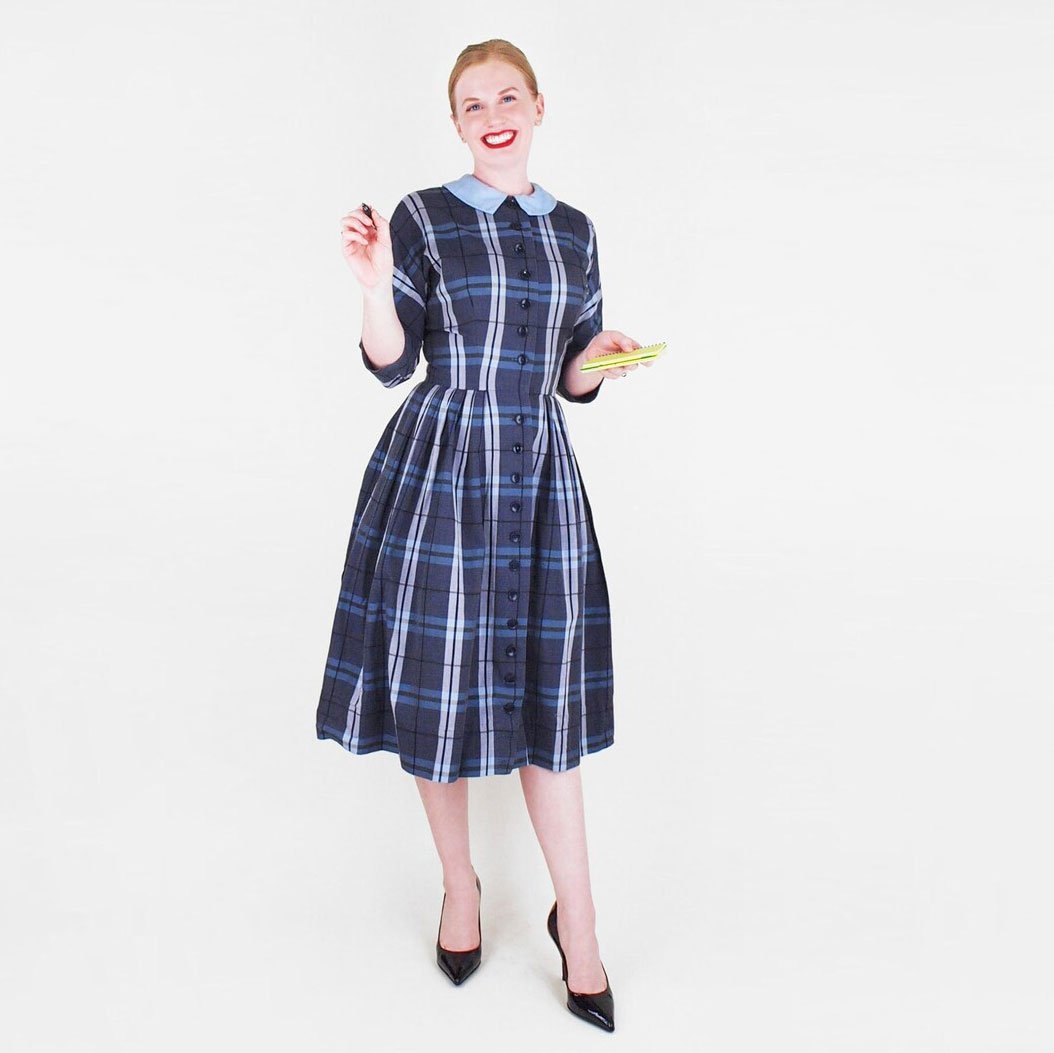
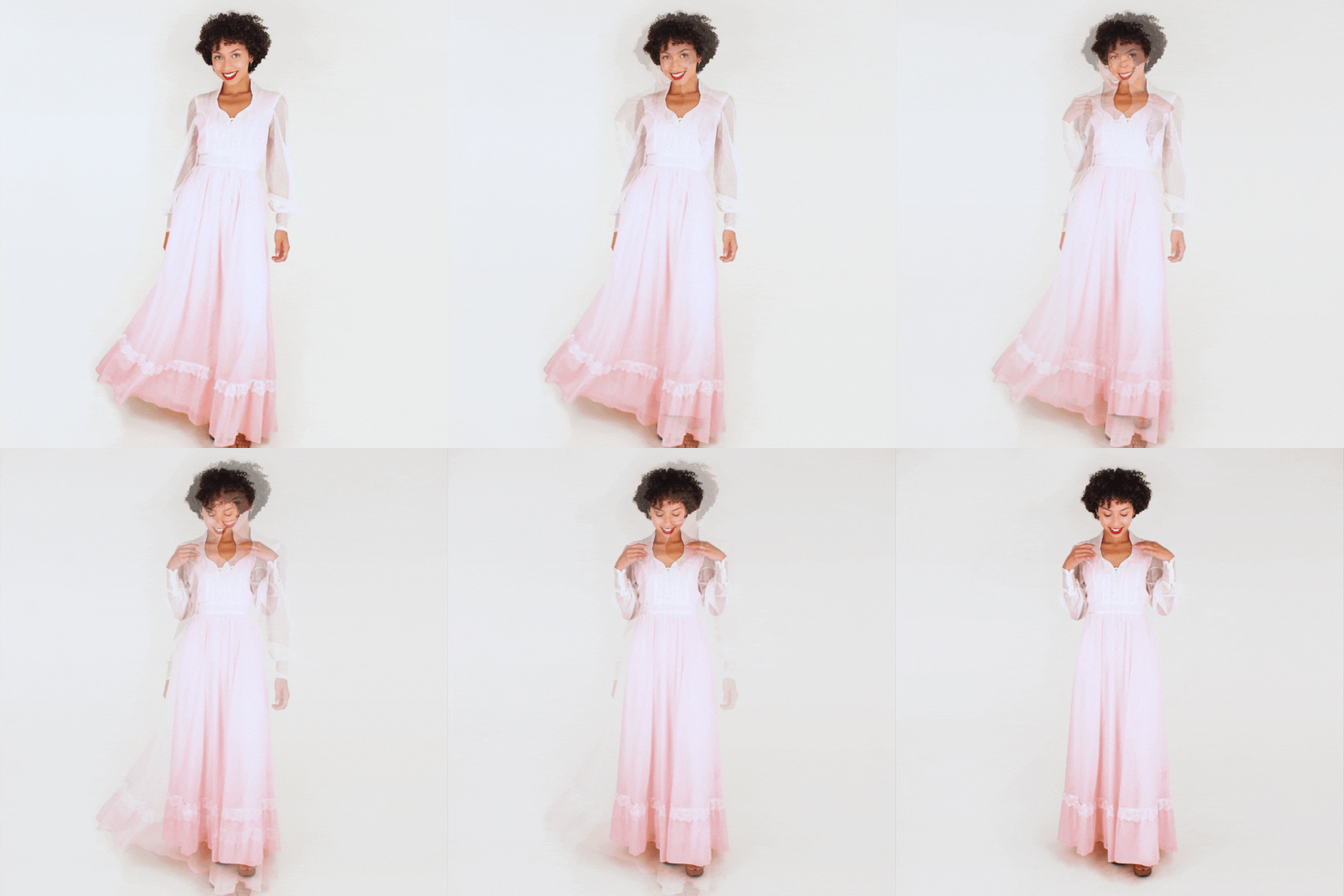
Was 2023 ever the year of -cores! Mermaidcore, Barbiecore, Regencycore and, of course, Cottagecore, which these two Gunne Sax dresses (the blue was made from a Gunne Sax pattern) exemplified. What’s your prediction about 2024’s trends? I have ideas, but I’m going to share those in another blog.
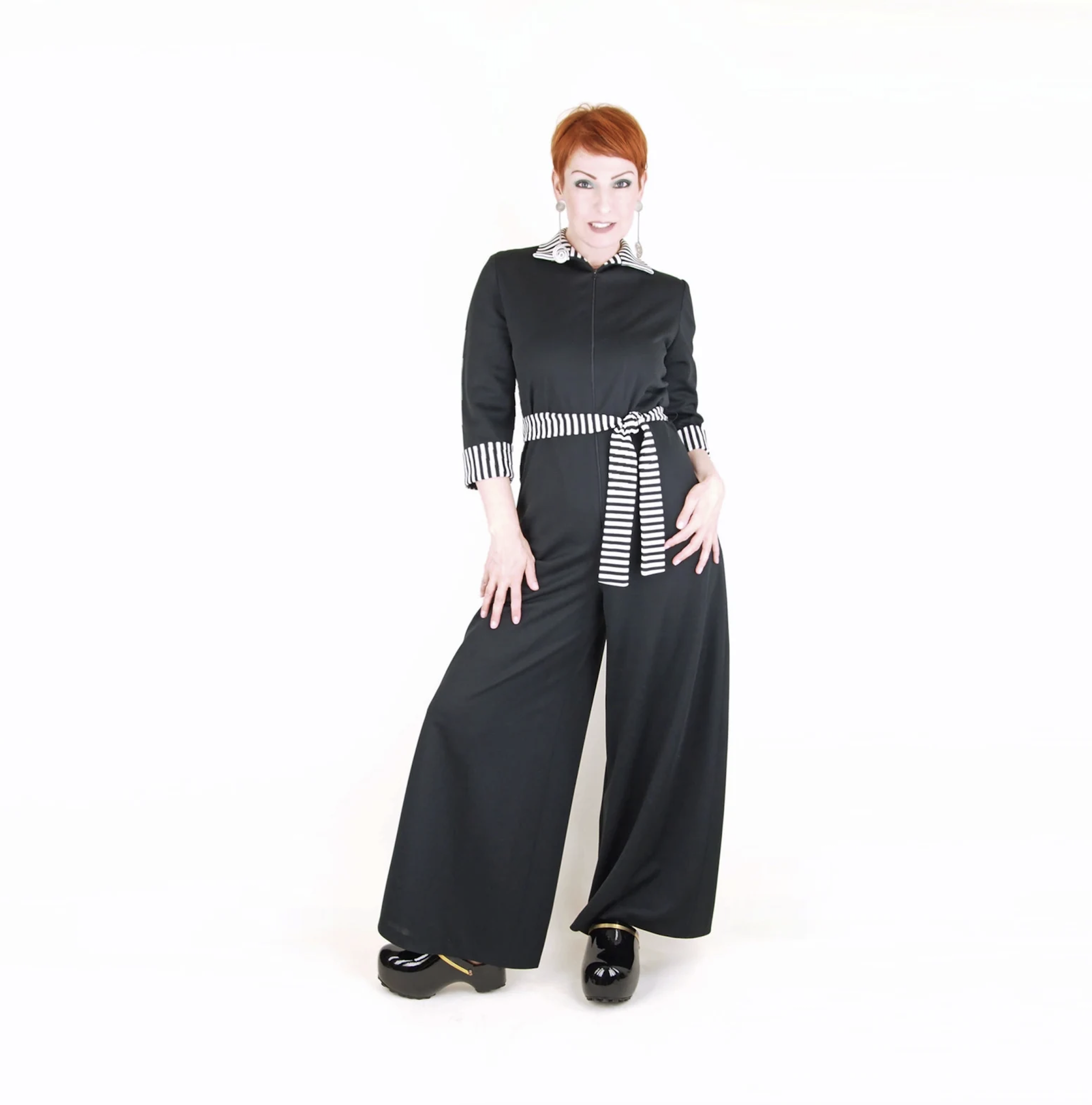
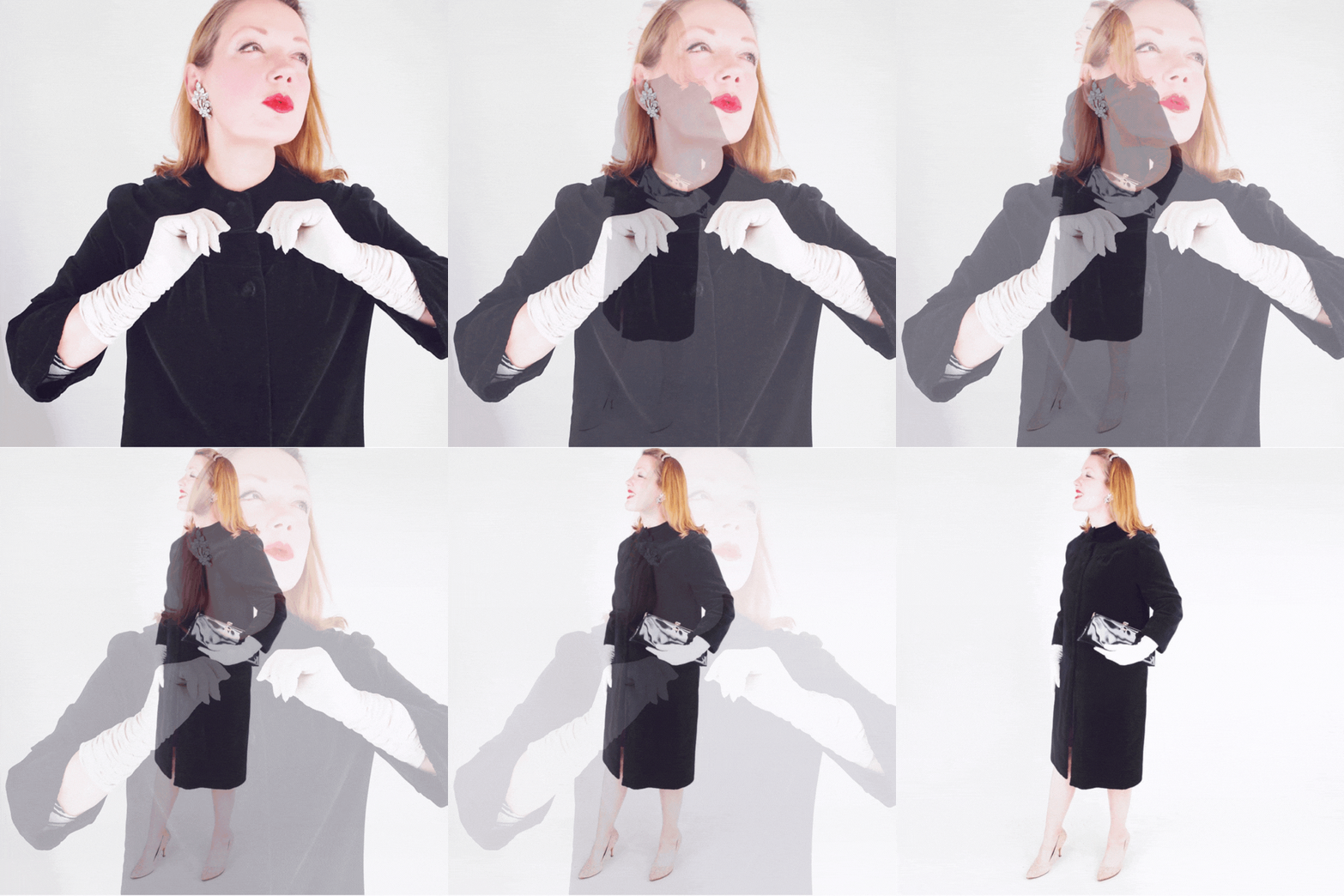
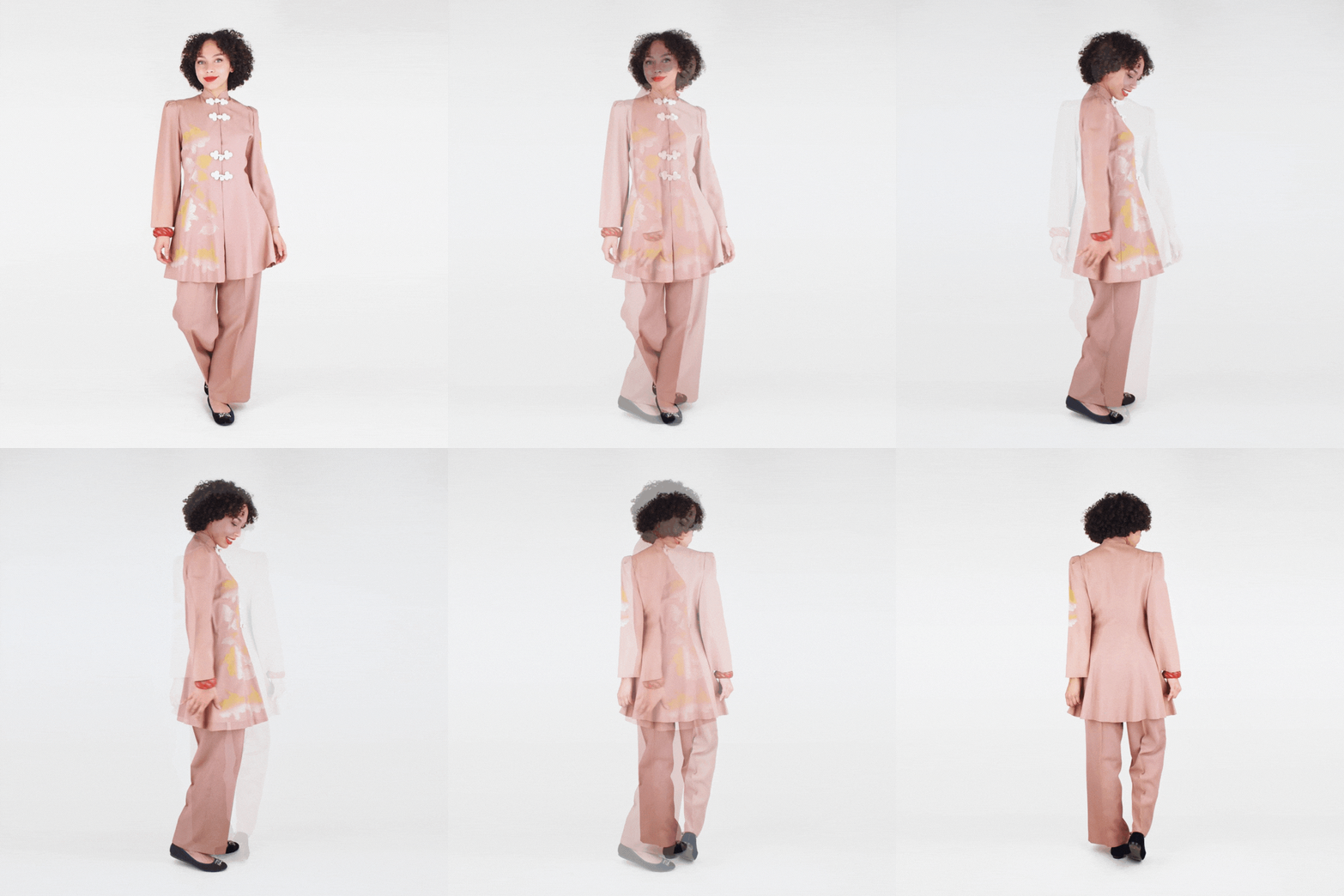
I don’t know if there is any -core involved in this, but when I offered these outstanding lounging/hostess pajamas, they received a lot of love!

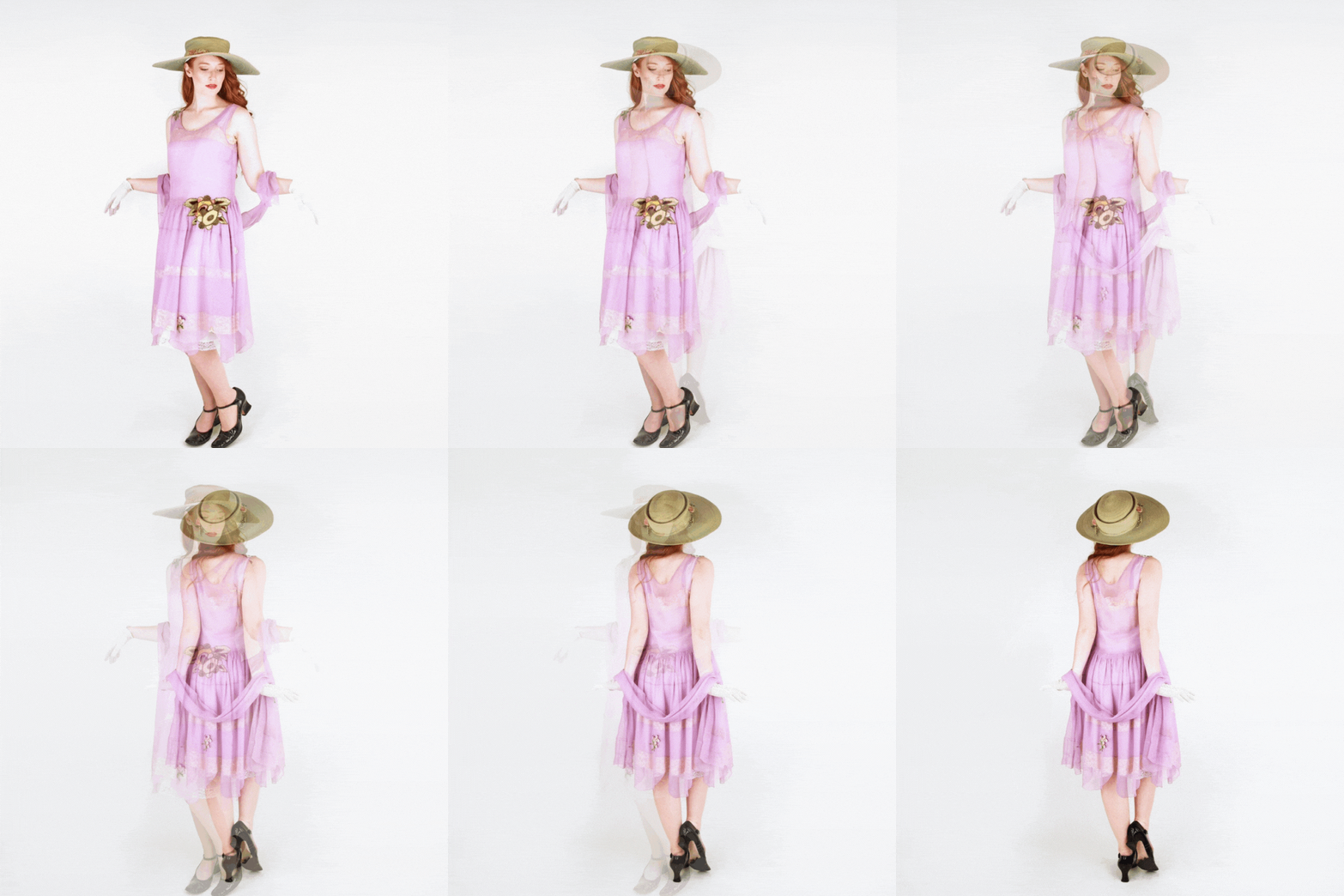
This spectacular but flawed 1920s silk dress found its forever home. I understand the challenge of caring for ephemeral objects, and I so appreciate the person who took on this beauty.
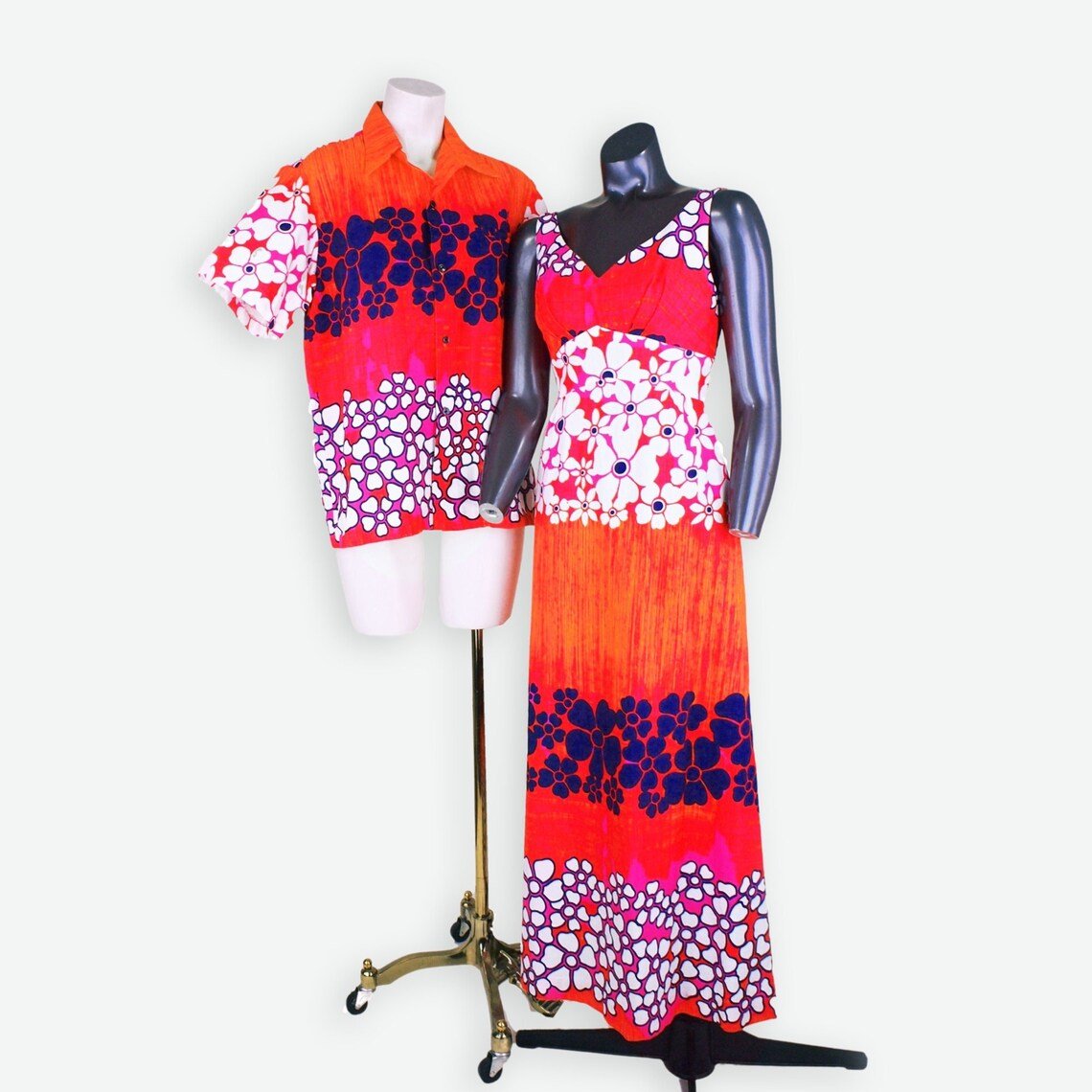
There’s never a year in which I don’t offer and sell vintage Hawaiian wear. This year, along with the rest of you, the wildfire on Maui deeply troubled me, and I sold a his-and-hers 1960s-70s set with 100% of proceeds going to the Maui Humane Society. MHS has done spectacular work reuniting pets with residents and treating animals that had no home.
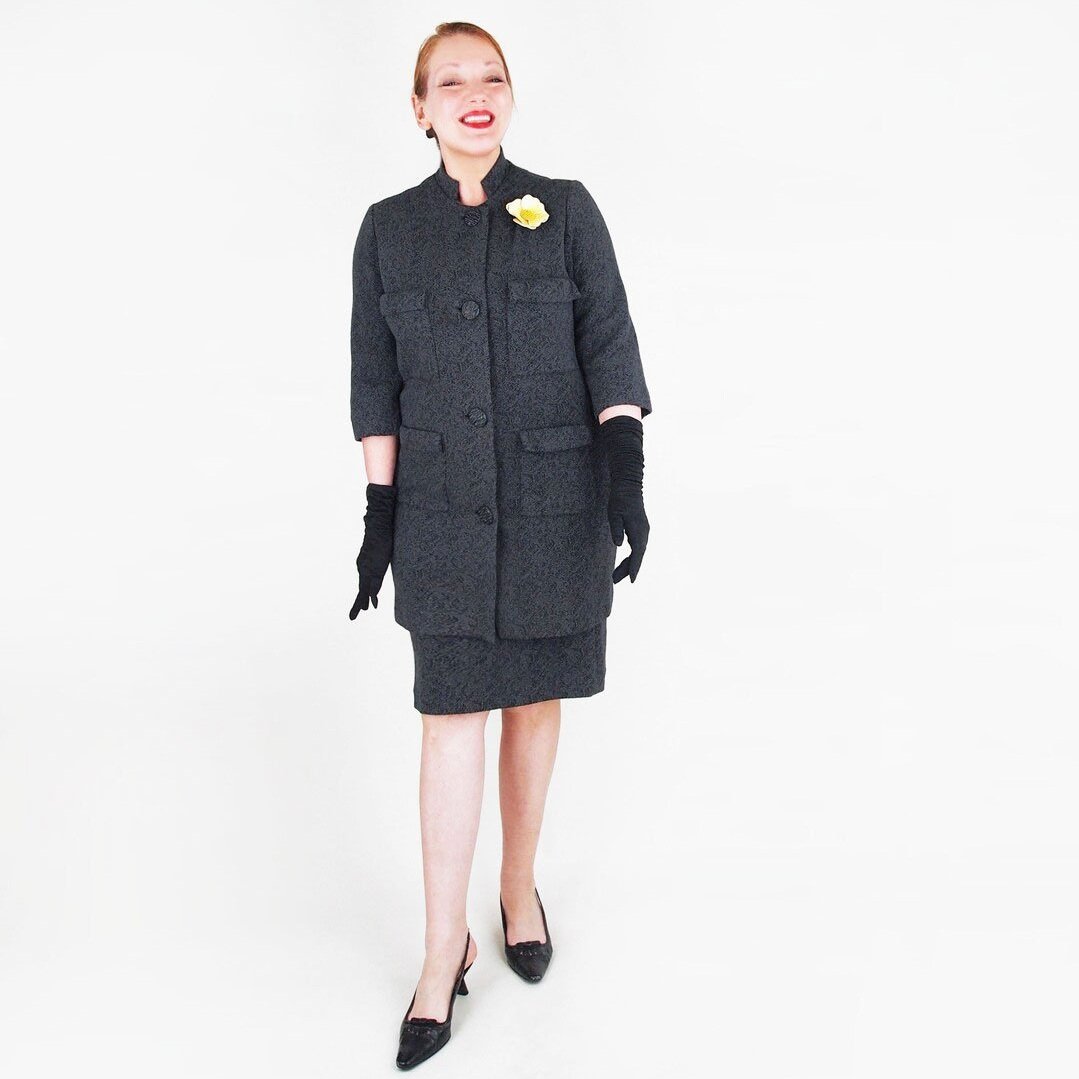
There’s nothing more classic than black and gray, and it’s great to have both in one reversible coat!

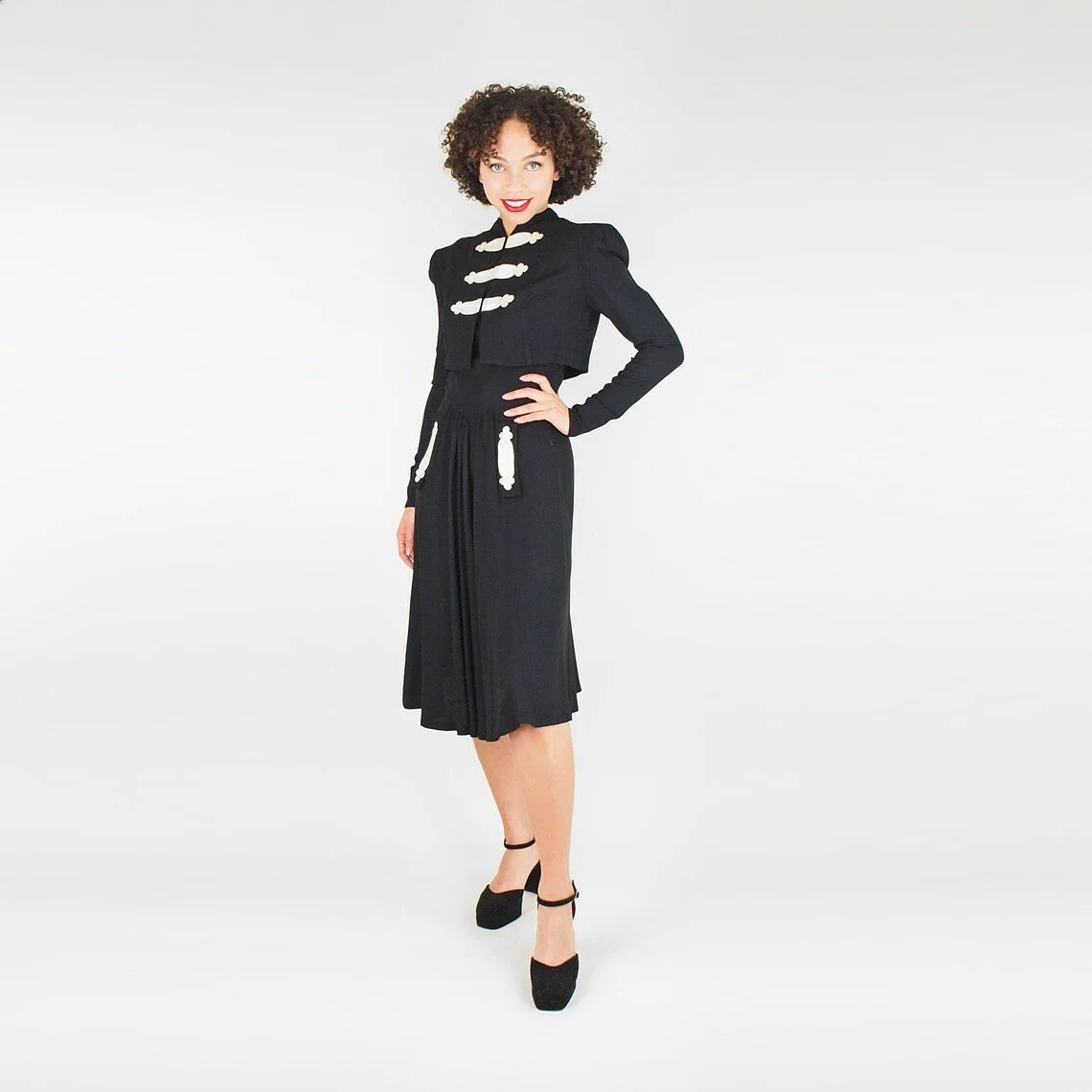
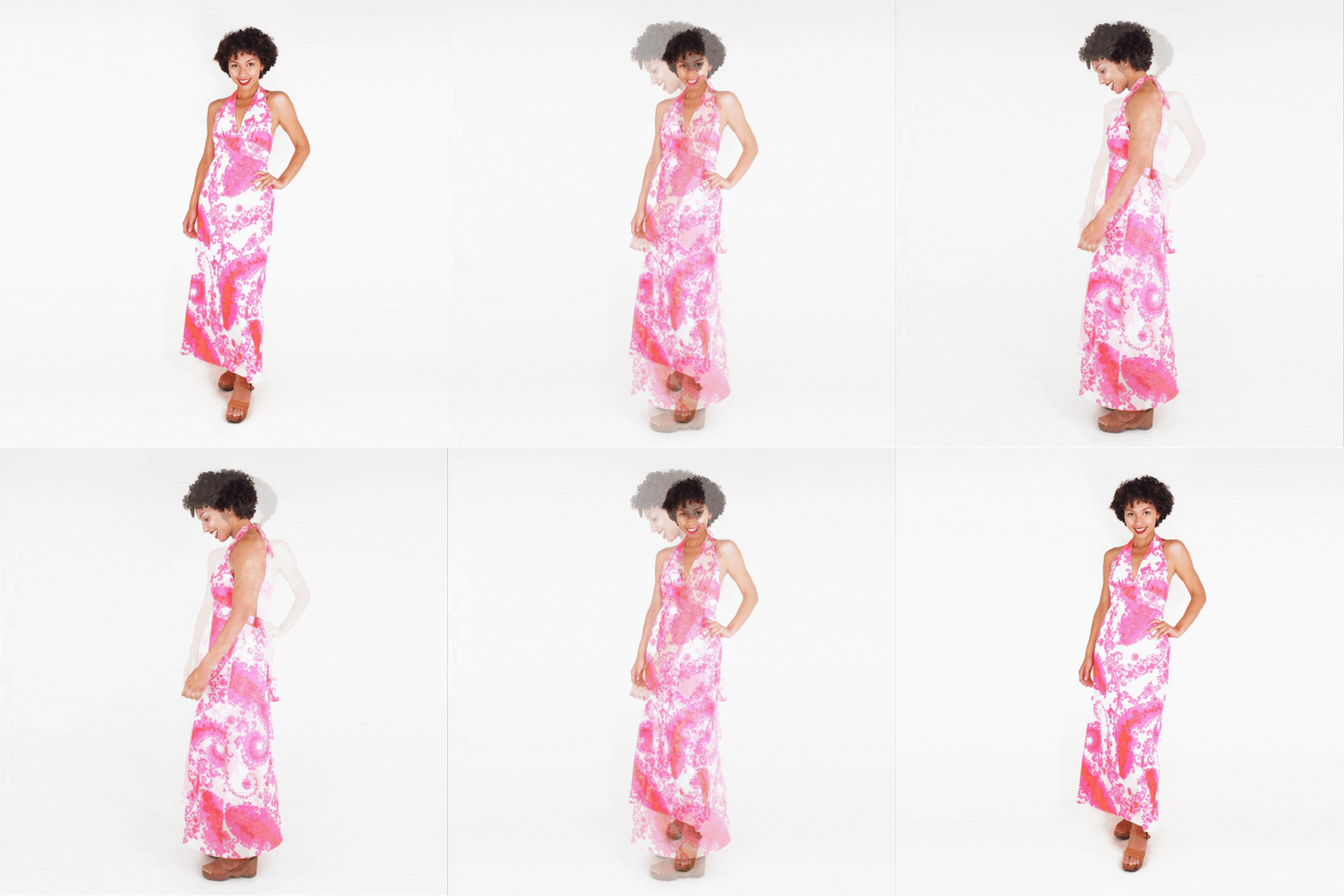
Then there’s the intricacy you find with vintage fashion—can you even imagine finding something like any of these new?
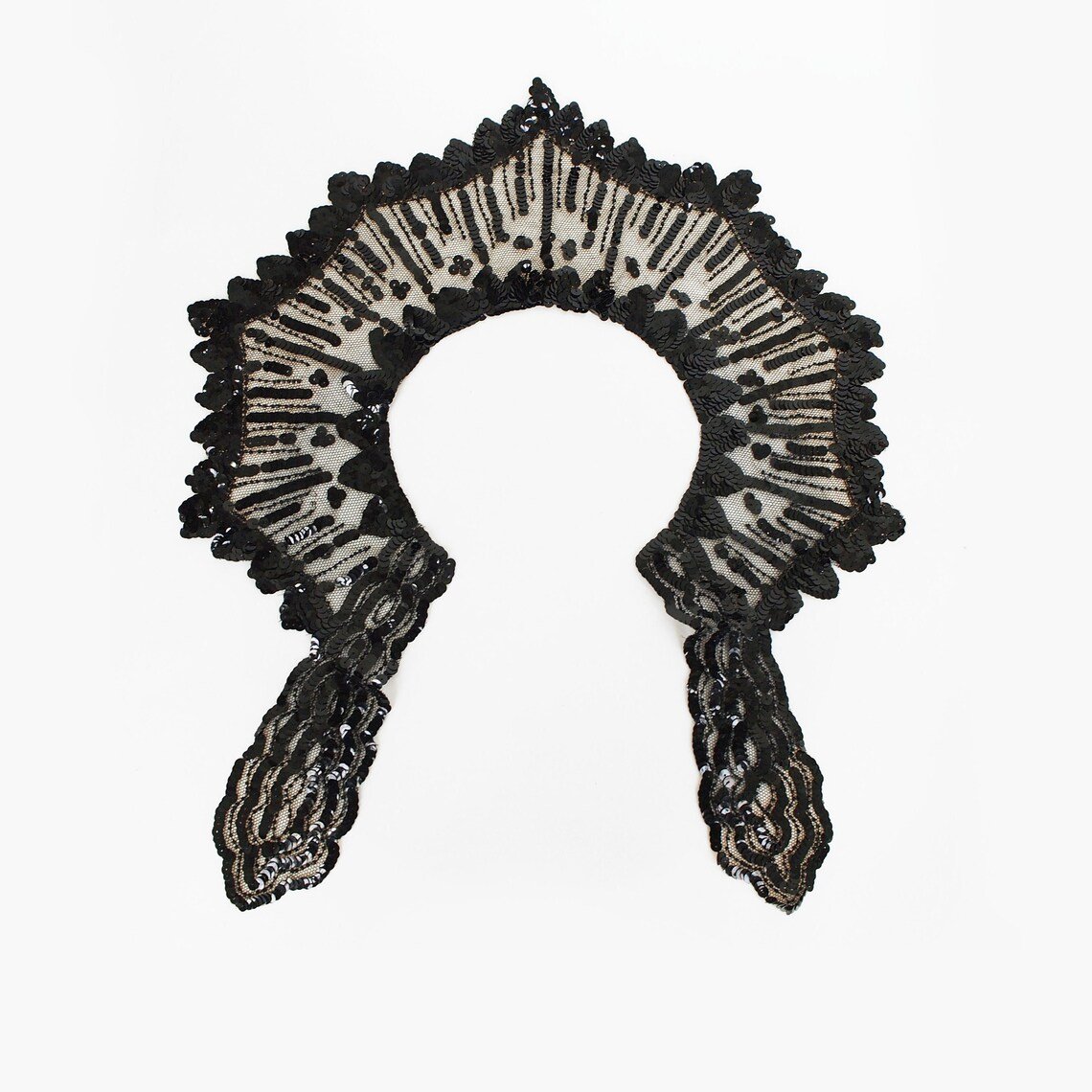
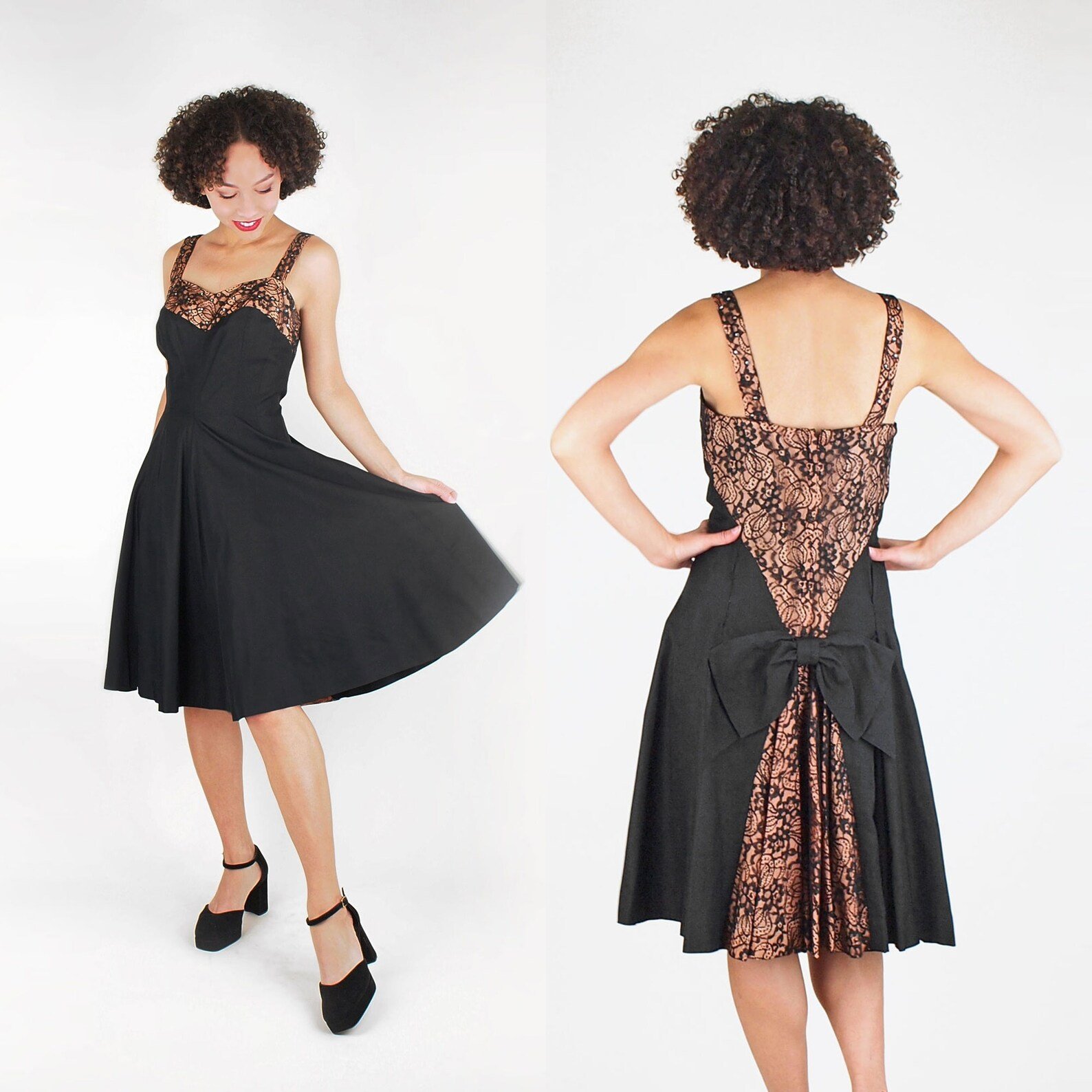
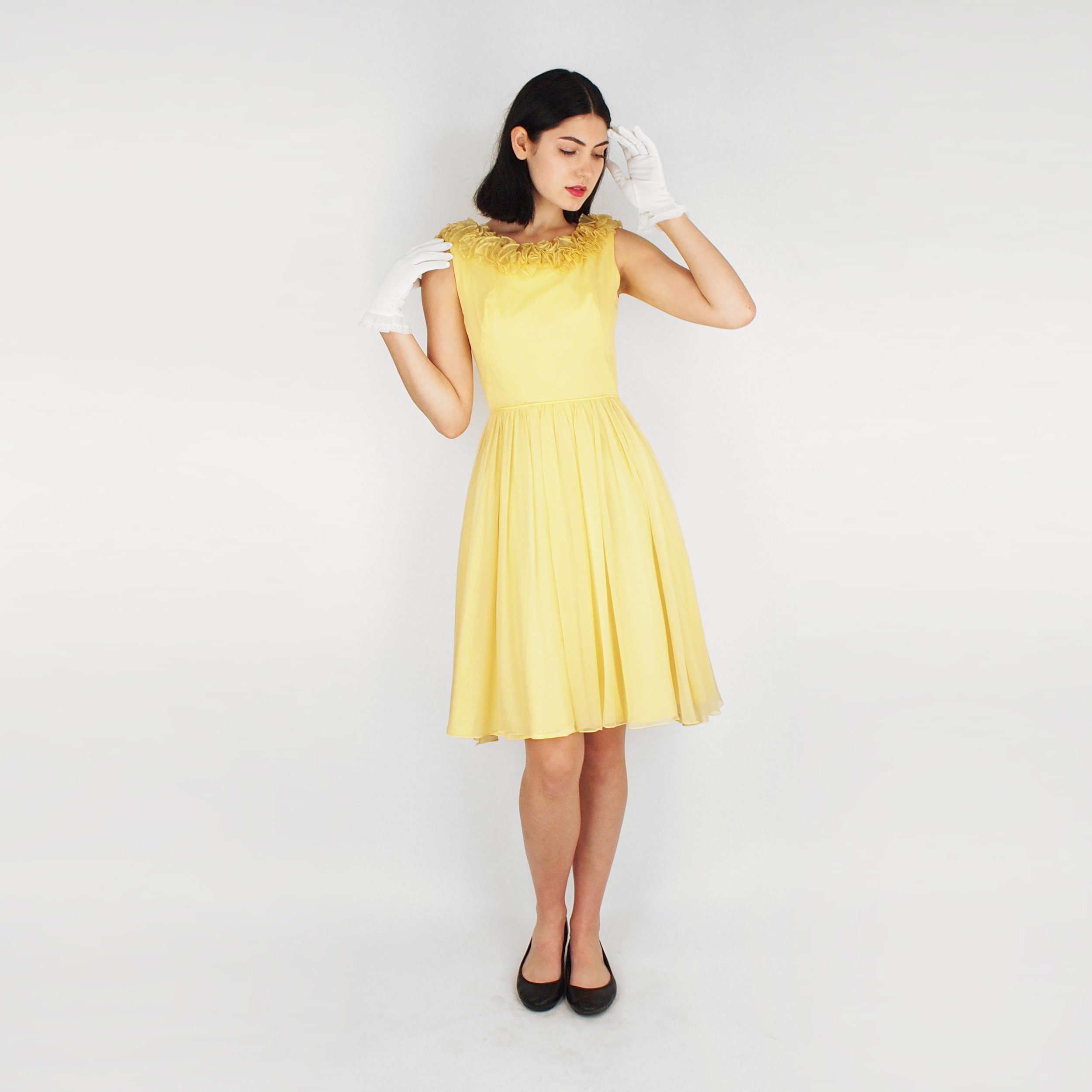
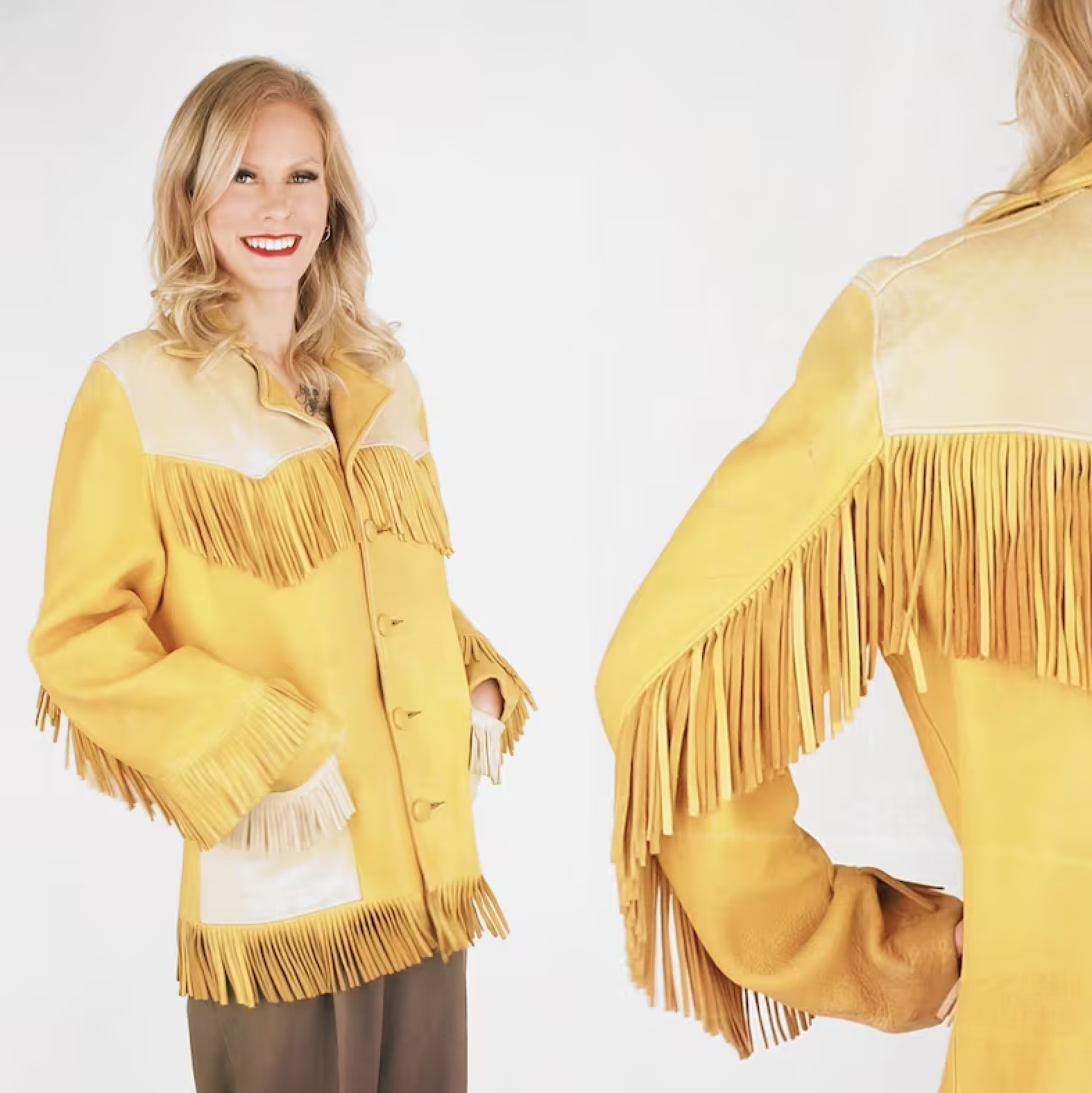
The bright thing at the bright time: There doesn’t seem to be any slowing down of this trend!
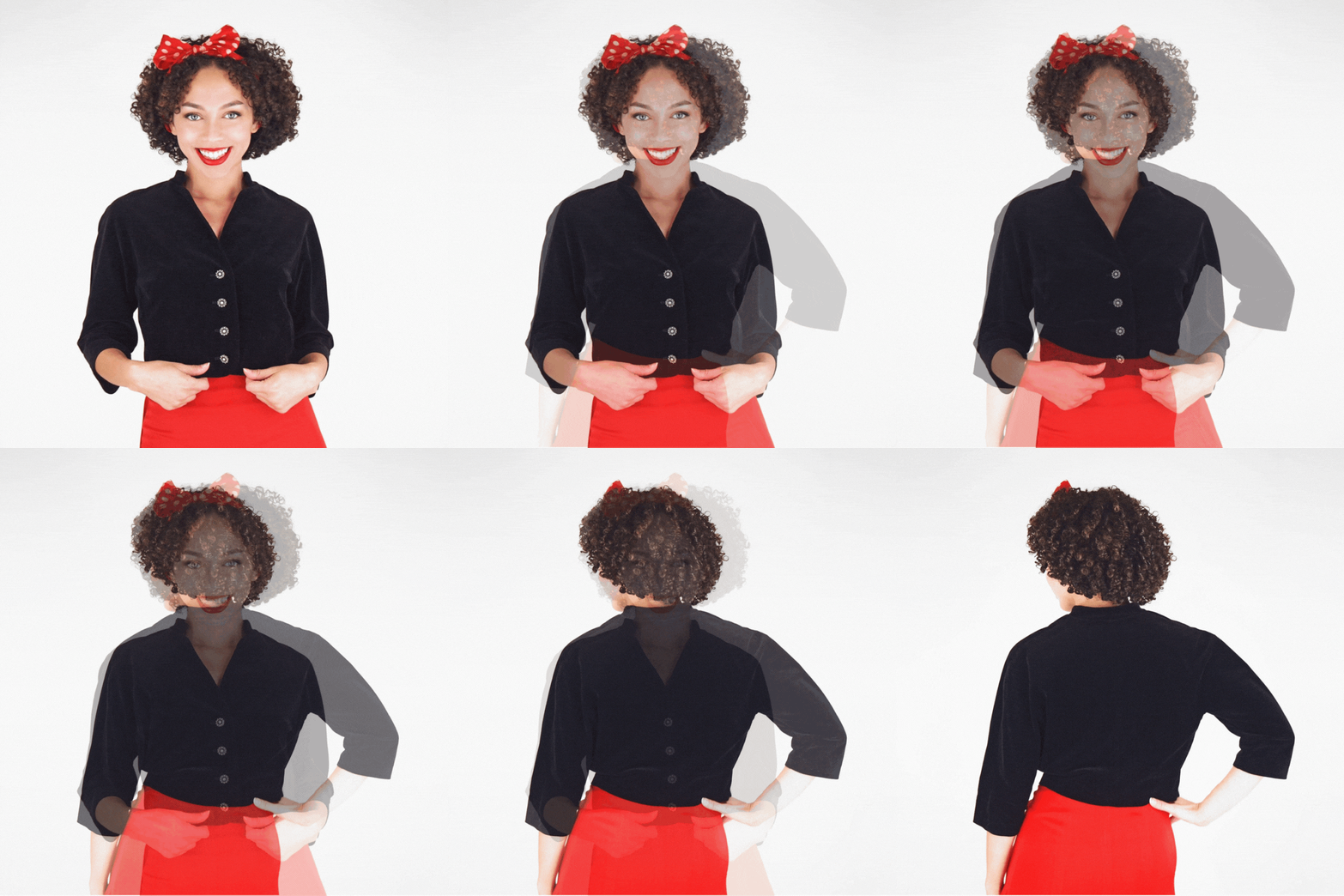
The pop of red with black—it’s the cherry on top!
Here is just another chance to remind everyone that vintage fashion is the greenest way to dress.
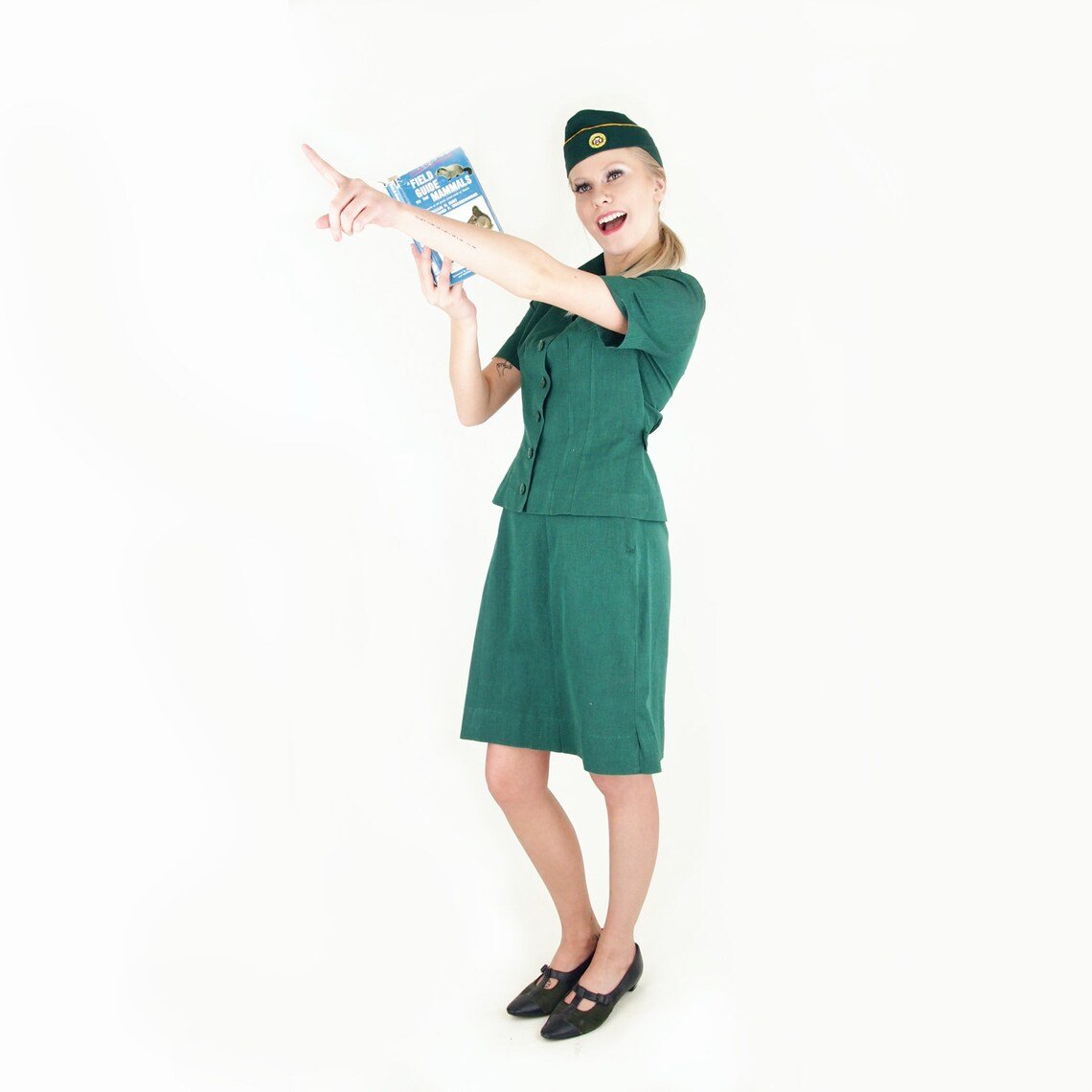
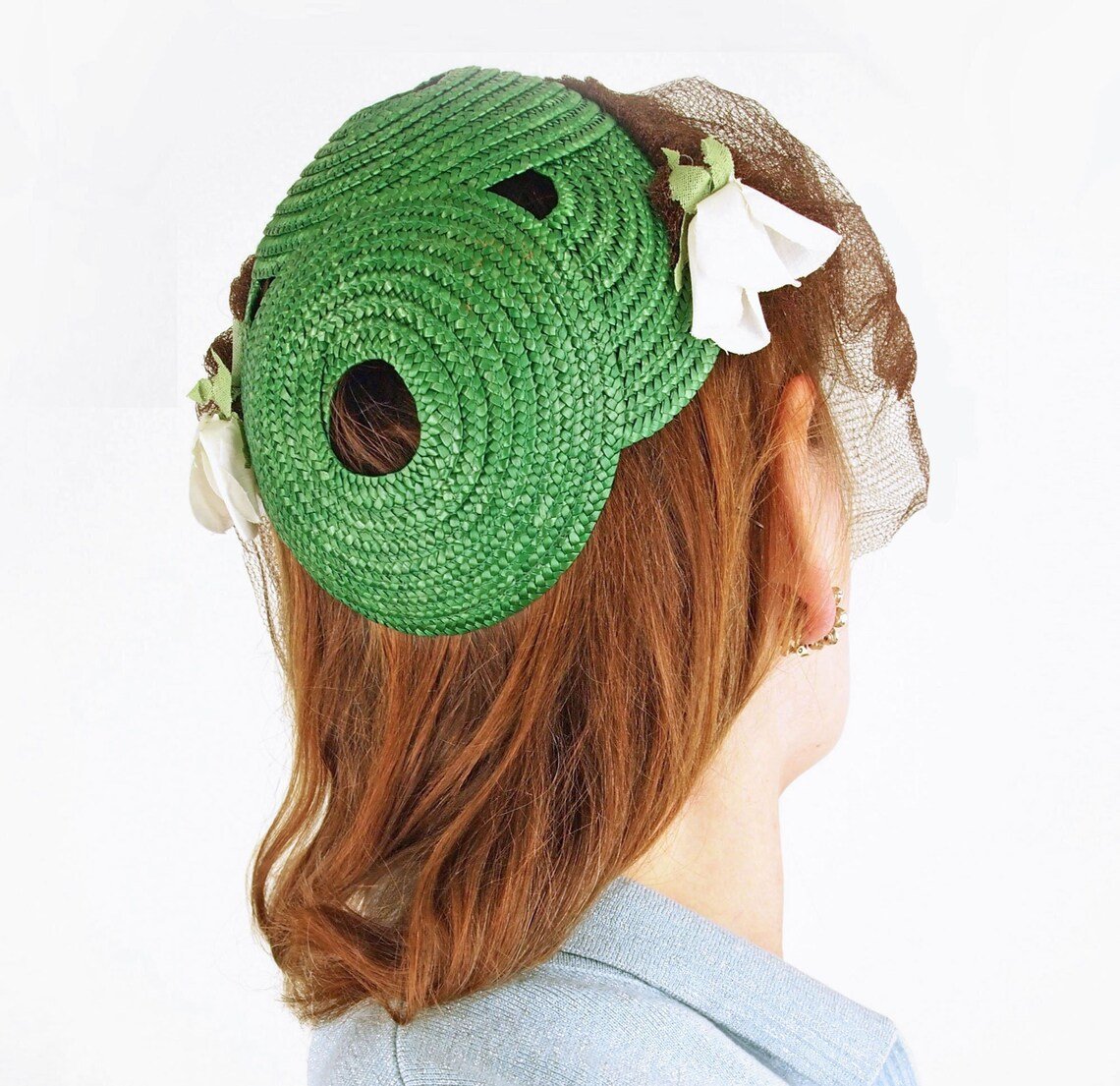
If you are like me, you want to do whatever you can to help the planet with your everyday actions, and vintage fashion is a wonderful and accessible thing to do. How to feel extra good about your purchase? As always, I donate 10% of my profits to Save the Manatee Club for the protection of this beloved and endangered species. I also give $1 for every sale to One Tree Planted, which plants a tree for each dollar received. In addition, 100% of profit on items in the Pink Heart Shop of my Etsy store benefit Dress for Success to help women thrive in work and in life. (Psst: Some of the best items I offer are in the Pink Heart Shop!)

Other things that happened this year?

I was honored to have the last word on Huff Post, reached 4,000 sales on Etsy and found the best possible home for this incredible Ice Capades jacket.


You read my goal for the year, but besides health, I’m planning on sharing with you as many wonderful vintage finds as I possibly can. Just you wait—you’re going to love what you see!

What is your focus for 2024? What’s on your vintage fashion wishlist? What is making you smile?

Comment

Comment

Dress like a star at home

A few years ago, I made it a resolution to dress like a star at home. I thought of my existence at home as a substantial chunk of any week and decided that dressing for the occasion of day-to-day life seemed like a worthy goal. However, I didn’t want to be uncomfortable, so I thought of the elegance of vintage loungewear and hostess garments. Maybe this interests you too?

The allure of vintage fashion extends to at-home style

There’s a timeless elegance in the comfort and glamour of wearing vintage loungewear and hostess garments at home. In an internet-paced world, where comfort often takes precedence over style, vintage fashion offers an escape to an era where time, beauty and sophistication intertwined.

Imagine yourself lounging in a silk robe adorned with delicate lace trim or bold embroidery reminiscent of old Hollywood glamour. The feeling of the fabric against your skin, combined with the craftsmanship, transports you to another era. Vintage loungewear is not just clothing; it is an experience, a way to embrace the worthy arts of relaxation and self-care.

Hostess garments, worn by our foremothers for informal-but-stylish entertaining at home, exude an air of charm and sophistication. Whether you are entertaining guests or simply enjoying your own quiet company at home, wearing a vintage hostess outfit instantly elevates the ambiance and invokes refined glamour. Look for intricate details, flowing silhouettes, opulent fabrics and beautiful prints that allow you to channel the grace and poise of hostesses from eras past. Even your cat may notice!

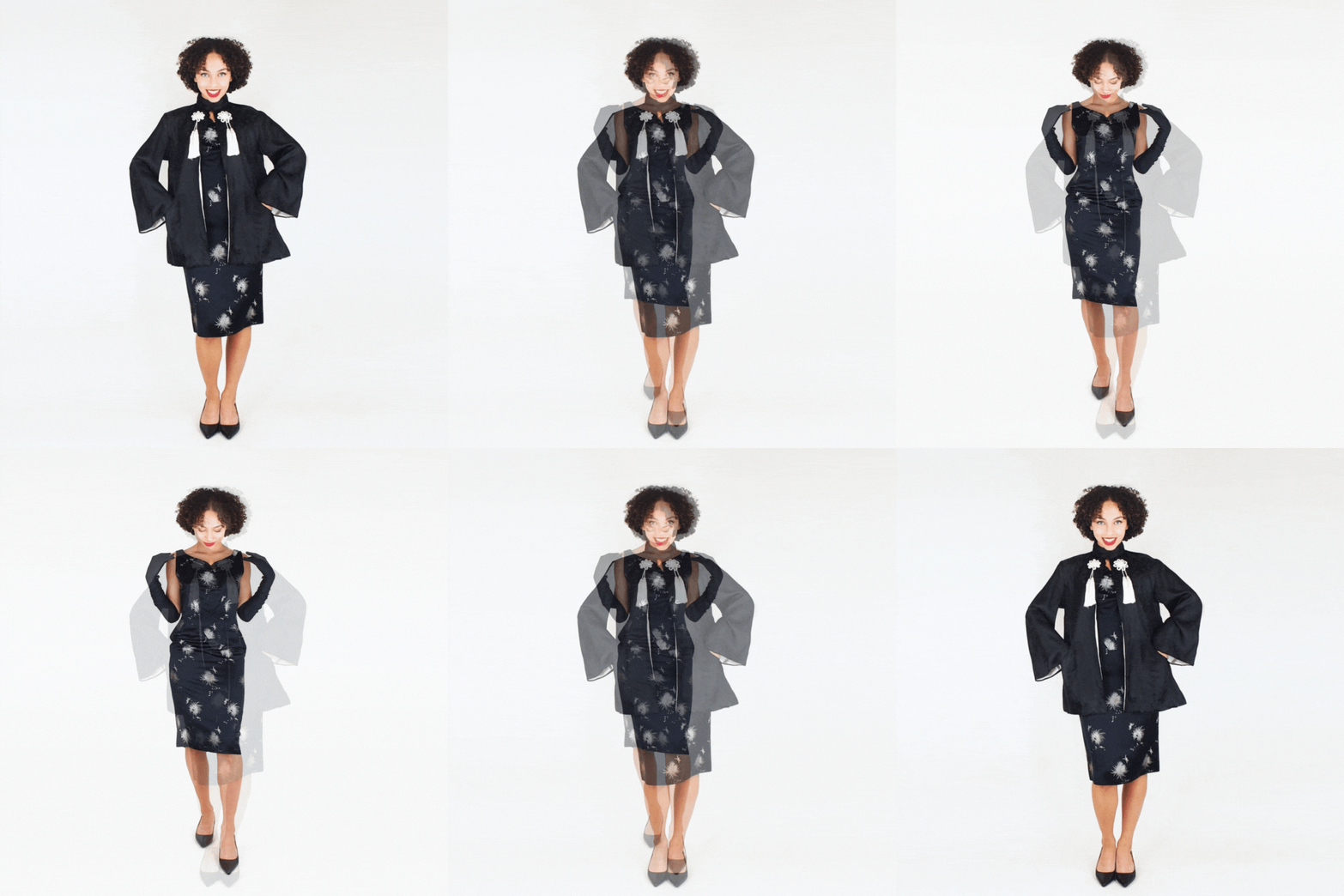
And another thing: You most definitely can wear these pieces outside the home now! The taboos surrounding clothing meant for in-home wear are no longer observed (at least for some of the world), and it looks great to head out with a leather or denim jacket over a vintage satin nightgown, or a vintage kimono robe over a simple black dress.

But it’s not just the aesthetic appeal that makes vintage loungewear and hostess garments irresistible and more versatile than you might expect. The quality and attention to detail that define these pieces ensure a level of comfort that is hard to beat. The fabrics used are often natural and breathable; silhouettes are designed to flatter without constraint, allowing for ease of movement without compromising on style.

In a world where comfort often comes at the expense of finesse, vintage loungewear and hostess garments allow you to have the best of both worlds. These represent a celebration of the artistry, craftsmanship, and beauty that can elevate your day-to-day life.

All items from Vintage Fashion Guild members

Top Row: 1960s to 70s leopard-print rayon/acetate robe from NobleVintageCothier on Etsy; 1940s to 50s white rayon and lace robe from vintagerunway on Etsy; 1930s Art Deco dressing gown from VintageFanAttic on Etsy; 1930s hand-sewn silk kimono with a metallic jacquard pattern of pekinese dogs from magsrags.myshopify.com; 1920s pink silk and lace dressing gown from daisyandstella on Etsy.

Bottom Row: 1950s rose-print polished cotton house coat from VintageFanAttic on Etsy; 1980s butterly-print silk caftan from Wyogems on Etsy; 1950s printed silk hostess dress from StralightVintage on Etsy; c. 1970 wool long tunic dress from my denisebrain shop on Etsy; 1960s black rayon velvet palazzo pants jumpsuit from TheBlackLotusVintage on Etsy.

Comment

Comment

My thanks

Each day, I am fortunate to pursue my passion for vintage fashion, and it is all thanks to you.

You are more than just customers, colleagues, collectors, and historians—you are a community of kindred spirits. Your stories, your style, and your support have enriched my life in countless ways. Even my musings on manatees don't seem to deter you!

You read my blog, my newsletter and my detailed (OK, wordy!) Etsy item listings and take the time to visit my website and share your thoughts. Your encouragement when I succeed and your forgiveness when I falter remind me of what a decent lot we can be. You inspire me to be better, to do better, and to see the beauty in things. Thank you.

As Thanksgiving approaches, I wish you all the happiness that life can offer, and may you be surrounded by all that brings you joy.

And now… On to the pumpkin pie!

Comment

Comment

Manatee appointee

I have been asked by Save the Manatee Club (SMC) to help spread the word that November is Manatee Awareness Month. This is the time of year when manatees travel close to shore and into warm springs and inner waterways, where they feed primarily on seagrass.

Recently, due of decades of human-produced pollution, seagrass beds have been choked out by algae blooms leading to a massive loss of seagrass. This has lead to a horrific loss of manatees from starvation. Those that have ventured out of their winter safe havens risked cold stress and boat strikes. It’s not an easy time to be a manatee.


When SMC reaches out
I will say yes without a doubt
To raise a bit for the manatee
(You know they are my cup of tea!)


So I am doing this all November
Sharing that we must remember
The gentle giant of the sea
Otherwise known as the manatee


With boating dangers and pollution
We must provide a real solution
The many insults that they face
From the reckless human race


Entanglements with fishing line
The lack of veggies where they dine
Endangerment from climate change
Risks across their watery range


Thirty million years they’ve been around
Perfecting the art of slowing down
The manatee is ancient stuff
Although that hasn’t made her tough


The sea cow is a gentle sort
Not prone to take us into court
That’s why she needs an advocate
A helping hand that will not quit


So I support the SMC
Because they help the manatee
They clearly made the admirable choice
To be the sea cow’s human voice


All this month please help by giving
To keep the manatee simply living
To prevent her progress from regressing
—Even five bucks is a blessing!


All year round, I give 10% of my earnings from the small business of selling vintage clothing at denisebrain on Etsy. This November it is my ambitious goal to raise an additional $500 for Save the Manatee Club. You can find my JustGiving page here: https://www.justgiving.com/page/margaret-wilds-1699293737104 Thank you for your support!!


Comment

2 Comments

Wearing colors of fall: Enthralled or appalled?

Pumpkin spice anyone? Or flaming orange-red?

Everyone loves an orange, red or yellow leaf falling but lots of people think they can’t wear the colors of autumn.

Many of you are fearless and wear any color you want. That's the best and I applaud you! However, many people think that the colors of fall are some of the hardest to wear. They think they look offensive in orange, boring in brown and just plain yuck in yellow.

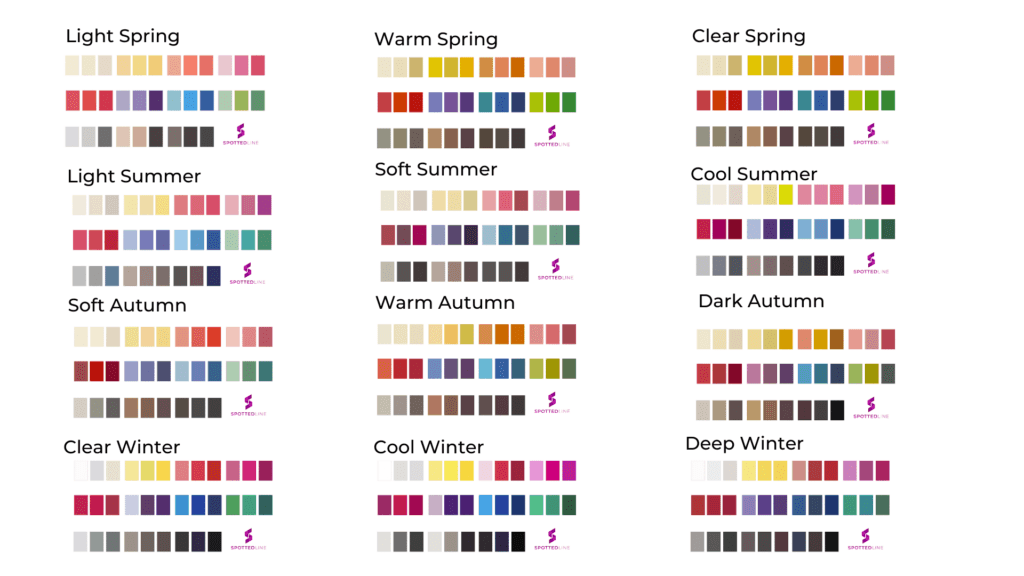
Do you remember those color seasons, such as cool winter and warm autumn? If you're curious, here's one of many webpages that helps you find your color season: https://spottedline.com/color-seasons/

The 12 color seasons palettes as shown on spottedline.com


While anybody with warm colors in their skin, eyes and hair can happily wear a number of autumn shades, there is always a yellow, orange or brown shade that suits any person and makes them happy.

If you feel iffy about this, or just don't like the orange, yellow or brown that is supposed to suit you, try an accessory in your favorite version of the color. Or wear it in a mixture of colors that you like. Another trick is to wear the autumn shade with the color-wheel opposite of the shade if you like that color. You can also give it a try paired with black.

Ready to give it a try? I’ve got vintage fashion in oranges, yellows and browns, some already in my Etsy shop (affiliate link), and some coming very soon. Don’t touch that dial!

2 Comments

Comment

The Triangle Shirtwaist Factory Fire: The horror of the tragedy casts a shadow even to this day

This Labor Day, I feel the imperative to revisit a seminal disaster in our nation’s history, The Triangle Shirtwaist Factory Fire.

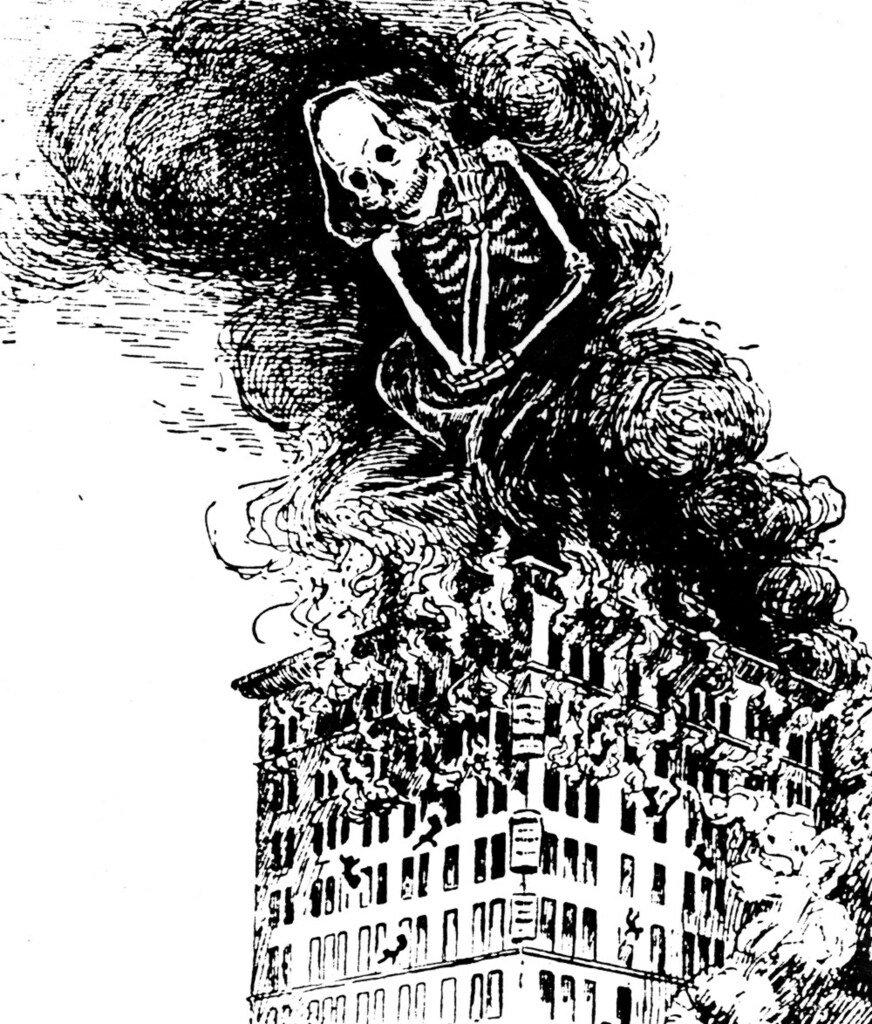
A political cartoon from 1911, portraying the spectre of death (a skeleton) sitting on the burning building, with people jumping from the windows.

The specter of Death rises with the smoke and flames of the burning building as people jump and fall to their death, editorial cartoon from 1911.

On Saturday, March 25, 1911, near quitting time, a fire broke out on the 8th floor of New York City’s Triangle Waist Company and quickly spread to the 9th and 10th floors. Within minutes, 146 of the 500 employees had died in the blaze. The seamstresses—mostly young women who had recently immigrated to the U.S.—were trapped, locked inside by the management. Numerous safety violations made their rescue impossible. The women who didn’t burn alive jumped to their deaths, to the horror of the crowd on the street.

Louis Waldman, a New York Socialite, was sitting reading in the nearby Astor library.

I was deeply engrossed in my book when I became aware of fire engines racing past the building. I ran out to see what was happening … When we arrived at the scene, the police had thrown up a cordon around the area. Horrified and helpless, the crowds—I among them—looked up at the burning building, saw girl after girl appear at the reddened windows, pause for a terrified moment, and then leap to the pavement below, to land as mangled, bloody pulp. Occasionally a girl who had hesitated too long was licked by pursuing flames and, screaming with clothing and hair ablaze, plunged like a living torch to the street.

 
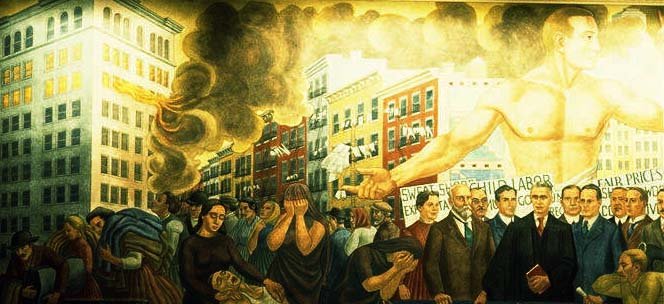
Detail, History of the Needlecraft Industry (1938), a mural depicting a building on fire with mourning onlookers

Detail, History of the Needlecraft Industry (1938), by Ernest Fiene, High School of Fashion and Industry. The mural was commissioned by the International Ladies Garment Workers Union (ILGWU).

Striking garment workers in 1909. Of those who died in the Triangle fire, dozens were teenagers as young as 14, and there was even an 11-year old.

The workers were subjected to dangerous and inhumane factory conditions but it wasn’t for lack of fighting for better. In 1909, 20,000 garment workers in New York City walked off the job, and the strike lasted 14 months. They made some progress with smaller manufacturers but a big factory like the Triangle Company could afford to hold out longer than the workers.

{Must see: Kheel Center for Labor-Management Documentation and Archives at Cornell University’s Triangle Shirtwaist Factory Fire Website}

On April 5, 1911, just over a week after the fire, union organizers and workers held a funeral march down New York City’s Fifth Avenue. Reports vary, but it’s estimated between 80,000-120,000 people marched for over six hours, with 300,000-400,000 people observing.

Workers protest after the fire, April 5, 1911.

Following the tragedy, public sentiment strongly favored increased safety standards and humane working conditions, and workers flocked to strengthening unions, most prominently the ILGWU. Progress was made, much due to that terrible March day.

We must learn from our own history and consider the workers who make our clothes. We in the wealthier countries are often purchasers of greatly undervalued clothing from countries such as Bangladesh, China and Vietnam and we need to realize that there is a risk in a cheap + plentiful equation. To reduce this risk we can demand fewer items for our own closets, purchase secondhand and vintage clothing instead of newly made, and demand clothing be made by decently paid workers in safe work places—even if it costs us more.

Best in slow fashion infographic

Slow fashion trumps fast fashion for many reasons. It is not just good thinking, it is a moral imperative. denisebrain graphic.


Select references:

Juravich, Nick .“Look for the Union Label: A History of the ILGWU’s Iconic Jingle.” New York Historical Society, April 24, 2019, https://www.nyhistory.org/blogs/look-for-the-union-label

“The Tragic Story of the Triangle Shirtwaist Factory Fire of 1911.” 5 Minute History, https://fiveminutehistory.com/the-tragic-story-of-the-triangle-shirtwaist-factory-fire-of-1911/

“International Ladies’ Garment Workers’ Union.” https://labormovement.blogs.brynmawr.edu/1915/03/26/international-ladies-garment-workers-union/

“Clara Lemlich and the Uprising of the 20,000.” American Experience, PBS.org https://www.pbs.org/wgbh/americanexperience/features/biography-clara-lemlich/

Hickey, Andrea. “The Tragedy Of The Triangle Shirtwaist Fire Was A Landmark For Workers' Rights.” Buzzfeed, Jun 2, 2018, https://www.buzzfeed.com/agh/triangle-shirtwaist-factory-fire-workers-rights-history

Comment

Comment

4000 sales on Etsy! (and a sale to celebrate!)

That is a lot of vintage fashion that my wonderful customers have purchased.

Right now you can help me celebrate by using the coupon code HAPPY4000 at checkout for 25% off any purchase of $20 or more, or just click here (affiliate link) to have the discount automatically applied at checkout.


Comment

6 Comments

Pink Power: In Fashion Beyond Stereotypes

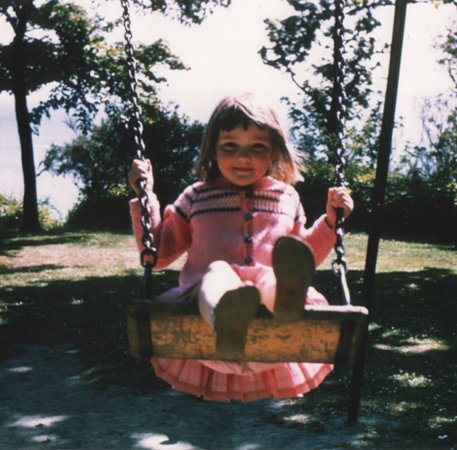
In case you hadn’t noticed (and how could you not notice if you are reading this on my website?) pink is my favorite color. When I was a little girl I wore pink often, my room was pink and my favorite toy was Pink Bear. I have never stopped loving this color and I feel I have to say that it isn’t because I am drawn to its connection to femininity, it’s because pink gives me visceral joy. I’ve worn it all my life.

Pink has long been associated with femininity in the world of fashion, but it didn’t start out that way. In recent years, many shades of pink have surged in popularity and—thanks to Barbie and Ken—pink is as big as ever.

From runways to street style, pink is no longer confined to being just a “girly” hue. It has strengthened to become a symbol of empowerment, self-expression and even protest.

Some wearable pink history

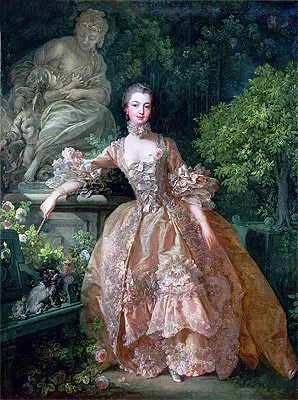
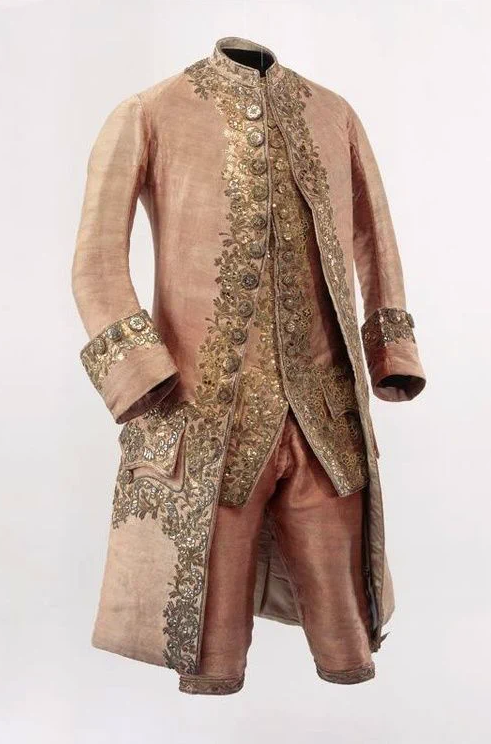
Worn by the upper classes of 18th-century European society, pink was a symbol of social status due to the relatively high cost and newness of pink dyes. Madame de Pompadour was so fond of the color that, in 1757, the porcelain maker Sèvres developed a hue called “Rose Pompadour” in her honor.

Madame de Pompadour, 1759 by Francois Boucher.


18th-century (c.1780) man's suit of pink silk, silver brocade and gold embroidery, via Swiss National Museum.

Although worn by women and men both, pink was often associated with masculinity until the 19th century.


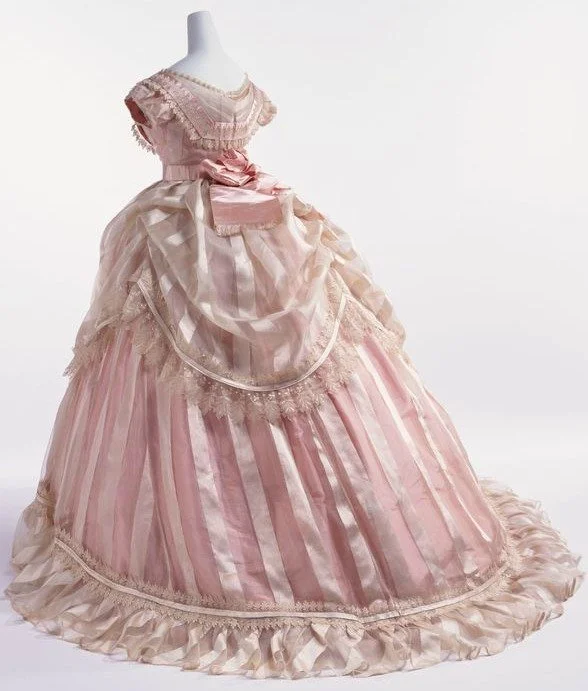
1866 striped silk taffeta evening dress via Kyoto Costume Institute.

Around the middle of the 19th century, men in the Western world began to wear more dark, sober tones, leaving their female counterparts with more colorful and frilly options. This is when pink’s relatively recent association with women and femininity began.


At the start of the 20th century, children wore white. In the World War I era boys started being associated with pink again. White was for babies, red was for soldiers, so a boy should wear pink, right? A 1918 trade publication by Earnshaw’s Infants’ Department, quoted by History Daily, stated: “The generally accepted rule is pink for the boys, and blue for the girls. The reason is that pink, being a more decided and stronger color, is more suitable for the boy, while blue, which is more delicate and dainty, is prettier for the girl.”

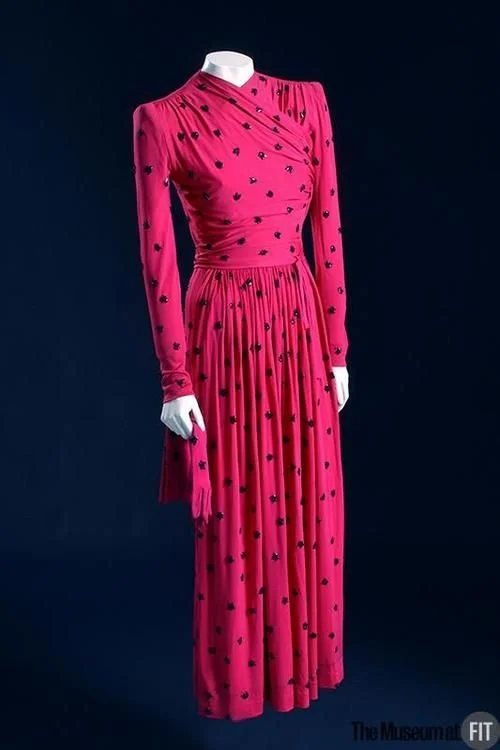
But then there was the jolt of a very un-dainty Shocking Pink developed by Elsa Schiaparelli in the 1930s. The color flashed in front of my eyes,” Schiaparelli said, “a color of China and Peru but not of the West—a shocking color, pure and undiluted.”

Indeed, pink was worn in ancient India and Imperial China. In India, pink is understood as a color for all, symbolic of love and joy.

Bright pink is also the oldest known color in the world, discovered inside 1.1 billion-year-old rocks under the Sahara Desert. (“World’s oldest color found in ancient fossils,” science.org.)

Nevertheless, more somber hues replaced Schiaparelli's shocking color throughout World War II.

Dress, Elsa Schiaparelli, c. 1940 via Museum at Fit.

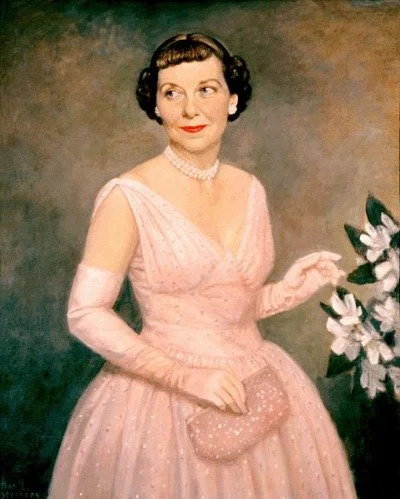
First Lady Mamie Eisenhower wearing a pink dress by Nettie Rosenstein, along with matching accessories, painted in 1953 by Thomas Stevens.

After the war, gender-conforming roles were pushed, and the consensus was that pink was for girls. When Mamie Eisenhower wore pink for her inaugural dress in 1953, she cemented the color’s association with femininity.


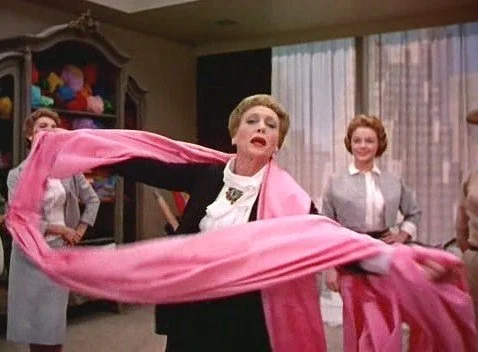
Kay Thompson brandishing pink as Maggie Prescott in Funny Face.

Also in 1953, Marilyn Monroe sang “Diamonds are a Girl’s Best Friend” in a pink gown so radiant that one might argue that pink was an even better friend than diamonds. And what about that paean to the hue, “Think Pink” sung by Maggie Prescott, the magazine editor in Funny Face (1957).

Pink was markedly feminine in the 1950s, and the robust economy of the U.S. meant there were not only pink clothes and toys for girls, there were even pink cars for women. You could buy a suite of pink kitchen appliances or have an all-pink bathroom.


Sears catalog pages from 1975.

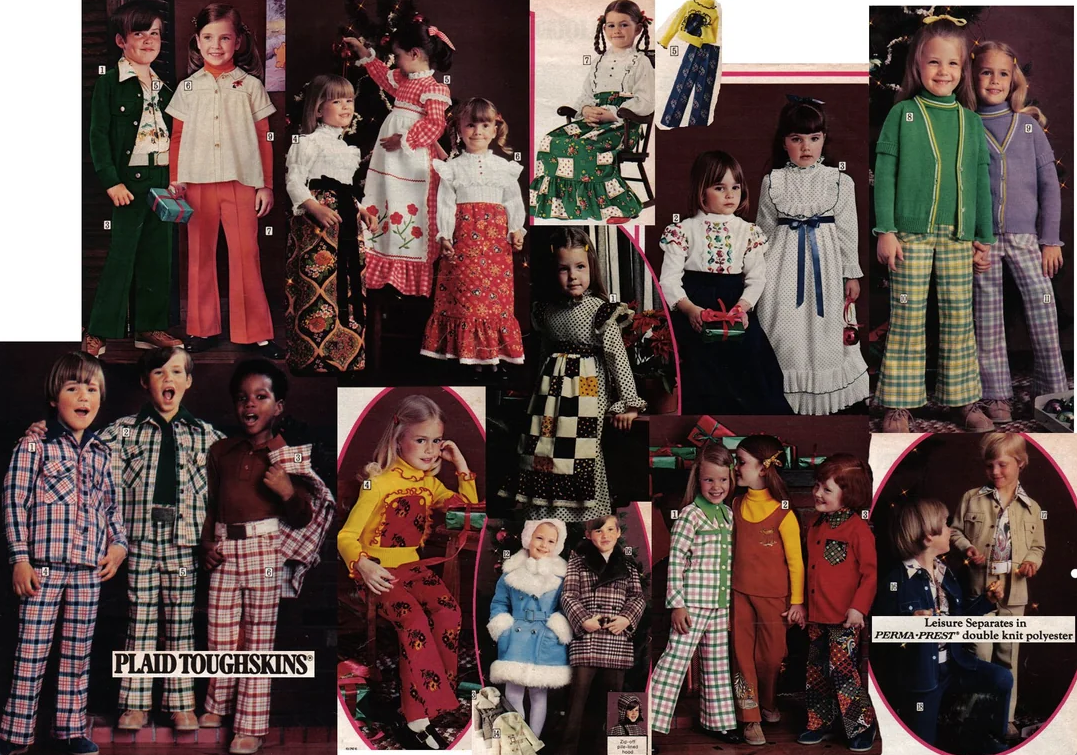
With the women’s liberation movement of the 1960s and ’70s, there was a push for more gender-neutral tones, and even baby clothes went neutral. As reported in “The Surprisingly Recent Time Period When Boys Wore Pink, Girls Wore Blue, and Both Wore Dresses” (todayifoundout.com), “In the 1970s, the Sears and Roebuck catalog even went two full years without showing any toddler wearing pink, in stark contrast to a couple decades before.”


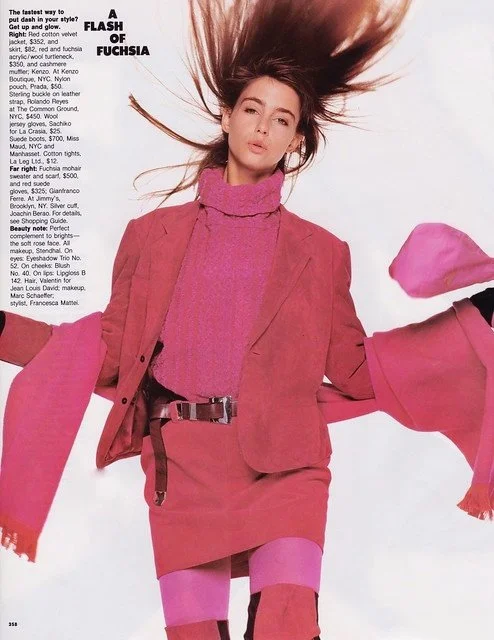
Editorial photo by Oliviero Toscani, Elle, 1987. Roberta Chirko, model. Via barbiescanner on Flickr.

The bright and bold 1980s saw a resurgence of pink, and not just for little girls. Barbie, who had come on the scene in 1959 wearing clothing worthy of a best-dressed list, began being associated with pink in the 1970s, and by the mid ’80s, fashion magazines even touted Barbie Pink as a major trend. In 1991, the Susan G. Komen Breast Cancer Foundation began symbolizing a show of support for ongoing research for a cancer cure with a pink ribbon.


The new pink-woman connection

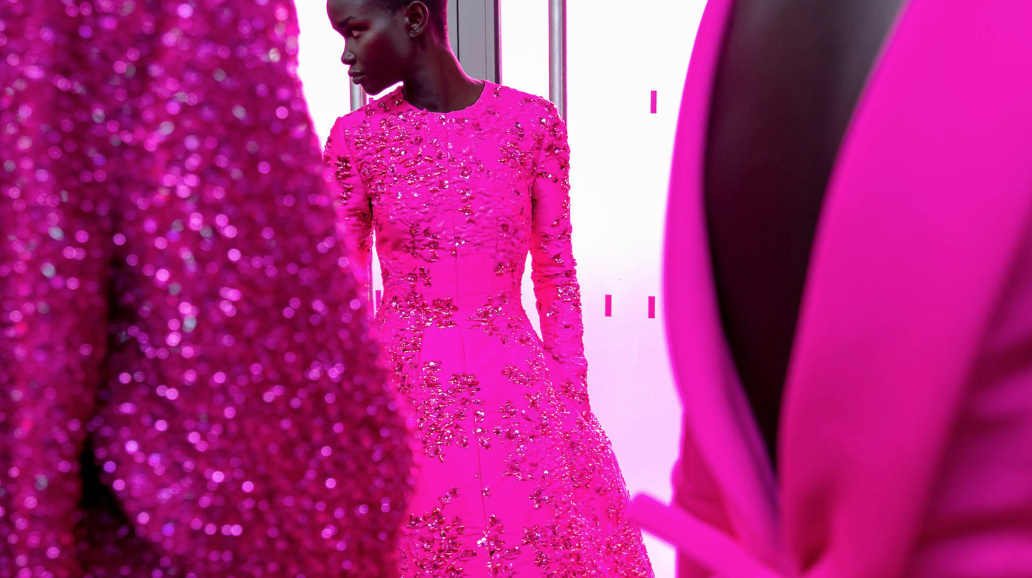
Courtesy of Valentino.

Class, gender, commercial use…pink associations have been in perpetual flux. If you were born between 1980 and 2000, you may strongly associate bright pink with feminism. Think of the 2017 Women’s March, a worldwide protest movement against U.S. President Donald Trump. Remember those hats? Bright pink has become a symbol of women’s reproductive rights—it’s Planned Parenthood pink after all. At the same time Roe v. Wade was overturned, Valentino’s runway collection was primarily hot pink. CodePink uses a vibrant magenta to symbolize women working for peace. Flipping its connection with sweet femininity, pink has proven to be a powerful emblem for women.


Besides women’s activism, pink has been adopted increasingly by the LGBTQ community. Starting in the 1970s, gay activists took to wearing a pink triangle as a defiant and proud symbol, diametrically referencing the very dark time when Nazis forced men they had labeled as gay to wear pink triangles. (“How the Nazi Regime’s Pink Triangle Symbol Was Repurposed for LGBTQ Pride,” TIME.)


Blame it on Barbie

In 2018-2019, The Museum at FIT held an exhibition entitled Pink: The History of a Punk, Pretty, Powerful Color, organized by the museum’s director and chief curator, Dr. Valerie Steele. It was (and is, by way of the accompanying book by Steele) an exploration of the historical context and the many meanings humans have given all shades of pink.

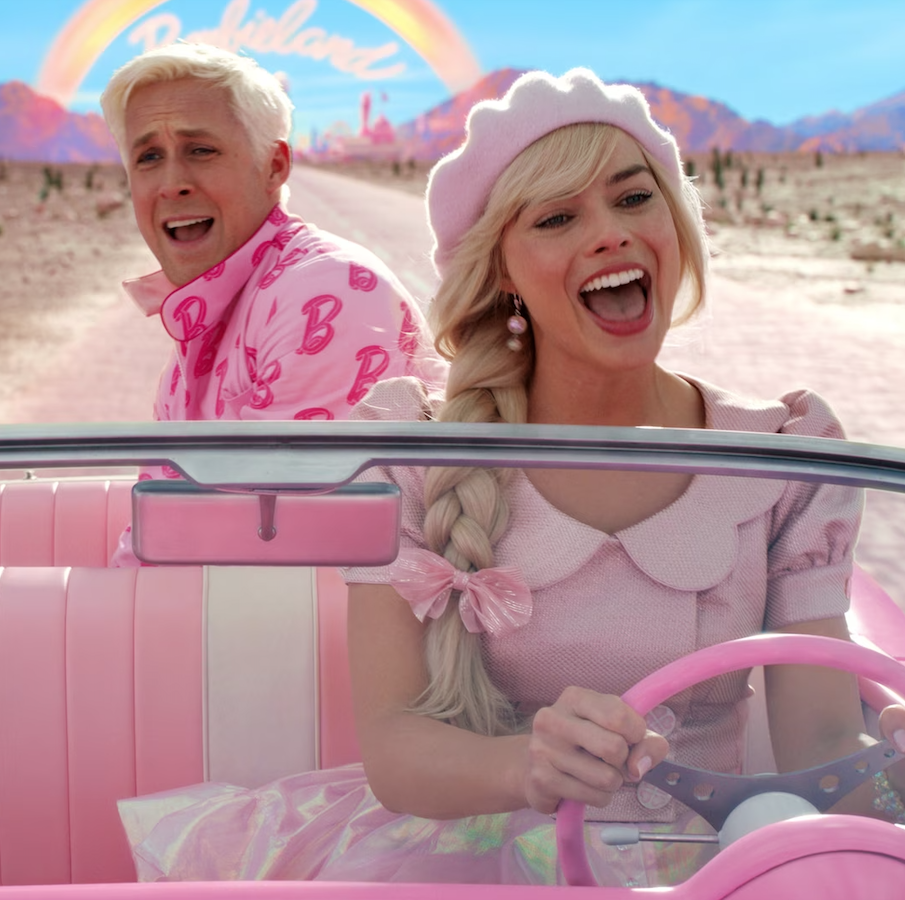
Margot Robbie and Ryan Gosling in Barbie. As if you didn’t know.

And so we come to Barbie in 2023.

Just the whiff of Greta Gerwig’s Barbie helped make “Barbiecore” fashion the major trend of 2022, according to Lyst’s “Year in Fashion” report. Now that Barbie is a blockbuster hit movie, it’s hard to see pink’s star fading. But what does pink mean in 2023?


Dr. Steele herself said, in an interview with CNN, “The 150-year-old notion of pink as synonym with fragile femininity brought forward by the West is being challenged. Pink is now having a ‘cool’ phase: It’s hip, it’s androgynous, it’s strong. And it’s here to stay.” Even since the FIT exhibition, she said, “we’ve seen the rise of millennial pink as an ‘It’ hue, but also its appropriation by feminists around the world as a powerful, socio-political mark.”

Referring to the trending bright pink, Katy Kelleher wrote, “It’s plastic, it’s neon, it’s fluorescent, it’s shocking, sexy, contemporary, and nostalgic all at once. It’s tacky on purpose, camp by design …Who wouldn’t want to pick the angriest, sexiest, loudest, oldest pink on the planet? (“Forget Pantone, Barbiecore Pink Is The Color Of The Year” Refinery29, last updated August 18, 2022.)


The last word goes to the stunningly original and prescient Elsa Schiaparelli, who described her shocking pink as “Bright, impossible, impudent, becoming, life-giving—like all the lights and the birds and the fish in the world put together.”


As a pink lover, I can only hope my favorite color keeps being fashionable, controversial…and powerful.

6 Comments

Comment

It's denisebrain's Prime Vintage Day

It's denisebrain's Prime Vintage Day! If you're not too busy with that ~other~ Prime day, shop my Etsy store at 25% off through July 13! No coupon needed.

I prefer glamazons to Amazon, don't you?

Affiliate notice: If you click on a link and make a purchase, I receive a wee bit of affiliate income, at no cost to you.

Comment

Shifts and Sheaths

Comment

Shifts and Sheaths

Do you know the difference between a shift and a sheath? These two dress silhouettes have often occurred at the same time in fashion. I focused on the 1950s and 1960s versions of these for this Vintage Fashion Guild Parade recently. The VFG Parades take place each week, and there’s a new theme every time.

Shifts & Sheaths

Should she sheath, or should she shift?
Surely she won't give either short shrift

In fifties, sixties, she showcases
In sheaths and shifts, different places:

The waist in sheaths is the showiest spot
While shifts show shins—and nothing taut

Shapely sheaths make sharp shadows,
While short shifts show that knees have values

Schiap, Schnurer, Schrader, Shaheen
All made sheaths and shifts umpteen

Whether you shop, shimmy or sell shells by seashores
Shirk neither sheaths nor shifts from VFG stores!

You can see the whole VFG Fashion Parade in the forums, here: https://forums.vintagefashionguild.org/threads/shifts-and-sheaths-the-vfg-fashion-parade-for-the-week-of-june-12th.80265/

Comment

Comment

A journalist models denisebrain vintage items ...and I interview her

You know you’re going to have a good day when someone visits with many pairs of vintage shoes. At least I know I will. And I had such a day recently when Chey Scott came over to model some vintage fashions for me, and brought along a large tote filled with her shoes that we hoped would go with my outfits.

Chey is not a model (although she could be with her poise and beauty), but a journalist, an award-winning journalist at that. I’ve been interviewed by her, and the results have been in The Inlander, the weekly paper for which Chey is the Arts and Culture Editor. The idea of asking her to pose for my photos was a spur-of-the-moment inspiration. I knew that Chey had a penchant for vintage fashion (see her Instagram @sewvintagewritemeow and her Inlander articles on the subject), and I thought why not ask? And she said yes!

Chey made a beautiful Cinderella in this gown, now in my shop.


And of course, since she is a journalist, it seemed fitting to turn the tables, and get Chey’s take on wearing vintage.

Maggie: Do you wear top-to-bottom vintage fashion, or do you prefer to mix it with newer items?

Chey:
Most days, I am wearing at least one thing that’s modern, however there are times I am wearing 100 percent vintage (minus undergarments, of course). The modern pieces I wear with vintage tend to be wardrobe staples, like a plain T-shirt or modern shoes that complement the vintage aesthetic I’m aiming for. Sometimes, though, I may just feel like wearing modern skinny jeans with a vintage T-shirt or blouse, and that’s one of many reasons why vintage is so fun and fabulous — there are no rules! Also, when I’m just hanging around the house, I definitely don’t wear anything vintage because I don’t want to damage any of my one-of-a-kind-pieces or cause excess wear. 


M: What is one of your favorite vintage fashion items and why is it so?

C:
Oh gosh, this is such a hard question because I have so many! 

When it comes to items that are very “me,” I’d have to say the very first Alice of California / Alice Polynesian Fashions brand palazzo jumpsuit I found a couple years back. This was the piece that introduced me to the brand, which is now one of my favorites. It has a black background and a border-esque print of neon pink and orange flowers with green leaves on the bodice and bottom of the wide, billowing legs. It’s barkcloth, which is also one of my favorite vintage fabrics, and has a super chic, draped high neck. I wore it to a concert a few summers ago, and it definitely turned heads!


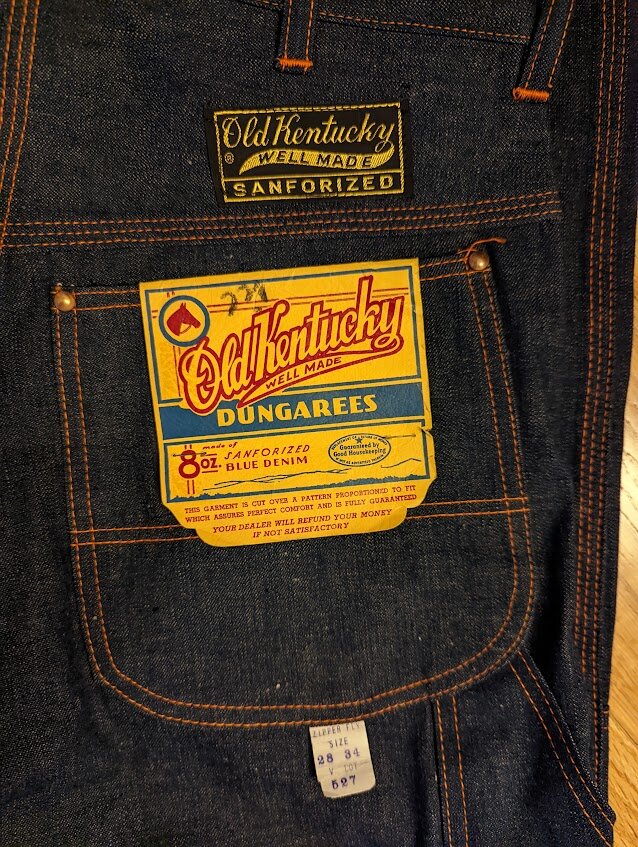
When it comes to items that are “practical” and more everyday, I have the most amazing pair of 1950s deadstock, deep indigo blue jeans. They have a wide leg cut, super high waist, bright orange contrast stitching, big patch pockets on the back and that perfectly crisp, stiff feel from being never worn. The best part is the brand and the label on the back: “Old Kentucky Well Made Sanforized” embroidered in gold thread on a black patch. Something about that label just adds the most charm and personality to these jeans, which I wear often, styled all kinds of ways!

I also have several vintage dresses — one formal and two day dresses — that my dear, late grandmother made for herself in her 20s and 30s (during the 1950s and ’60s) which I cherish deeply. 


Another very special piece is a late ’40s, early ’50s letterman jacket from Washington State University — my alma mater — that I somehow scored on Etsy one late night for an incredible deal. The catch was that it needed many major repairs to the knit wool cuffs and collar, which I painstakingly took on. The seller told me it was her father’s, who attended back when it was still Washington State College, so the iconic cougar silhouette logo patch on the front has a ‘C’ instead of a ‘U’ for its mouth. It’s a highly collectible piece that I treasure for its provenance, my incredible luck in finding it, how it unites my love of vintage with being a WSU alum, and the time I put into restoring it to wearable condition.

M: Do you have any favorite vintage labels or designers?

C: As mentioned, I love the Alice brand!

Others I’m drawn to include Alex Coleman, Bobbie Brooks, Judy Bond blouses, John Abbott dresses, Mode O’Day, Jantzen, Pendleton — all high quality brands whose tags fill my closet(s)! I also adore vintage military-issue pieces and own many pairs of pants originally made for service. A few favorites are my navy wool fall-front sailor pants, some side-buttoning Vietnam-era field nurse pants, and a pair of deadstock 1940s WAVES wool slacks.


M: Do you collect any particular vintage fashion item?

C: I have a growing collection of vintage novelty print tops with cats! 

I also love 1960s era shoes, and have many pairs in all colors. The wearability and comfort of a low block heel can’t be overstated! I have a large number of 1960s shift dresses in bright, colorful patterns, as well as many pairs of 1950s denim and ’60s palazzo pants, including my jumpsuits. So there are definitely items I gravitate towards.


M: What do you consider the biggest challenges in finding vintage clothes you’d like for yourself?

C: I don’t have too many difficult challenges, to be honest. The competition as a buyer to get good deals or snag in-demand pieces from some of the more well-known online vendors can be frustrating, at times, but I spend a lot of time shopping, both locally and online, to find good deals. While I’ve definitely splurged on some grail-level pieces, the amazing, unexpected scores even it all out, or at least that’s what I tell myself to justify my spending… 


M: Have you ever talked someone into giving vintage fashion a go?

C: I hope that my coverage of the vintage scene in the Spokane area has inspired others to go out and visit the many amazing shops we have here, because they need that support to stay in business.


M: What’s your holy grail vintage item?

C: Another very tough one, because there are many — lots of things I’ve even found but haven’t hit “buy” on simply because I also have to feed and house myself, ha ha. 

Chey in a 1920s rayon jersey dress, now available in my Etsy shop.

I would love to someday own a true vintage, 1920s flapper dress that’s sturdy enough to wear (with care). I have come across many I love, but they’re often quite expensive, as is to be expected. I think the main thing holding me back, besides budget, is fear of it not fitting right or getting damaged if I were to wear it. If I did own such a piece, I’d want to wear it out for the right occasion because it deserves to be seen. At the same time, I’d be terrified of accidentally ruining it!


Thank you, Chey, for being a wonderful model, and for sharing your experience with vintage fashion! I hope you find that exact-right flapper dress.


The links to the two items in my Etsy shop are affiliate links. If you click through and make a purchase (any purchase on Etsy) I earn a small amount of money at no cost to you.

Comment

Is there such a thing as “Vintage Condition”?

8 Comments

Is there such a thing as “Vintage Condition”?

Vintage condition. Many excellent vintage fashion sellers use this term to say something like “good considering it is old.”  So, presumably, it isn’t like newer clothing in good condition. The word vintage means the condition reflects the age and wear and tear that you might expect given the item is at least 20 years old.


But hold up. What do you consider the expected condition of a dress from the 1960s? How about the 1920s? How does that compare to someone else’s expectations?


From a seller’s point of view, the term vintage condition may feel like a helpful shorthand, but for the buyer it can be much more troublesome. In a discussion on Etsy forums (Forum Topic - Excellent Vintage Condition vs Excellent Condition), a vintage seller asked what others thought of the term. 

One seller responded, “I try to be as specific as possible about any condition issues and show pictures of any problems rather than relying on general terms.”

One response was harsher: “I’ve generally found this type of description as a way to oversell flawed vintage items. What would typically be described as ‘fair’ under normal circumstances, suddenly becomes ‘great vintage condition’. Any serious collector of vintage knows there are still plenty of real ‘excellent’ and ‘mint’ vintage pieces available. Vintage doesn't necessarily have to mean there are flaws.” This person went on to say, “While flaws in and of themselves don't always negate the desirability of a vintage pieces, and sometimes actually add to their appeal, I think the overselling, false positive descriptions do the entire market a disservice and frankly, are many times bordering on consumer deception.”

Ouch! As a seller, you do not want to go there!

Another person added, “I agree that the meaning of 'vintage condition' is generally understood, but I never use it. The problem with describing condition, of course, is that qualifiers are all very subjective—your ‘excellent’ condition might be only ‘good’ to me.”


Yes, all qualifiers are subjective, and that’s why, years ago, a group of online vintage sellers worked hard to hammer out a set of words to codify condition ratings.


This chart has been edited and tweaked by various groups and sellers. Here is one provided on the Vintage Fashion Guild website.


And here are some examples of items that I consider to be in these conditions.

1. Pristine/Perfect/Mint. As new, with absolutely no flaws or wear.

This is quite rare, and having the tags still attached to a vintage fashion item does not mean it is flawless. It may have been stored where sun has faded the colors, or where insects have done damage. Basement odors, dripping pipes, cigarette smoke …there are lots of ways that an unused item can be damaged. 

This is a dress by Lanz that, even though it dates from the 1940s, has absolutely no flaws of any kind. The original tags are attached, and it looks (smells, feels) like new.

Here on the other hand, is a 1960s dress with its hangtags still firmly attached. However, some small rusty stains are found near the hem. I would call the condition very good, and if I got the stains completely out I feel I could call the condition excellent.

So to be in mint condition, an item should have no signs of wear, no signs of age, to have been stored well and have no flaws of any kind. 

2. Excellent. Used, with no noticeable flaws. 

Here is a late 1940s to early 1950s dress with no hangtags. There are no flaws that I could find except that there are string belt loops and no belt. I would call the condition excellent, noting the lack of belt.

3. Very Good. Used, with minor flaws, no repairs needed.

This example might surprise you: An Edwardian silk faille capelet embellished with jet beading. The high neck is made of silk, the lining is also of silk, and a ribbon tie fastener—again silk. There is a lot of vulnerability there, but there is absolutely nothing wrong with the capelet inside or out except minor wear to the corner of the collar and fewer than 5 missing beads, with no loose ends where more beads could fall off.

I call the condition very good. I have purchased new clothing with more damage!

Another example, a faux fur bag and hat set: The set appears flawless from the outside, but there are whitish marks in the bag’s lining that I can’t remove. I would call this very good condition.

4. Good. Visible wear. Minor flaws and/or optional repairs needed.

Here’s an example of an item I consider to be in good condition. It is a silk panné velvet evening jacket dating from c. 1930. It has some smallish marks but most of all some golden streaks of discoloration. I had a reliable dry cleaner try to improve this but nothing doing. No repairs were needed, but the condition could only be called good due to the discoloration.

This is another item I’d say is in good condition. It’s a pair of boudoir slippers by Daniel Green dating from the 1950s. The vamps are in excellent condition, but the insoles, originally pale pink, are discolored and there are some marks. The soles show some wear and there are a few scratches on the satin covering the heels. They are perfectly sturdy and wearable, but the condition issues are not going to be readily solvable.

5. Fair. Numerous flaws, repairs needed, fragile.

What can I say? It’s heartbreaking, but many a 1920s dress is in fair or poor condition due to use, weight of embellishments (metallic threads and beading are notoriously hard on lightweight silk) and of course, being a century old. This one I considered a flawed, delicate wearable. I probably would only wear it (if at all) very carefully just for photos or similar. The Charleston is out. But how could one completely sideline such a beauty? I know that dresses from the 1920s can be tattered to pieces, still, I would not call the condition of this dress very good or good for its age, I’d call it fair.

6. Poor. Extensive damage. For display or study only.

There are reasons to offer items that are extremely damaged. A garment from the 1700s might be in poor condition, but worthwhile to repair and conserve to display. A shirt worn to bits by Hank Aaron would be treasurable as is. Some apparently worthless items could have value for parts such as beading or lace.


I know that my judgement of the condition of each of the items I used as examples would not completely match other very ethical and thorough sellers—we all see things a little differently. So, I would argue, each of these condition ratings is subjective enough without any generalizing qualifier such as “vintage”.

Does a seller need to show a condition chart to customers? No, that’s not necessary, although it may help guide a buyer to understand the meaning of your words, and therefore trust your assessment. The crucial things for the buyer are for you as the seller to describe and show the flaws. Remember, condition is both inside and out and it includes alterations. It is not just about the look, but the odor and feel.


Some of my (ahem) less than ideal purchases have included 1. A sweater with no condition description (and limited photos) which was more like a hole with a bit of sweater around it. 2. An “excellent vintage condition” dress with obvious staining under the arms. The seller explained, “but the stains only show when you lift your arms!” I’ll have to try to remember not to hail a cab… 3. An “excellent condition” jacket with tears throughout the lining. This seller said he didn’t know that the inside mattered! 

As a person who purchases vintage items online, I’m acutely aware of condition and try very hard to figure out exactly what each seller means. I scrutinize the pictures, read the text and even ask questions. If someone includes “vintage condition” and the item has no noticeable flaws, I will write to ask what makes the condition “vintage”.

To sellers: Put on your buyer’s shoes and make it as plain and simple to know exactly what you mean and you will avoid questions, frustrations, click-aways, disappointments …and returns.

News flash: I don’t know everything. Everyone lives and learns. I have been buying vintage clothing and accessories forever, and selling for 24 years. I still make mistakes, and I still modify what I do when I find a better way. I’m still learning and will always be learning.

However, I don’t think I could change my mind about “vintage condition”—it is not helpful in describing vintage fashion.


8 Comments

4 Comments

Right to Dry

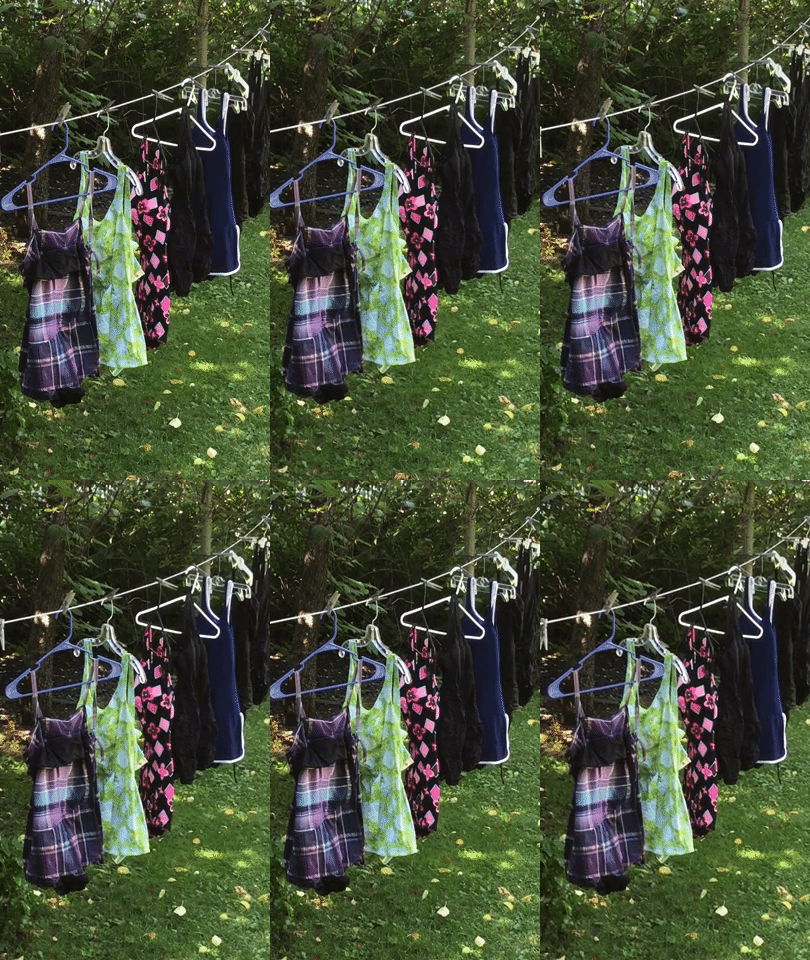
A batch of freshly washed vintage swimsuits on my clothesline

I live in a 116-year-old house with a couple of clotheslines that look like they’ve made it at least half that long. An ancient grapevine winds up one of their posts. I use the lines in the summer for unbelievably quick drying, and many a vintage item has aired out in the breeze.

I guess I may be one of the lucky ones, as I have read there is a growing movement to protect a citizen’s right to dry clothes on an outdoor clothesline, challenging many state laws. (Here are the states that have blocked clothesline bans.)

The argument against use of lines is that it creates a messy vista, lowering property values—some homeowners associations even cite strangulation risk. Over 74 million Americans live in association-governed communities, and most of these associations regulate the use of laundry lines to some extent.


Arguing for hanging clothes out to dry focuses on the aesthetic of clean smelling clothing, getting oneself out into the fresh air, and the frugality: The average household stands to save $100-$300 per year over the use of an electric dryer according to Project Laundry List. Besides, clothes last longer when not subjected to the heat of the dryer. This is always on my mind, being a lover of vintage clothing!


From clotheslines.com

Most of all right now, supporters of “Right to Dry” are citing the energy consumption of the home dryer and how much it affects global warming. There are 89 million dryers in the U.S. according to Natural Resources Defense Council. Annually, each of these dryers releases about 1,500 pounds of carbon-dioxide emissions into the atmosphere. 

So what are you waiting for? Live and let dry!

P.S. Need some vintage clothing care how-tos?

Then please give my book a read if you haven’t yet. The care section is a culmination of decades of research, trial and error and honing. Here are some of the reviews.

4 Comments

Incredible Vintage: Happiest Ending

6 Comments

Incredible Vintage: Happiest Ending

In February last year I wrote about an extraordinary vintage costume jacket I found. It was labeled Ice Capades Costume Studio, Hollywood, California. The name, written in pen, was KONRAD, referring to Alan Konrad, a star of the Ice Capades from the late 1940s through 1964.

It was very well made and much used, with some damage and staining. The more I looked at it though, the less I felt it my right to attempt to clean it, with the honest signs of use by a brilliant performer. I polled my Instagram followers who wrote:

It’s awesome, a real treasure, honour it as it is 💛
Yes! Let this incredible piece honor the grit and toil of this magnificent performer!
In this case those stains are a fundamental part of the history of the jacket. It makes this incredibly special piece even more interesting!

And there were many more people who just wrote WOW in one way or another. I became convinced that the jacket needed to go somewhere special—and I tried to find that special place. When my approaches didn’t reach the right people, I just treasured the jacket and waited.


Then, recently, that special connection came to me. A comment was made on my blog by someone named Nancy Sapir:

Alan Konrad is my uncle, and he was indeed a brilliant skater with a wit as sharp as his blades.

That same day, Nancy’s son Steven contacted me to ask if he could purchase the jacket for his mother. They had been discussing Alan and it took Nancy down memory lane via Google search to my blog. Steven said,

My mom never had a father. Alan was there for her … It would be the only thing she would have from her uncle.

I had the privilege of sending the jacket home, to the family of Alan Konrad. They seem like the warmest people.


How many stories come to such a wonderful conclusion?


6 Comments

Comment

Denisebrain is 24 and Earth Day is 53

I started offering vintage fashion as denisebrain on April 22, Earth Day, of 1999. It’s a marvelous day to consider the choices one makes for the good of our planet. And vintage fashion is the most beautiful of reuse.

April 22 is my business’s 24th anniversary, and Earth Day’s 53rd, and I’m celebrating Earth Day, along with so many of you, more than ever.

Besides your purchasing vintage clothing for reuse, you help me by supporting One Tree Planted. For each purchase made, I donate one dollar, good for one tree. Your purchases also allow me to donate at least 10% of my earnings to Save the Manatee Club.

From Patrick Rose, Save the Manatee Club Executive Director

From Matt Hill, One Tree Planted President and Founder

I know some of you are really clued into taking good care of your clothes to help them last longer. I offer lots of advice on vintage fashion care in my book, Wear Vintage Now: Choose It, Care for It, Style It Your Way, which is a bestseller on Etsy, and has all 5-star reviews on Amazon. The most popular part of this book seems to be the care section. I am so glad people are referring to it to make their vintage finery last—What a great thing to do for the Earth.

Sometimes these days it is really difficult to feel optimistic about the future of our planet’s environment, but we can’t lose hope, and we can’t stop doing what we can, which includes wearing vintage and secondhand clothing and extending its life with good care.

As Greta Thunberg says:

  1. All the clothing and accessories I sell are authentic vintage, which I’ve purchased from individuals and small stores.

  2. My dry cleaner uses an eco-friendly (non-perc) method.

  3. I use 100% recycled acid-free tissue to package your purchases.

  4. When possible I use compostable bags and recyclable paper ribbon to protect and wrap up your item.

  5. I print your thank you note on 100% post-consumer recycled paper.

  6. The shipping boxes and the kraft tape I use are recyclable.

  7. Etsy offsets 100% of carbon emissions from shipping.


Comment

1 Comment

Save the Manatee this Seagrass Awareness Month

Did you know that March is Seagrass Awareness Month? 
 

Even if I have not convinced you to wear green (see previous post), we can all agree that everyone needs to eat green—especially manatees.

These are tough times for the beloved manatee and its most important food source. I have just started a GoFundMe page to help raise a little extra money before the end of March: Save the Manatee this Seagrass Awareness Month.

The fact that March is Seagrass Awareness month has never been more vitally appropriate.

Manatees are creatures of habit, returning to their limited safe havens during the cooler part of the year. In these spots, they rely principally on seagrass to eat, and warmer waters to protect them from deadly cold stress. Manatees have very little protective fat—their round shape is due to the bulk of their digestive tract.

The safe havens, because of decades of human-produced pollution, are being choked out by algae blooms leading to a massive loss of seagrass. Marine biologists state that the current tragic die-off of manatees is due to starvation.

In the deadliest year on record, 2021, more than 1,100 manatees perished—most of these starved to death. Those that ventured along the coast in search of food risked death from cold stress or boat strike. In 2022, the preliminary estimate is that 800 of these beloved creatures perished.

Rescue crews have been rushing to save as many manatees as they can, but this loss can't be sustained. Manatees were prematurely removed from the Endangered Species List in 2017—prematurely because all the threats that could lead to the extinction of this iconic species are still present. This recent death count is proving that.

Manatees have been around for between 30 and 60 million years. We can't let human carelessness and selfishness wipe this gentle and intelligent species off the face of the earth.

If you can add $5 to to the total of my fundraiser, I would be so grateful. If you don't have anything to spare but would like to help, please share the fundraiser. Thank you!

1 Comment

2 Comments

Finding a Vintage Sweater: The Benefit of Stretch

This is an excerpt from my book Wear Vintage Now! Choose It, Care for It, Style It Your Way.

Please see my previous post for information about figuring out vintage fit and size.


There are many styles of sweaters, from chunky knits to fitted Sweater Girl styles, cardigans, short sleeves and sleeveless, beaded, appliquéd, embroidered, hand knit, and major vintage designer labels.

Clockwise, from top left: 1950s sweater jacket on April @la_velvet_belle on Instagram

’80s novelty design sweater from Small Earth Vintage

’50s beaded cardigan from Jumblelaya

’60s sequined sweater top from Morning Glorious Vintage

What do you like in a modern sweater? Something you could wear skiing, a simple basic, or something a bit flashy? If you’re looking for warm and thick, try searching for vintage sweaters using keywords like Nordic, Irish (also Irish fisherman, Aran), ski, Fair Isle, Icelandic, boyfriend, chunky, and cable knit. Sweater Girl sweaters are fitted, usually 1950s to ’60s in vintage, and often waist length. Look for soft lambswool blends, angora, and cashmere—add beads, sequins, or embroidery to your search for something even dressier.


When it comes to basics, I love vintage cashmere sweaters. They beat most modern cashmere knits in the quality-to-price ratio hands down. Cashmere is light, soft, and warm, and it’s not likely to irritate the skin of any but a tiny fraction of the most sensitive wearers. Vintage cashmere knits come in a wide range of styles and colors—they are a practical luxury.

A vintage Scottish-made cashmere sweater like this one from shopwhatsnewpussycat is almost guaranteed to lower your heating bill!


The appropriate fit for knits varies with the style. If you like a Sweater Girl fitted style, look for a sweater with a bust measurement about the same as your own. Very often the hem of a sweater is ribbed; ribbing is stretchier than a plain stitch, as well as being sturdier. What that means is that you don’t need to worry if the measurement of a ribbed hem is smaller than your own waist or hip measurement, where the hem will fit. One caveat: If the sweater is a cardigan and worn tight at the bust, it may gap along the buttoned placket.

If what you are after is a thick, chunky knit, you may want it to be larger than your own measurement at the bust. I would allow at least 1–2′′ (2.5–5 cm) of ease (we’ll discuss “ease” in more detail soon).

Look carefully at the condition of vintage sweaters. Holes can be mended, but when you’re just starting out with vintage, look for a sweater that’s in excellent shape, clean, and either hole-free or with just one or two tiny mended holes in inconspicuous places.

Now that you’ve taken a look at sweater knits, you are ready to delve into woven apparel. Fit is so important in choosing clothing items without much or any stretch.

2 Comments

Comment

Figuring Out Vintage Fit and Size


Of the handful of Really Important Issues when choosing vintage clothing, fit is probably number one for most people. There’s quite a lot to cover, so let’s get started.

THE IMPORTANCE OF MEASUREMENTS

There is no standard by which vintage sellers collectively describe sizes, but let’s be fair, there is no precise standard for modern clothing either! Sometimes you’ll see a vintage item that has its original tag or label with the size marked on it, but don’t confuse this with current sizing. Vintage sizes do not coincide with modern sizes, nor are they predictable when compared with other items from the same era. In her study of advertisements in Vogue magazine from 1922 to 1999, Alaina Zulli found a great deal of irregularity, with a generally decreasing size number through the decades, due to so-called vanity sizing. As summarized in 2011, Ms. Zulli found that in the Sears catalogue of 1937 for instance, a woman with a 32′′ bust would have worn a size 14. She would have worn a size 8 by 1967, and today, she’s wearing a size 0.* Fit is all about measurements, not stated sizes.

I have tried to at least codify my own modern size estimates for the vintage items I have for sale, based on an assortment of websites’ and catalogues’ size charts. Other vintage sellers have done something similar. However, I would recommend that if you see U.S. size 6, say, or XL, even in my listings, do not assume it is the same as your idea of size 6 or XL. Go straight for the measurements and compare those to your own.

Many sellers, including me, suggest that you compare the measurements of an item you’re interested in with something similar of your own that fits you well. This is great if indeed you have a piece that is similar to the vintage item in key ways, for instance both are made of woven, non-stretchy fabric and are fitted in the same ways. I will later make suggestions about how to choose items even if you have nothing similar.

When should you ask for further help from an online vintage seller? By all means ask if there are no/not enough measurements or the condition is not described. A seller who offers almost no information may be a beginner or simply not very skillful. One characteristic that good sellers share is that their listings include most or all of the information you need to make an informed decision. Most good sellers will be happy to guide you if you need further help with the size or some other aspect. Just remember, don’t ask if that 1950s dress is a size 6—ask about the item’s measurements.

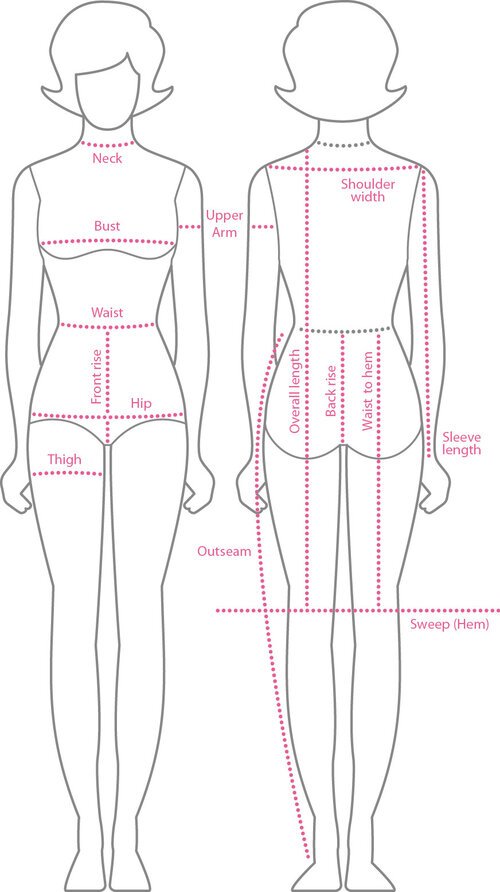
So now that you understand the importance of measurements for fit, here are the most common measurements you will need for clothing:

It is an extremely good idea to have someone help you with these measurements, at least the ones that would require advanced contortionism to manage on your own. Use a cloth measuring tape and keep it straight and snug but not tight as you measure. Stand tall and relaxed and don’t suck in, especially for the bust and waist measures.

Bust: With your bra on, measure around your body at the fullest part of your bust.

Under-bust measure: Measure around your body just under your bust.

Waist: Measure around the smallest part of your waist, just above your belly button.

Hips: With heels together, measure around the fullest part of your hips, about 8′′ (20.3 cm) down from your waist.

Shoulder width: Imagine lines going straight up from your armpits to your shoulders in back. Measure from this point on one shoulder to the other, across the back.

Outer sleeve length: Measure from the tip of your shoulder to your wrist along the outside of your arm.

Upper arm: Measure around the fullest part of your upper arm.

Neck: Wrap the tape around your neck about 1′′ (2.5 cm) above the point where your shoulder meets your neck.

Back waist length: Measure from the base of your neck to your waist in back.

Inseam: While standing straight, measure from the groin to the place where you would like the hem of the pants to fall (ankle or floor).

Outer leg length: Measure from the waist to the point where the hem of the pants will fall.

Rise (front and back): Measure from the groin to your waist at center front for the front rise, and at center back for the back rise.

Allow me to digress a moment here. You can be any size and look great; you just have to be honest about the size you really are. For instance, when you measure your waist, don’t suck in or you’ll have to live with permanent duck face while wearing too-tight clothes. If you lose that weight you’ve been meaning to lose or whittle your waist with exercise, you can find a new vintage frock or alter what you have. But now is now—and you deserve to look and feel great right now! There are vintage foundation garments that will help you modify your size somewhat, but for starters, let’s stick with the basics.

Now, what vintage garment are you going to look for first? My suggestion is a sweater because 1) a sweater’s fit is flexible—you are practically guaranteed success—and 2) vintage sweaters are the best!

*Clifford, Stephanie. “One Size Fits Nobody: Seeking a Steady 4 or a 10.” New York Times, April 24, 2011.


Look for tips on finding a vintage sweater, in my blog soon!

Comment

Comment

Hello, Good Buy!

Right now, and through February 12, the majority of the items in my Etsy shop are 40% off, no coupon needed. Click image to stop by my store:

P.S. Have no fear, even during sales:

1. 100% of profits on items sold from the Pink Heart Shop of my Etsy store go to Dress for Success Worldwide.
2. 10% of all other profits go to Save the Manatee Club.
3. Via One Tree Planted, a tree is planted for each order.

Comment