
Comment

What goes around SHOULD come around

Or, the continuing story of a vintage dress

On one day in c. 1949, a beautiful iridescent gingham taffeta dress was made. This is about that dress.

Although it doesn’t have a maker’s label, from the size tag, I can say definitively that it was commercially made in the U.S. Can’t you see the original wearer swirling about in her dress?

Fun fact: Did you know that there is a name for the distinctive rustling sound that taffeta makes? The sound is called scroop, a late 18th-century word blending scrape and whoop!

At some point—perhaps when fashions changed, or the wearer changed—the dress was carefully saved. I don’t know the full story of the dress from that point until the new millennium, but perhaps it was worn by another lucky soul in the 1950s.

2005

What I do know is that I was entrusted with the sale of the dress in 2005.


By then, wearing vintage was gradually becoming more mainstream, and the dress sold to another appreciator. More scrooping commenced!


Then, ten years later, the woman who purchased the dress was ready to pass it on to the next wearer. I photographed it on beautiful Sarah, and it is now for sale in my Etsy shop, specifically in the Pink Heart Shop section of my store.

All proceeds from items purchased from the Pink Heart Shop go to Dress for Success, an international not-for-profit organization that empowers women to achieve economic independence by providing a network of support, professional attire and the development tools to help women thrive in work and in life.

If this dress could only talk, we might hear of all its wearers, the joy it has in its beauty and scroop, and its pride in passing from one stylish, interesting and caring person to another.

Click to view the gingham dress in my Etsy shop. (affiliate link)

Comment

Pendleton ’49ers—and ’49er Look-Alikes

17 Comments

Pendleton ’49ers—and ’49er Look-Alikes

I live a mere 195 miles from Pendleton, Oregon, the home of Pendleton Woolen Mills. Perhaps that explains the amount of vintage Pendleton items I have been fortunate to find in my area. The casual nature of Inland Northwest life might also be thanked.

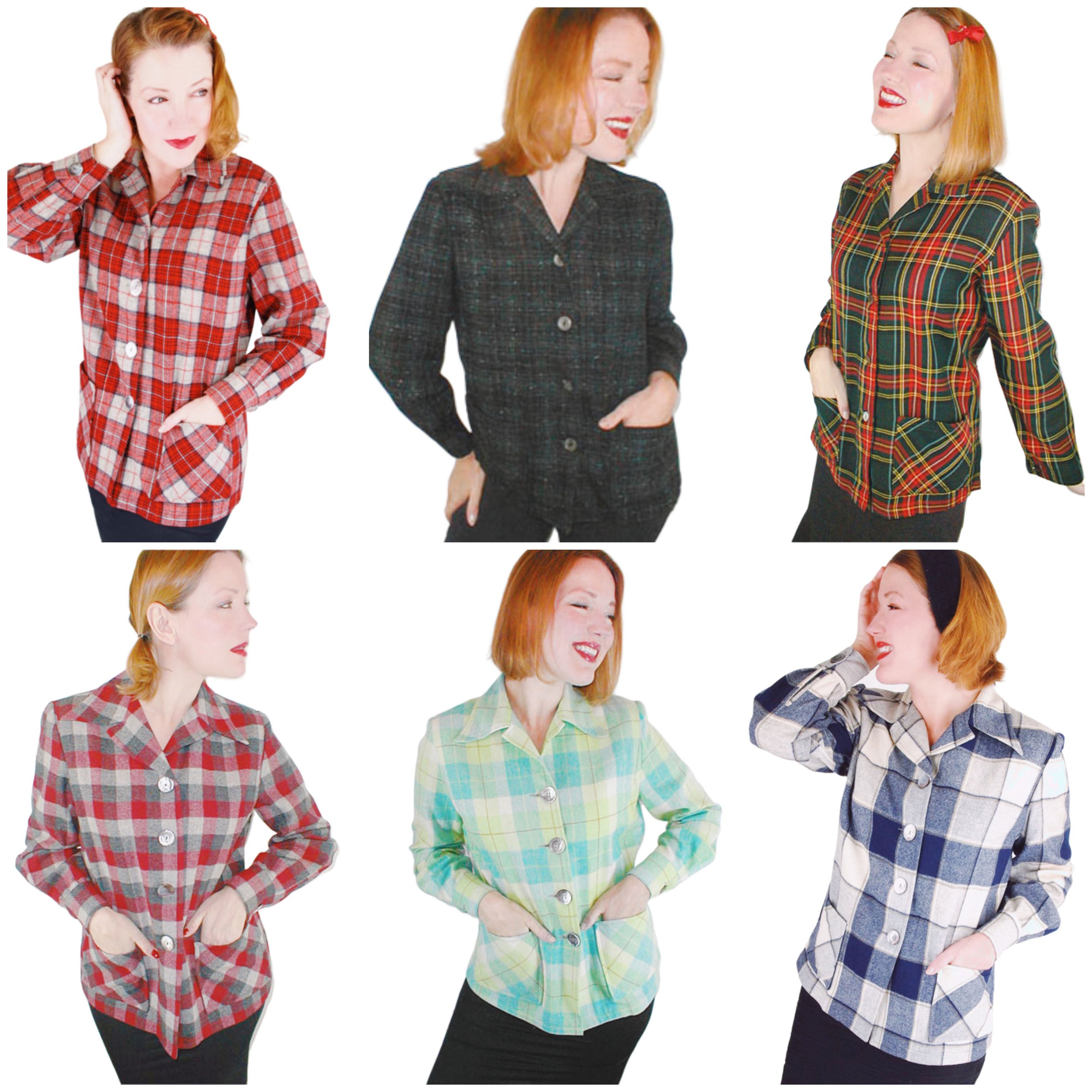
Of all the versatile, classic pieces made by this venerable company, one particular Pendleton item, called the ’49er Jacket, interests me the most. Ineffably and timelessly cool to my eyes, the ’49er is a sporty basic that Pendleton started making in 1949. It was among the company’s very first articles of clothing for women. Pendleton has made the jacket in many of the years since, with some variations.

The classic is a shirt jacket with flanged shoulders, fullness gathered into the sides of the back yoke, roomy patch pockets with the plaid cut on the bias, big dark shell buttons, and long sleeves with buttoned cuffs. I’ve seen solids, but they are almost always plaid or tartan wool flannel.

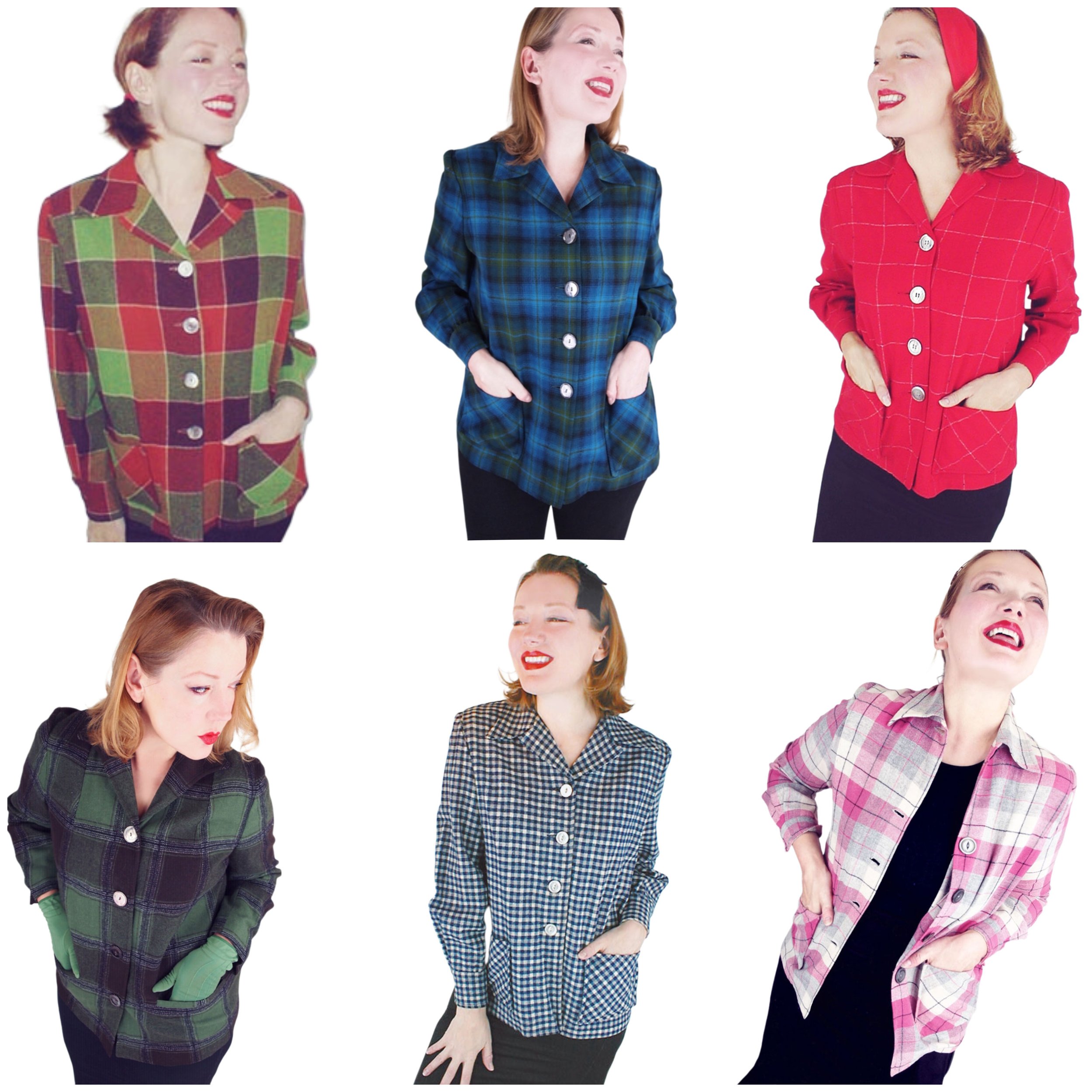
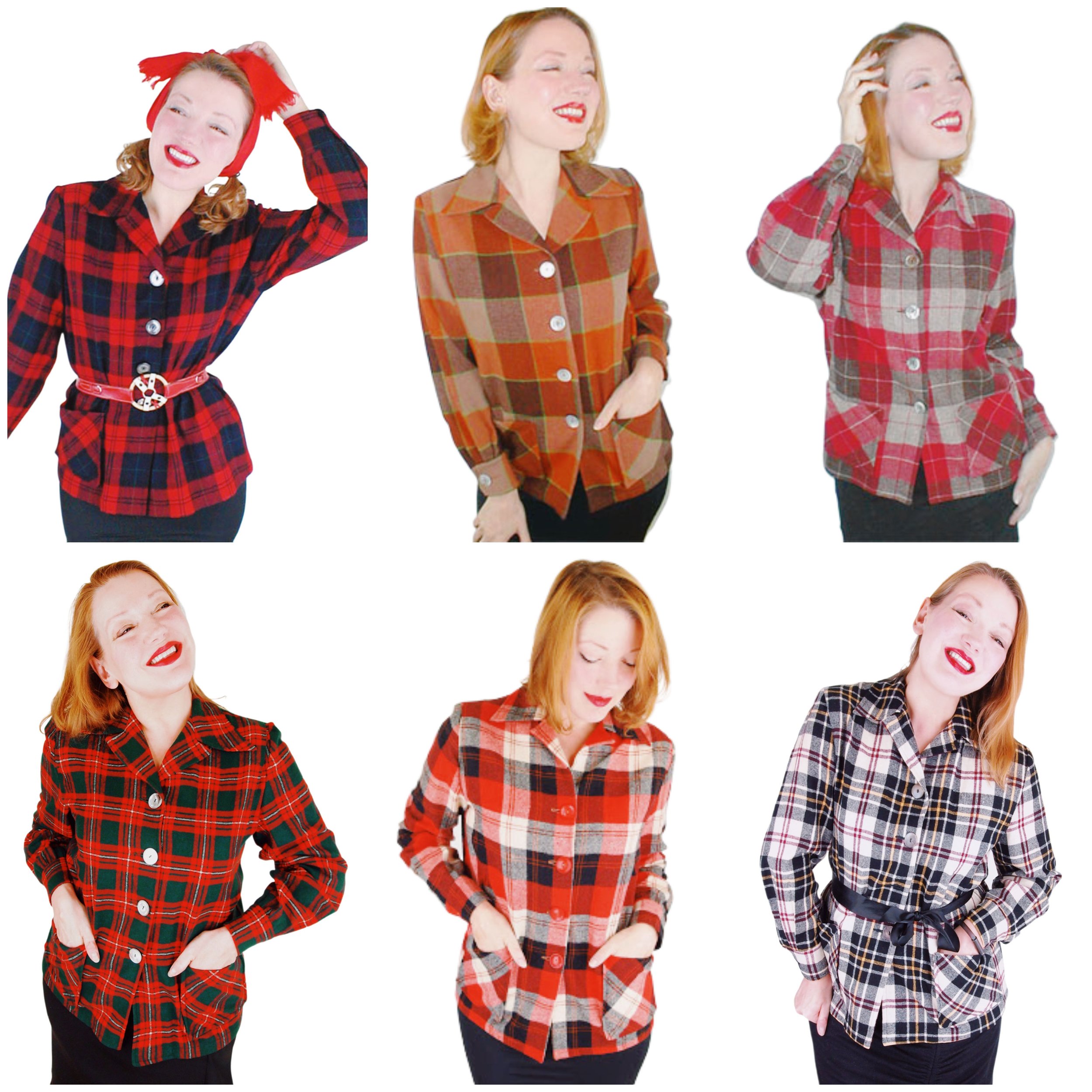
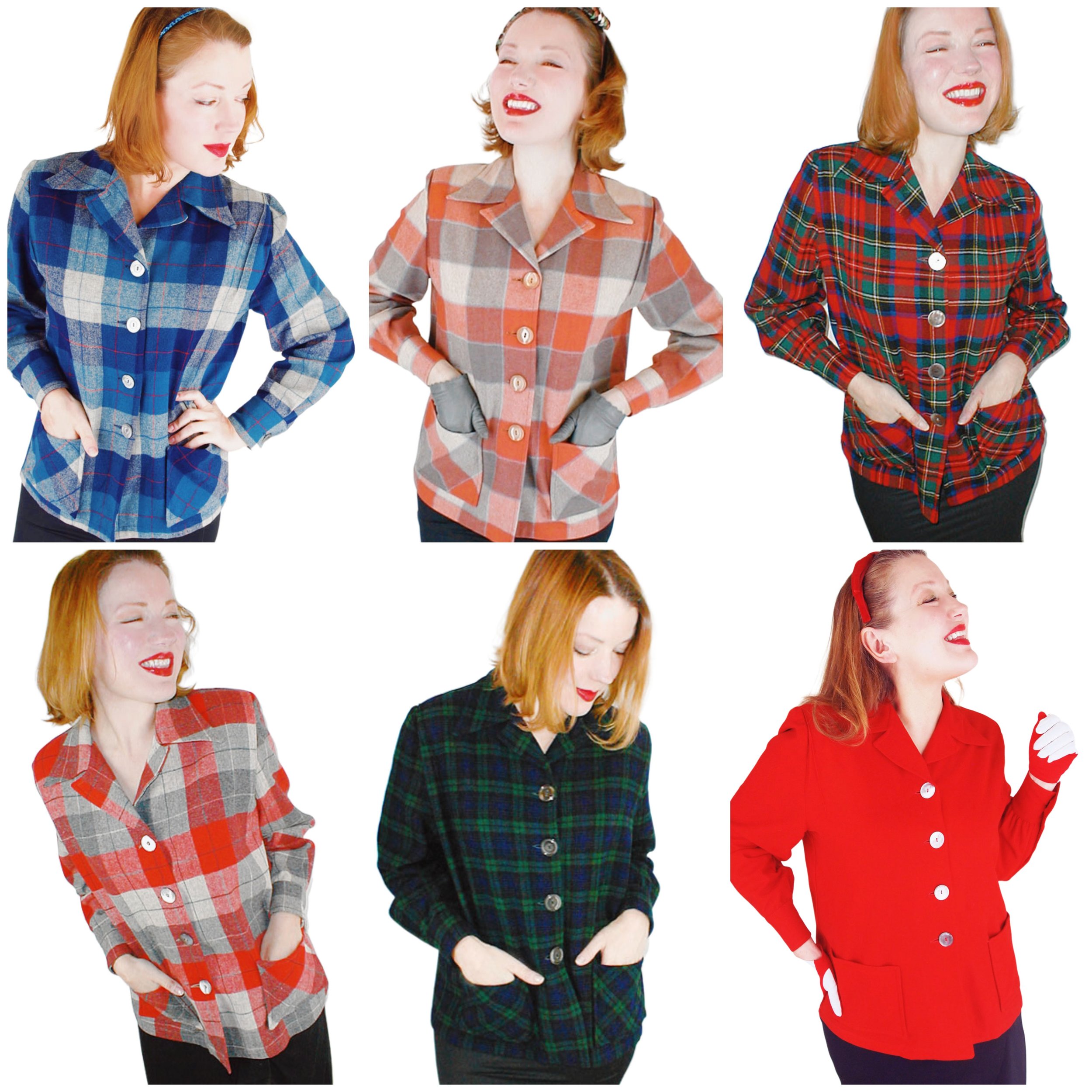
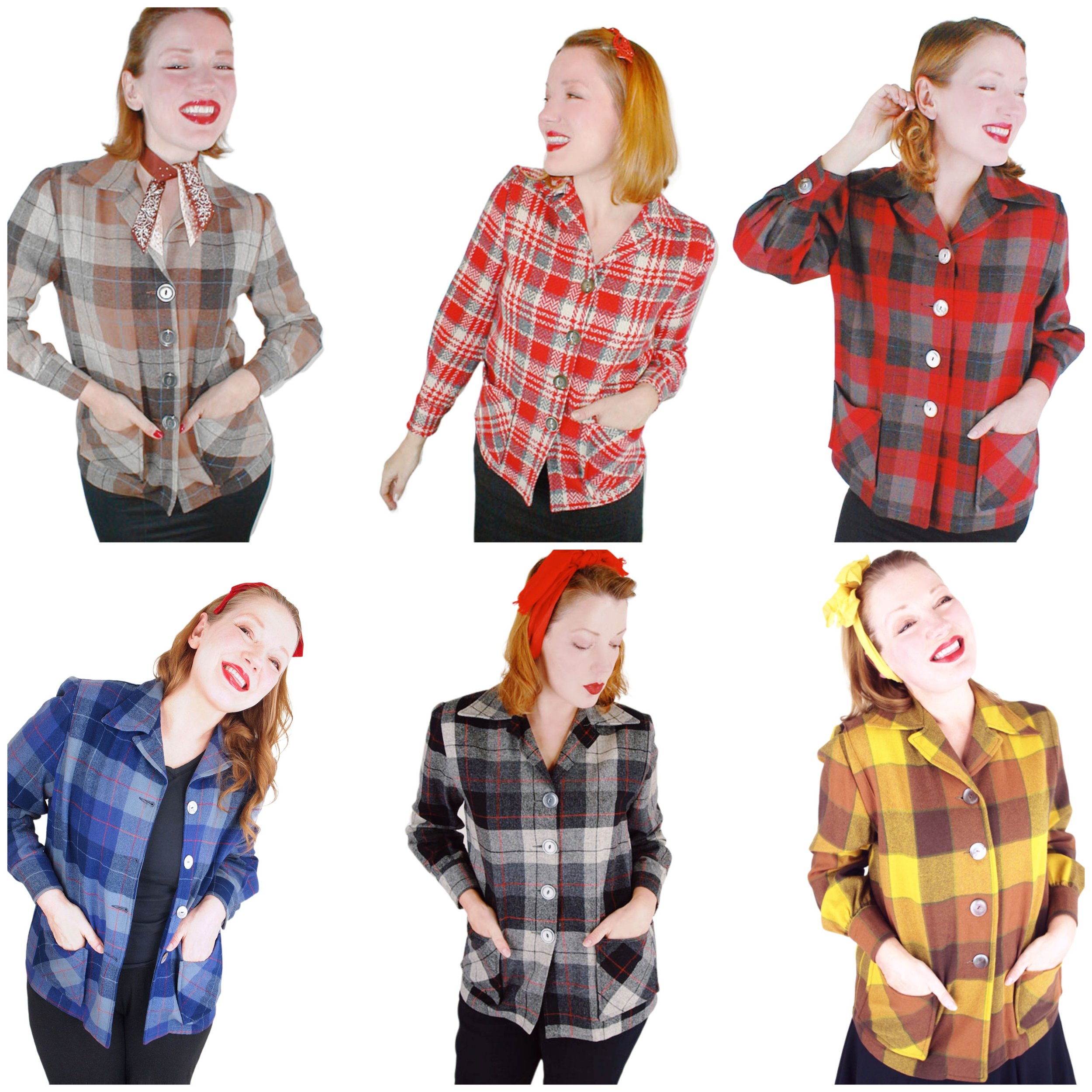
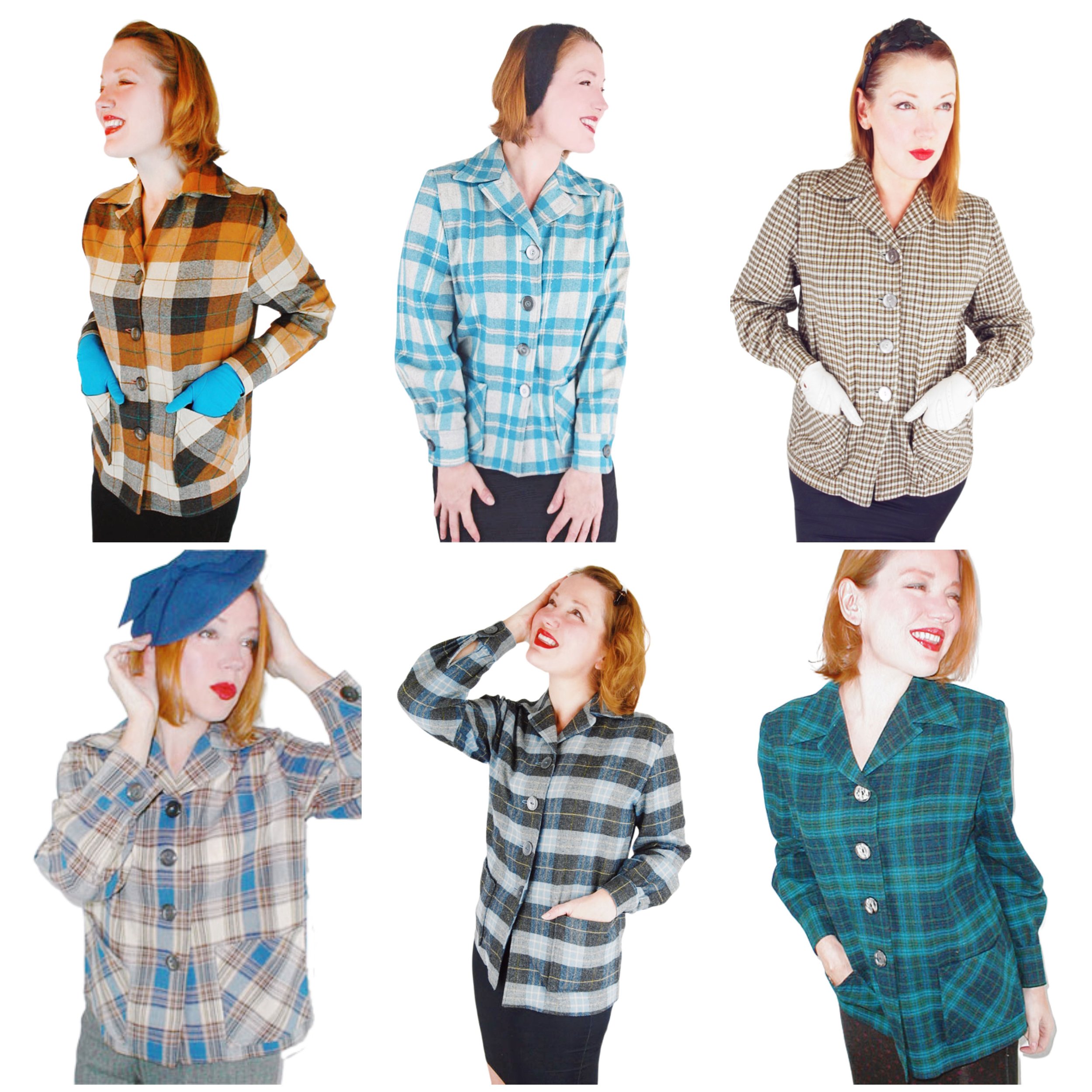
People are always surprised at the variety of the plaids used for the jackets made by Pendleton. I get plenty of requests for specific favorite plaids, but almost every one I find differs from every other one I’ve found. A woman once wrote to me that her mother had sewn pockets onto Pendleton ’49ers until 1957. It surprised her to see a vintage ’49er in purple and lime green plaid and asked her mother if that could possibly have been an original ’49er color scheme, and her mother said yes! The variety is wonderful.

It is often very difficult to tell the exact era of a Pendleton ’49er because they have been made similarly for so long. The company still makes wool shirts and jackets for women, but the current (2023) models drift more toward their classic men’s shirt jackets.

If imitation is the most sincere form of flattery, Pendleton should feel deeply admired by the number of companies that copied the ’49er to greater and lesser degrees. Everyone wanted in.

Some, but surely not all, the ’49er look-alike labels (White Stag, Western Star, Chippewa Woolen Mills, Graff Californiawear, Penney’s, “The Prospector” by Algene, Traverse Bay Woolens, “Slick Shirt” by Vic-Gene, The Empress, Game and Lake Original, Merrill Woolen Mills, Frisco Jac, and The Crescent).

How did Pendleton come to make the ’49er to begin with? According to the company’s blog, “During WWII, men were not the only people enjoying distinctive plaids and ombres in pure virgin wool. Women began to borrow men’s work shirts for both work and warmth. It’s possible that by wearing their husband’s shirts, women kept the memories of their husbands, fiancés and brothers close, though many undoubtedly needed some serious work wear that was simply not available for women at the time. Whatever the reason, women loved Pendleton shirts.”

The name ’49er was not only a tribute to the year it was first made, but, as a Western U.S. company, a nod to the California Gold Rush. The designer was a 41-year-old woman named Berte Wiechmann who had been working at Jantzen, another sportswear company based in Portland, Oregon. Although she based the details on Pendleton’s popular men’s shirts, she chose to use large patch pockets, and those big iridescent shell buttons, to help soften the look. Again according to Pendleton, Wiechmann’s choice of buttons was a black shell beauty from Australia and Tahiti, supplied by J. Carnucci & Sons, NJ.

Researching Weichmann, I came across her designing for Jantzen again in 1958. She was a popular speaker, described in The Capital Journal (Salem, Oregon) as, “an entertaining, peppy and enthusiastic leader in fashions … She’s a riot all by herself.” Weichmann lived to be 101 years of age, dying in 2009.

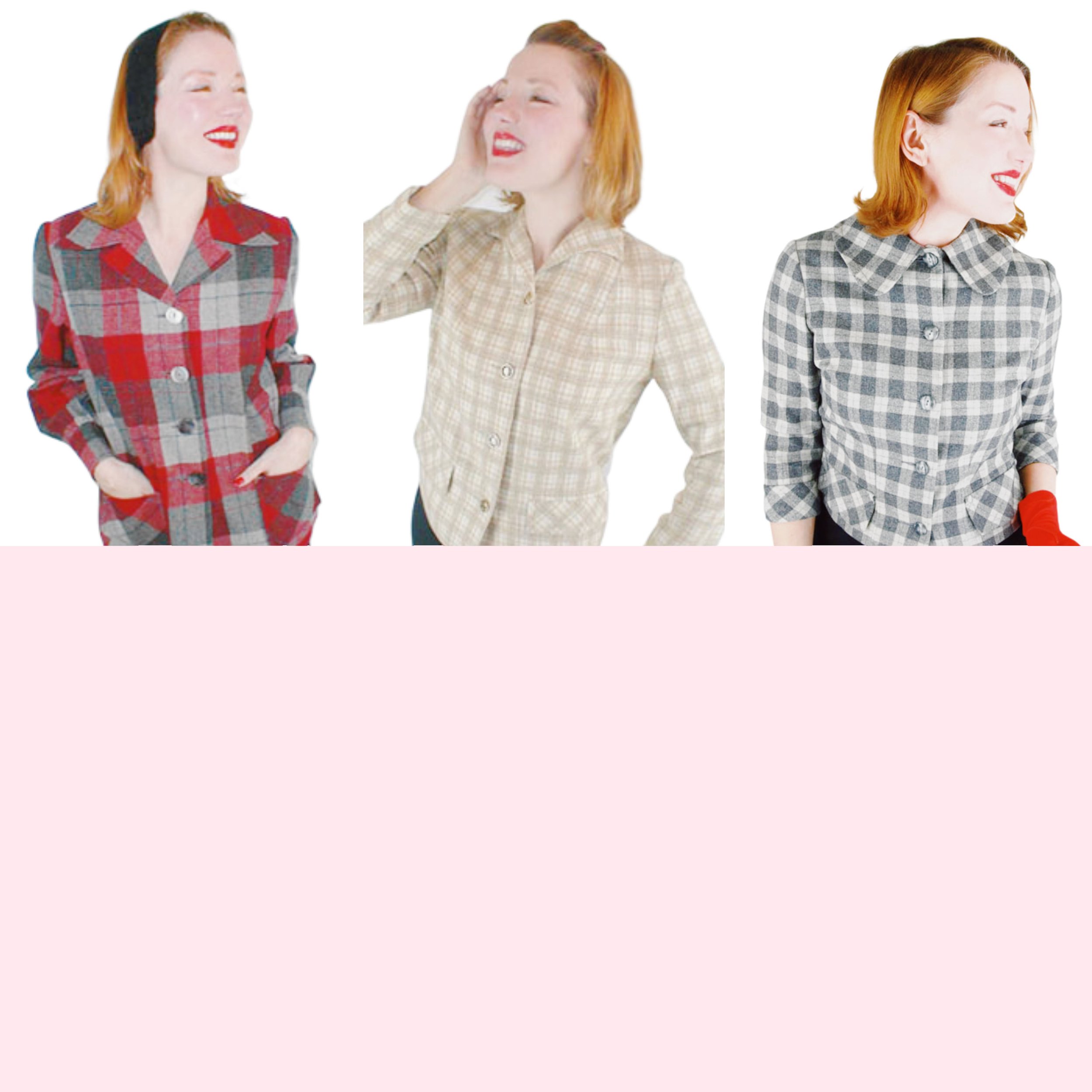
Here are the Pendleton ’49ers I’ve offered over some years, along with an assortment of very similar jackets by other manufacturers. The last two jackets shown are 1960s variations by Pendleton, both shorter than the original.

A Panoply of Plaids

Quick facts about Pendleton ’49ers:

Label from a 1950s ’49er jacket

Label from a men’s jacket dating from the 1980s. Note the Woolmark symbol in the lower left corner. (Courtesy of the Vintage Fashion Guild Label Resource)

  • Pendleton’s white labels are in clothing designed for women, blue labels are in their men’s clothes. You can see examples of many Pendleton labels in the Vintage Fashion Guild’s Label Resource.

  • The Woolmark symbol, which shows up on Pendleton labels, was not used before 1964.


The original dark shell buttons

  • I suggest dry cleaning all woven wool, including Pendleton jackets. Moths and carpet beetles love this wool, so it is important to keep it clean.

  • The dark shell buttons used on Pendleton ’49ers are prone to chipping—which is why many a vintage ’49er will have replacement buttons. Ask your dry cleaner to cover them for protection, or remove them yourself and resew them when the jacket comes home. You won’t be sorry. 

 
  • What is a shoulder flange? 

    Do you see the pleat from the top of the shoulder into the front of the jacket? It’s that flange that gives the ’49ers shoulders great definition, as well as some extra room. 

  • What is a back yoke? 

    This is the panel of fabric across the upper back, designed to support the shoulder and back fabric of a shirt. The ’49er borrows this feature from menswear. 

  • What is bias cut? 

    Fabric cut and used for the garment on the diagonal is called bias cut. This cut famously lent give (some horizontal stretch) to 1930s gowns. With the Pendleton ’49er, it sets the plaid at a jaunty angle.


Shoulder flanges, back yoke and bias cut pocket

Finally, there are also vintage '49er look-alike patterns so you can make one yourself—perhaps in purple and lime green plaid?


What do you think of these jackets? Do you have one? What are the plaid’s colors?

17 Comments

4 Comments

Denisebrain best of 2022

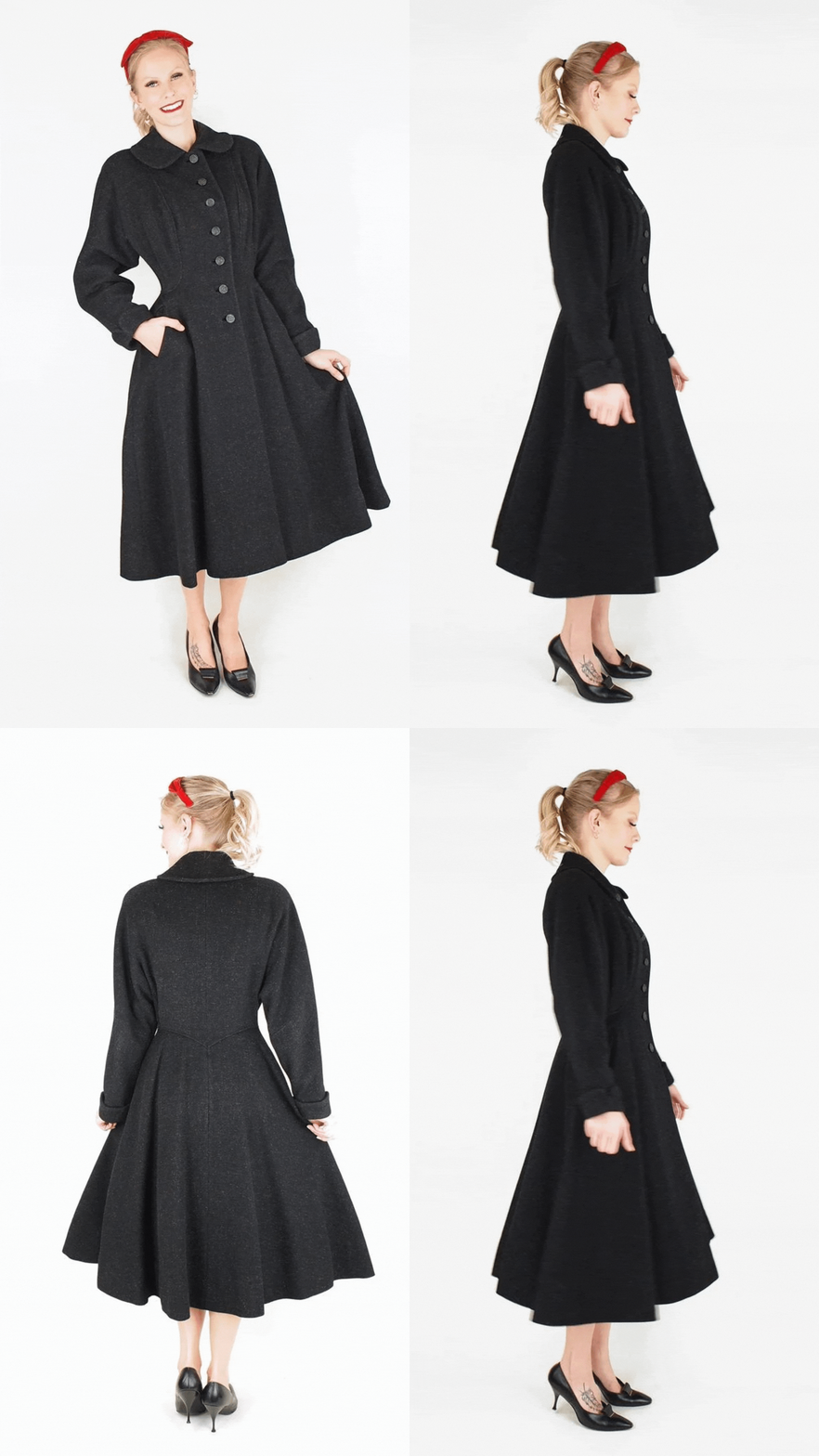
This year’s best-of starts off with two why-don’t-they-make-them-like-this-anymore-quality New Look-era items. The coat, labeled Bettijean, is made of wool with rainbow flecks.

Dan Millstein made this buttery-soft wool jacket with satin details. Both flew from my shop.


Once again, I am so happy to have had the help of models who really get, and love, the styles.

Here is a 1940s wool gabardine suit and a hooded velvet maxi coat from the ’70s, modeled by Sarah.

With your help, once again I have supported One Tree Planted with a dollar for each purchase from my Etsy shop. One Dollar = One Tree. Isn’t it wonderful to think of the green we are bringing to the world with that tree, and the green choice of great vintage fashion?

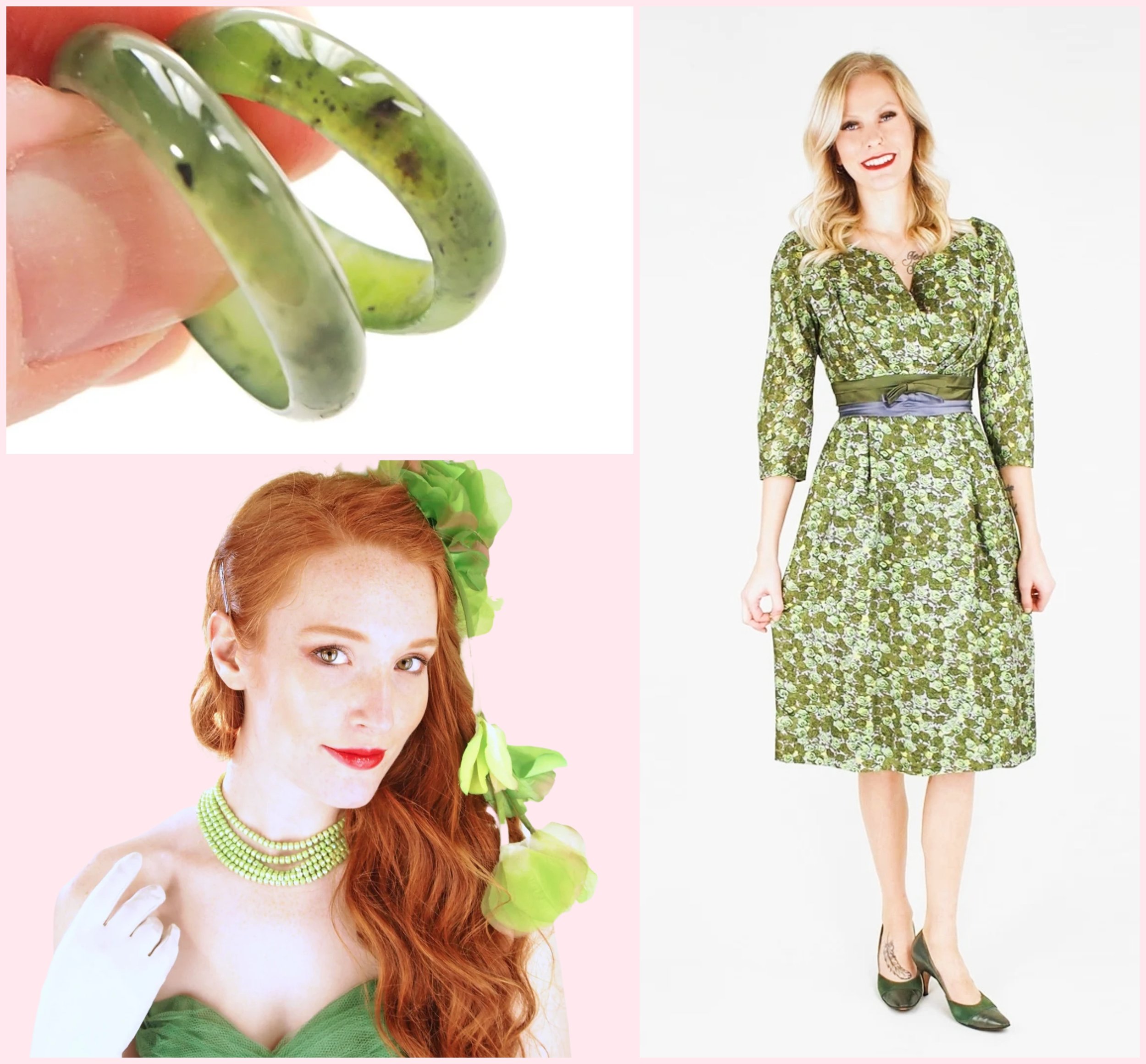
Speaking of green, these jade rings sold very quickly. And here are couple more wonderful models, Roxy, in a silk dress by Mort Schrader, and Selah in a Castlecliff iridescent green glass beaded necklace.

That necklace? A dear friend donated it for me to sell with all proceeds going to Save the Manatee Club. As some of you know, I love manatees, and donate 10% of my yearly earnings to Save the Manatee Club. I’m so grateful that many of you care about manatees too.

One customer wrote about this white gown:


I was deliberating between this dress and a couple others from different shops. Then I saw your note about donating to Save The Manatees. Done! Sold! I have loved manatees since I was a child, and I "adopt" one every year. His name is Floyd. Anyway - completely obsessed with the dress and 100% will be supporting your shop as often as I can afford!!!

Here’s another item my dear friend donated to raise money for Save the Manatee Club. It’s a mohair sweater by Lee Herman with puffy little embroidered mushrooms. I thought it looked great with this silk scarf by Jacqmar.

Among things that make a walk in the rain cheerful are vintage raincoats and polka dots. Together? Win-win. One coat’s buyer wrote: Vintage item and so cool, fun description is accurate and seller went the extra mile and I felt like I was receiving a gift! (I love it when people feel that way!)

The other said: Love this raincoat. I looked at it for quite a while. So glad I finally purchased it. (I’m so glad too!)


No color tops black in vintage toppers …at least that’s what you seem to be saying. I routinely sell more hats in black than any other shade.

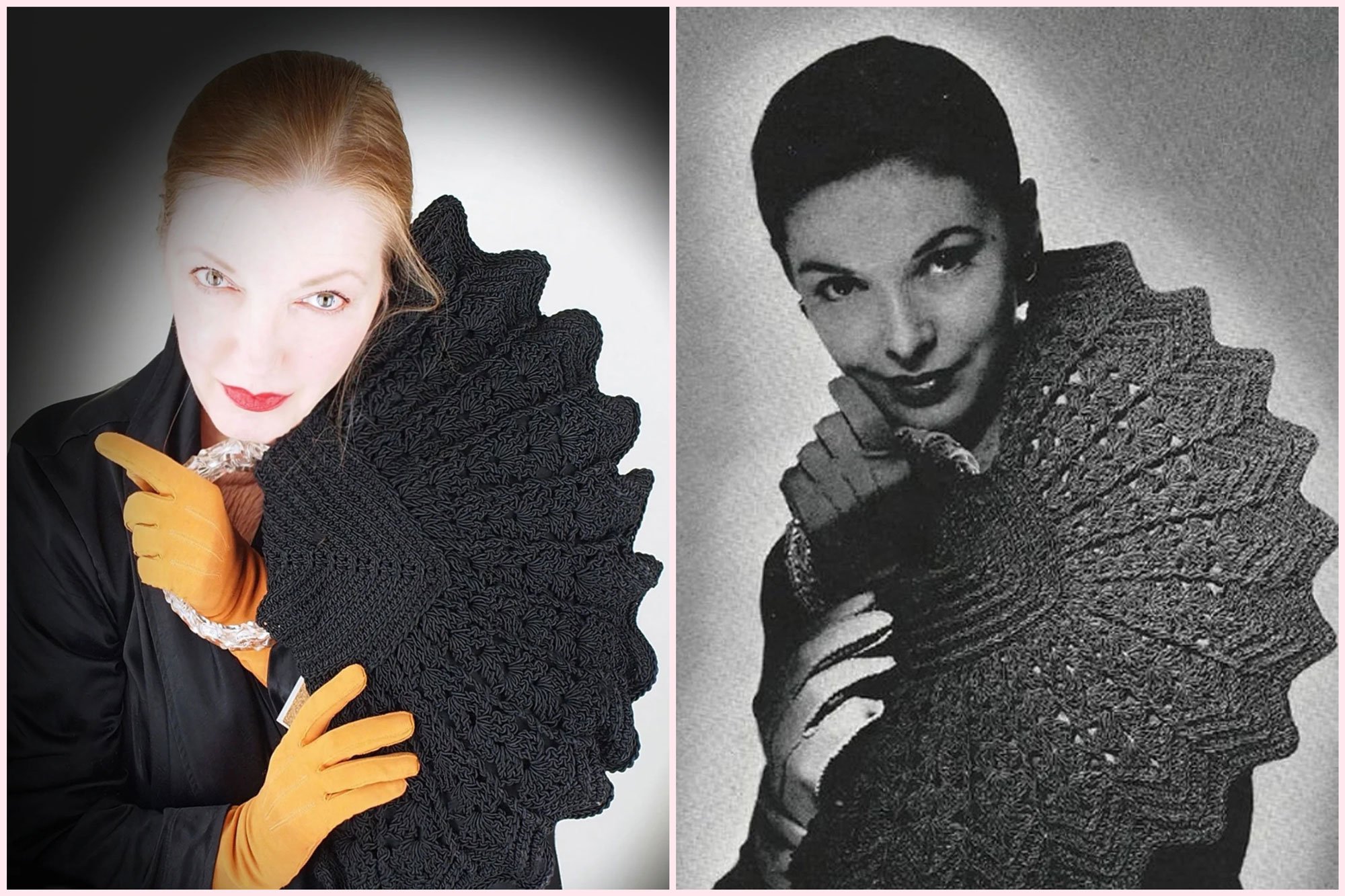
Speaking of black, here’s a Vintage Convergence: A large fan-shaped bag home-crocheted from rayon cord, with a twisted Lucite handle and carved Lucite zipper fob. The original design was a Cordet Crochet pattern by Jack Frost, dating from 1945. Of course I had to attempt the same pose.

Humor me—this is as close as I get to time travel.


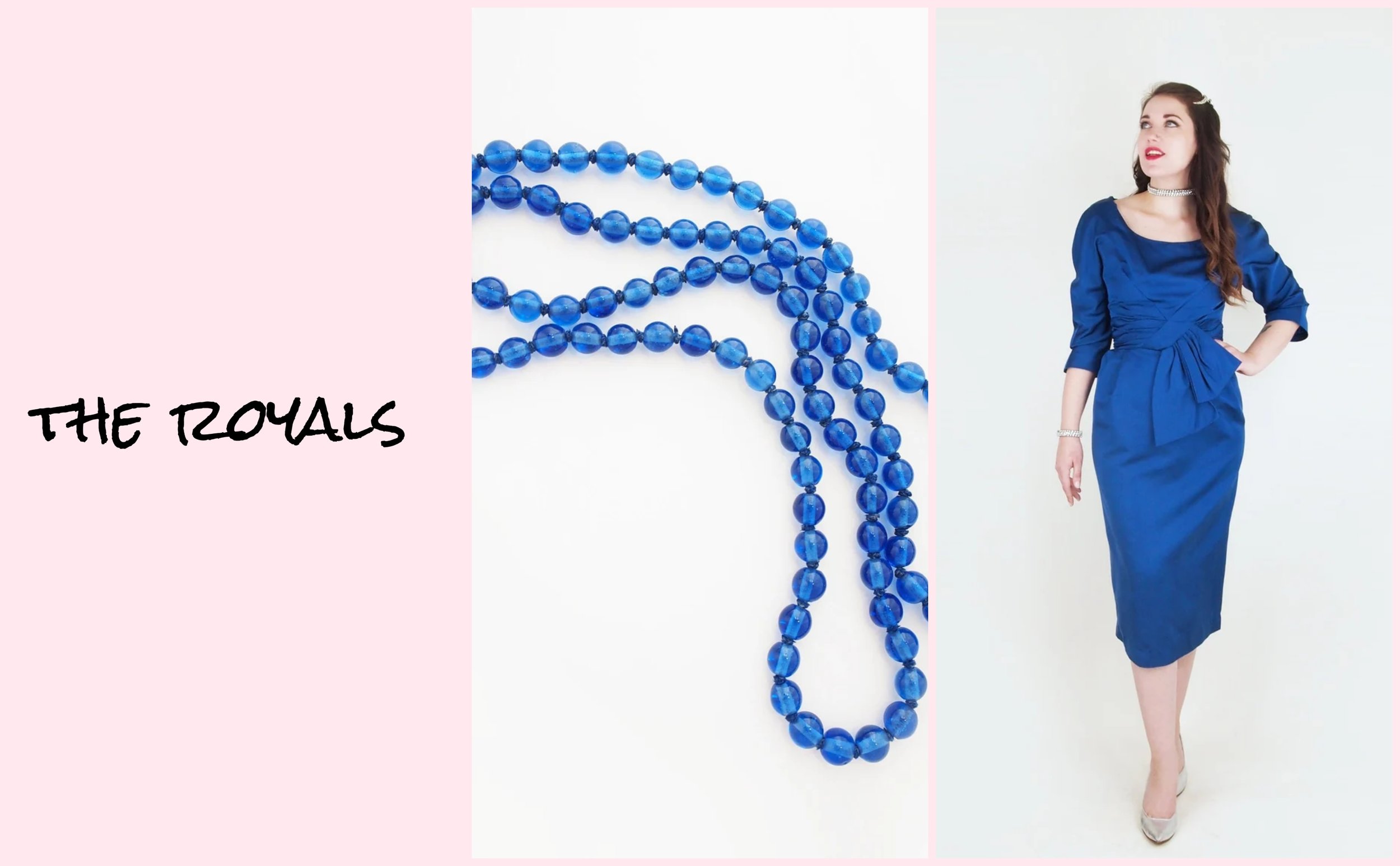
This long, hand-knotted necklace of blue glass beads is simple and beautiful. Another wonderful model, Jessica, modeled this blue silk faille dress for me—also a simply beautiful design made by the color.

Pale pink from the 1950s, ’40s and ’60s. Which is your favorite?


There’s no doubt, vintage Hawaiian-made fashions are perpetual bestsellers. Look at these prints from the 1950s and ’60s and you’ll see why.


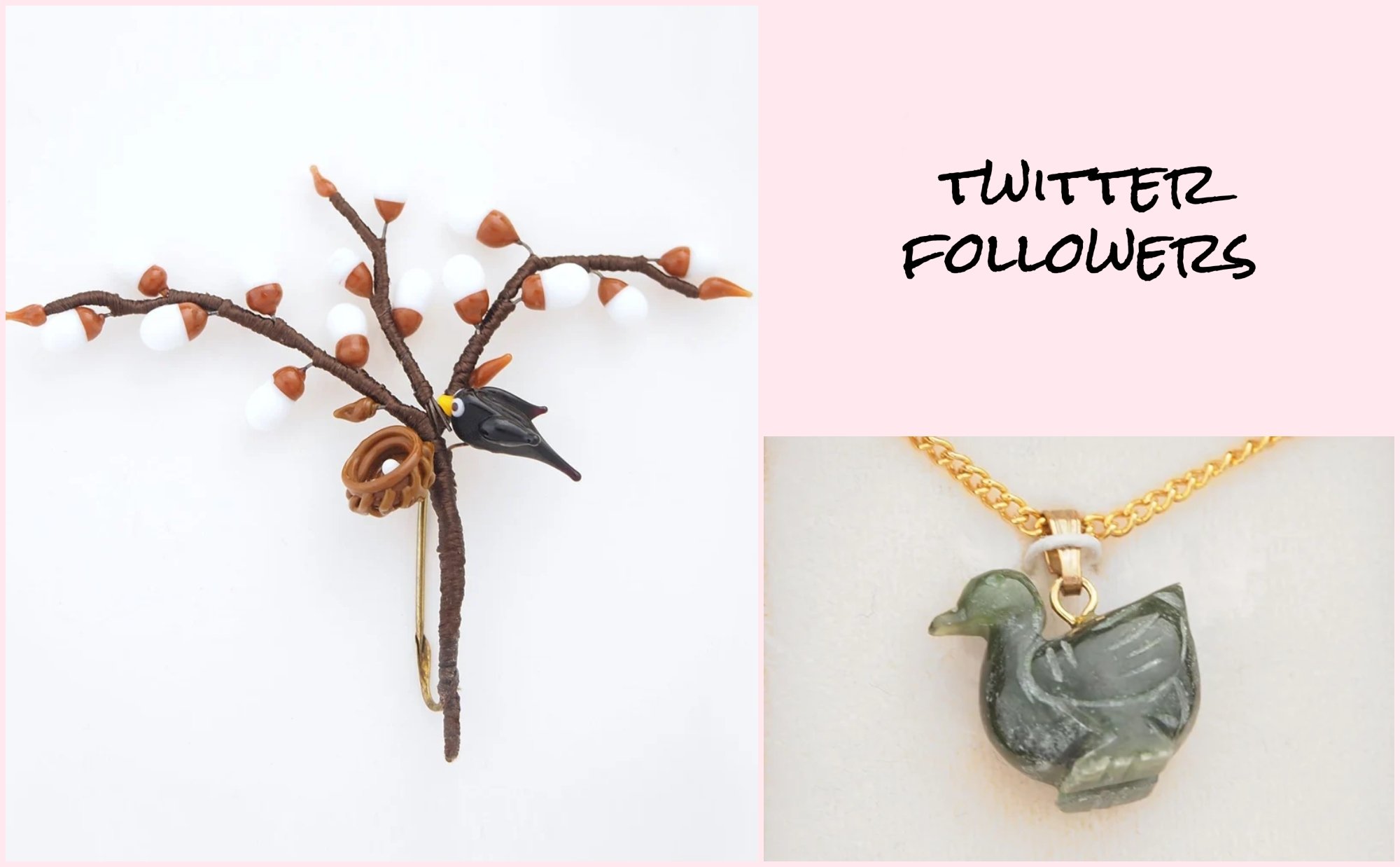
You may want to quit Twitter in its newest incarnation, but you clearly don’t want to quit twitterers—birds, that is. Most unusual is the blown glass and wire pin with a bird and nest in a tree that came to me in a box with the following note inscribed on the box's side: "From 'Aunt' Grace Hart, She bought it at the Golden Gate Exposition 1939 — brought it 'home' to me."

The 1950s Coro Duette owl pin clips and earrings are their own sort of amazing, with an ingenious mechanism (patent number 1798867) to separate the pin into two clips.

The duck, in its original gift box, is carved jade.

You (and I) love fashion from the 1940s, and here are two very different representatives: Wide-leg wool gabardine trousers, à la Katharine Hepburn and the most twirl-able cotton square dance dress by Donnell's of Denver.

In fact, black and gold are quickly sold! 1960s brocade, 1950s brocade (with a reversible coat no less) and 1950s velvet with golden cord embroidery.

I’ll let you in on five things I’ve considered my businesses’s mantras in 2022:

  1. Gratefully accept all the help you are offered.

  2. Only do the amount of things you can do well.

  3. Work with a volunteer SCORE or SBDC small business coach.

  4. People truly appreciate intangibles.

  5. Smile as much as you possibly can, and give others a reason to smile.

My personal mantras overlap:

  1. Gratefully accept all the help you are offered.

  2. Only do the amount of things you can do well.

  3. Feed the bees with everything you plant.

  4. Shop small shop small shop small shop small.

  5. Smile as much as you possibly can, and give others a reason to smile.

What advice helped you in 2022? I sincerely want to know.

Here are some diverse jewels that sold this year, from the 1910s through the 1960s.

The coins? This was clearly someone’s souvenir of her travels to South Africa, Belgium, Mexico, Sweden and Austria. The very lovely repeat buyer left this review: These coins must have appreciated in value because wearing this bracelet makes me feel like a million bucks! The very large round brooch is marked Original by Robert. One of my esteemed Vintage Fashion Guild colleagues said about the glorious mishmash: In my opinion, the unique beauty of imagined patterns, colors, and transparencies create the fantasy that makes costume jewelry so appealing.


1930s items are the greatest treat to find—truly becoming quite rare. Here’s a French-made sequined bag, a colorful necklace and an incredible silk dress, all sold in 2022.

These three went out just in time for Christmas.

Emma Domb gown

Brooch by JJ

1940s rayon gabardine

Wear Vintage Now! Choose It, Care for It, Style It Your Way, which I published in 2020, became an eBook this year, available from Apple Books. And I’ve just received a new batch of books to offer here on my website or in my Etsy store. (P.S. I love reading your reviews!)

A 1950s Schiaparelli bracelet that was purchased in 2022.

I will sign off with my very fondest wishes for 2023 to you.


Here's to a New Year of love, health, happiness, and hope for us all! 

—Maggie
of denisebrain


4 Comments

Comment

Let it Snow!

From Bing Crosby’s hometown—where we do not have to just dream of a white Christmas—I send my warmest wishes to you for the holidays.


If you think I’m kidding about the snow here, let me share this view from my front stairs some time ago. The snow is about two-feet deep now!

For those of you caught in brutally cold weather, deep in snow, I send extra warm wishes. Please stay safe!

Comment

Comment

Thankful

It’s Thanksgiving plus one day, but it’s never too late to let you know how thankful I am.

I am so thankful to have a small business. The people I have met—customers, colleagues, collectors, historians, models, journalists, the original owners of vintage fashion—have given me a world of kindness and support.

I wish you every happiness in this holiday season, and hope you are surrounded by all that you love best.

Comment

2 Comments

It's Manatee Awareness Month!

For the 43rd year, November is Manatee Awareness Month

November is Manatee Awareness Month, an annual month-long dedication to manatees and their conservation in Florida and beyond. Former Florida Governor Bob Graham first declared November as Manatee Awareness Month in 1979, when the state began designating manatee protection zones in areas where manatees gather during the winter. November is typically when manatees return to Florida’s warmer waters from their summer migratory routes.

(from the Save the Manatee Club website)


It is estimated that in the late 1960s the Florida manatee population was just several hundred. In 1973, the year the federal Endangered Species Act was passed, manatees became charter members of the endangered species list. 

Jimmy Buffet and Patrick Rose, SMC Executive Director, at the time of the founding of the Save the Manatee Club in 1981.


At the time of the awareness month designation there were 800 to 1,000 manatees. Two years later, Save the Manatee Club was founded by Jimmy Buffet (yes, Mr. Margaritaville) and the then-governor of Florida, Bob Graham.


Save the Manatee Club’s efforts have been critical to the recovery of the manatee. The Florida Fish and Wildlife Conservation Commission recorded as many as 6,620 manatees in its 2017 aerial survey. Since then the population has dropped, with last year the deadliest on record. The FFWCC recorded 1,101 manatee deaths. In 2022 so far, 718 animals have been found dead along the Atlantic and Gulf coasts.

This horrific mortality rate was precipitated by fertilizer runoff which created an algae bloom that devastated the seagrass beds that are the staples of the manatee’s diet. Many animals are perishing from starvation. If manatees venture out from their usual winter zones in search of food they risk deadly cold stress and boat strikes.

This is not an easy time to be a manatee.

How can we help?

Save the Manatee Club has a list. Of course.

If you are in Florida, there are many things you can do, from reporting sick and injured animals to simply respecting boat speed limits in manatee zones. However if you, like me, live far from Florida, you can still help. The Adopt-A-Manatee program is a classic.

I work to raise awareness of these wonderful animals and their plight, donating 10% of my vintage fashion sales earnings to Save the Manatee Club. This year, in honor of Manatee Awareness Month, I am dedicating 25% of my earnings to SMC. Some of the items to be listed through the rest of the month will be entirely for the manatees. Your purchases will help now more than ever!

Vintage items in manatee-approved blues

Vintage items from my shop in manatee-approved shades of blue (Manatee photo by Koji Kamei from Pexels.)

2 Comments

4 Comments

How vintage clothing is priced

This is an update of a blog I first posted 7 years ago, directed at buyers of vintage fashion. My next blog will be directed at sellers, about how to price vintage fashion.


Why does this 1950s dress cost $49, this one $98 and that one $300? Ever wondered why the big differences?

I am sometimes asked if I can accept an offer of a lower price for an item I have for sale, and I don’t like to just bluntly refuse without an explanation. Sometimes I’m asked how to price a vintage item, or why an item I’m selling is a certain price. This post is to explain a little about the vintage clothing and accessories marketplace and the pricing one sees.

First, you need to know how vintage clothing is acquired by those who present it for resale. With the exception of some one-shot Ebay sellers, it is infrequently something from the seller’s own closet or family’s closets. Very infrequently it was given to the seller.

Usually, vintage sellers who have been around any length of time must find and purchase vintage fashions. They may get up very early to get in line for promising estate sales, garage sales, car boot sales and flea markets. They may put ads out for purchasing vintage clothing and go on buying trips to nearby (or far away) cities and towns. They may regularly scour the thrift, second-hand and antique markets. Auctions can also be sources. The seller has to make many good contacts, persevere and be resourceful.

What impacts a price

✔️ Location. In some areas there may be relatively more or less vintage available, and at more or less high prices. Just to sustain the business may take more income in some areas than others.

✔️ Scarcity. Vintage clothing and accessories that pre-date the 1980s are hard to find in many areas, and the older, the scarcer. One of the most rare things of all the 20th century seems to be a beaded silk dress from the mid 1920s in excellent condition. The amount of activity (think dancing the Charleston) that some of these dresses endured in their Roaring 20s heyday took a toll, and the combination of the delicate fabric and heavy decoration has made these dresses extremely ephemeral. With the popularity of 1920s styles over the past few years, many seek these dresses and are truly amazed at the prices—but what’s really amazing is that there is an authentic beaded silk dress from the 1920s left to sell!

Some other scarcity issues involve sizes (such as larger shoe and dress sizes) and types of items (generally trousers are more worn out and disposed of than skirts, menswear more than womenswear, swimsuits can take a beating, as can shoes...).

✔️ Condition. The example of a 1950s dress for $49, $98 or $300 may come even from the same shop, with the $49 dress being pretty but flawed, the $98 a simple dress in excellent condition and the $300 dress pristine and with a good label and great design. Condition means so much in valuing vintage because it really impacts the wearability, life expectancy of the garment, and acceptability for various occasions. Would you want to attend your friend’s wedding in a dress with an obvious and unremovable stain on the front? No, but you might wear the dress to a swing dance.

✔️ Quality. There is a reason why vintage haute couture is haute priced: It is the work of a great designer, skillfully and beautifully crafted with techniques that are becoming rarer and rarer. The materials will match the workmanship and the overall impression will be, most likely, breathtaking.

Unlabeled items can also be of great quality, and a good seller will take the trouble to explain the elements of an item’s quality. It is important to know that certain designers, labels, styles, eras, fabrics and embellishments can justifiably command high prices. Even color influences price. Would you pay more for an aqua blue dress or a similar dress in brown?

✔️ The seller. If a seller has a great reputation, with excellent references and knowledge, he or she can charge more for an item. Some excellent sellers don’t charge at the top of the spectrum, but many do. They also will stand by their sales, something that is not easy to do with vintage, each item being unique. If you enjoy the offerings of particular sellers, and you know you can trust those sellers, their finds will probably be worth more to you.

✔️ The selling venue. Are you walking into a posh Manhattan vintage shop or an antique mall in a small town? Which do you think will need to charge more for that vintage handbag? Right.

The famous gown worn by Marilyn Monroe in 1962, and more recently by Kim Kardashian, unfortunately (White House photo by Cecil Stoughton. Wikimedia Commons)

✔️ Provenance. If an item was worn by Marilyn Monroe—such as the dress she wore singing Happy Birthday Mr. President, which sold at auction in 1999 for $1.3 million, and for $4.8 million in 2016—it is worth many times more than its weight in gold. Even if there is not a famous person tied to the vintage fashion item, a sweet or interesting story can push the value of the piece.

✔️ Going rates. Experienced vintage fashion sellers usually research before they price an item, working to find the right price for what they consider to be their place in the market, seeing how other sellers have priced. Sometimes a movie or show (Titanic, Mad Men and Downton Abbey immediately come to mind) will drive the interest in a style and the going rate will go up accordingly. Gem.app search helps immensely for checking prices on specific items for sale.

✔️ Work on the item. Some vintage items are ready to go as found, but usually they need washing or dry cleaning, often a bit of mending. In some cases a large amount of work goes into preparing a vintage garment or accessory for use. Some items are definitely worth the time, like one of those rare 1920s beaded silk dresses—if they are damaged but reparable, the repairs are often worthwhile for bringing such a beautiful piece of history back to life. Of course excellent work takes knowledge, skill and time.

✔️ Desirability. This is kind of a catch-all that overlaps the quality, scarcity, selling venue, seller—everything. Sometimes there is a certain je ne sais quoi about how the item is presented that makes it—and the seller—hot stuff. The same item may be almost worthless in other hands.

Do all these add up to a formula for how much that 1950s dress should cost? No, not at all. Pricing changes every day and it is nebulous. Even the best sellers make miscalculations in pricing, and the least experienced seller may earn top money on a particular item. Desirability may make an item of low quality into the coolest and most valuable thing in the shop for some people. The best shop owner may have prices so low that you wonder if the item is of any quality. There are simply no hard and fast rules about pricing.

Then there is the thrift shop purchase. You know, the one where you found a designer dress from the 1950s in top condition and half off of $7.50? Almost everyone who has ever loved the thrill of the hunt has a story to tell of some incredible deal. This has the effect of making the general public think that all one needs is a bit of pocket change and a trip to the thrift. Of course finding something great and vintage for next to nothing is rare and getting rarer, so if you fancy items that predate the 1980s, you will mostly come up empty.

There may also be the perception that a vintage seller doesn’t do anything but buy, mark up the price and resell. Some might do no more than that, but those who take the business seriously do lots more. For instance, I do a lot of research and stay in close touch with colleagues at the Vintage Fashion Guild who can help me when I don’t know something about a vintage piece. I have bookshelves full of vintage fashion history books. I did so much research on fabric that I ended up volunteering to write and compile the VFG’s Fabric Resource. Over the course of years I’ve built up many contacts and quite a lot of knowledge.

In my house there are always buckets of vintage items soaking, needles with every color of thread stuck in a pincushion, bags of metal zippers, jars of vintage buttons. I have a careful dry cleaner that I trust and a skilled seamstress for things I can’t fix myself. I have a storage cabinet full of various stain removers, gentle washes and odor lifters. Not only do I read and write blogs about vintage fashion, I participate in the conversations about it on the Vintage Fashion Guild forums, Facebook, Twitter, Instagram and Pinterest. I even wrote a book about it: Wear Vintage Now! Choose It, Care for It, Style It Your Way. In my selling practices I am as careful and honest as I can be. I am passionate about what I do. I sincerely care about each individual who crosses my vintage path. And I am not alone in any of this—there are quite a few really excellent vintage fashion shops. Is what we do more than buying and reselling? I think so.

Bottom line? There’s no magic formula for pricing vintage, but these are some of the considerations that might be taken into account.

4 Comments

Comment

Revisiting the Haunted Dress


In honor of Halloween, I must RETELL the story of the Haunted Dress

(Make sure to keep the lights on)

Sure I was smiling, but behind that smile was TERROR. Bwahahaha!

When I bought this beautiful blue-gray satin dress it had a small stain at the neckline, so I took it to the cleaners. I removed the four rhinestone buttons on the sleeves so they would not be damaged in cleaning. The dress came back without stain. I bought perfectly matching thread to sew the buttons back on, then hung the dress up on a rack below an open staircase. A month later, while going up the stairs, I tripped and spilled my dinner a bit. Some salsa splashed on this dress. Very frustrated, I took the dress to be cleaned again, removing the buttons again. It came back perfectly clean; I sewed on the buttons.

Then, a month later, I went to sell the dress, and there was a stain at the neckline again, and I have not a clue as to how it got there. Extremely frustrated, I removed the buttons again. I waited about six months to take the dress to the cleaners again (being slightly freaked out by this) and it came back perfectly clean again. Then I went to sew the buttons back on and could only find three of the four. I searched high and low.

Finally, after several months, the fourth button turned up in an unlikely spot. I was preparing to sew the buttons on, but the perfectly matched thread was nowhere to be found. I found a pretty similar gray-ish thread and stitched the buttons on, but noticed that one of the rhinestones had fallen out that was previously in place.

I photographed the dress, and by now I was a bit on edge about this series of mishaps. I was excruciatingly careful with it every step of the way. Then when I uploaded the photos from my camera, the computer crashed, something that positively never happens. When I restarted, the photos were gone (again, this never happens!) so I took more, with even more excruciating care.

The dress sold, and I boxed it up. By now, I was talking to it soothingly, like, “it’s OK, you are going to a good home, and you’ll like it there.” I thought I was done with problems, but when I got to the post office, my delivery confirmation sticker would not scan! (I'm not making any of this up!) The postal worker put on a new sticker.

The woman who bought the dress truly loved it, and I hope the dress loved her too and didn’t give her too much trouble!

Comment

2 Comments

It’s Labor Day—Have you looked for the Union Label?

ILGWU parade float bearing the union label, December 7, 1960. Photographer unknown, via The Kheel Center for Labor-Management Documentation and Archives.

There was a time not so long ago when many U.S. citizens, the majority women, earned a decent living making clothing. This was in great part aided by the strength of the ILGWU (International Ladies Garment Worker Union). Everyone who was around in 1970s America knows the jingle:

Look for the union label
When you are buying a coat, dress or blouse.
Remember somewhere our union’s sewing
our wages going to feed the kids and run the house,
We work hard but who’s complaining.
Thanks to the I.L.G. we’re paying our way.
So, always look for the union label,
it says we’re able
to make it in the U.S.A.


There’s no reason to stop looking for the union label when you purchase vintage fashion. Today through Wednesday, save 20% on all items with union labels in the denisebrain Etsy shop, no coupon code needed. And let me tell you, these are well-made fashions!

2 Comments

Steal Style Ideas From Your Younger Self

7 Comments

Steal Style Ideas From Your Younger Self

Most of us say that we wish we had known then what we know now—but I’ve been thinking that maybe we should consider the opposite.

This is a photo of me when I was in college. Is there anything one would want to repeat here? Red shag carpet? Radio? Granny squares?

memakingcrochetblanketbloomingtonb.jpg

I didn’t know what suited me best, what colors looked best on me …or how to put together a granny square blanket!

What I do like about this photo is the reminder of the freedom I felt then. It made me ask myself, what could we learn about style from our younger selves? Here are some of my thoughts, and I’d love to hear about yours in the comments.

  1. You don’t have to match things you already have if you absolutely love something. When we’re young, we gravitate to things that are not necessarily part of our idea of our style. Maybe something new will actually change your idea of your style. Experiment!

I remember a 60-something college instructor taping a post on her door: Resist the tendency to define yourself. When you’re trying to decide what to do with your life, you are open.

2. Be impractical sometimes. Capsule wardrobe, sensible shoes—one part Marie Kondo, one part Lady Gaga, let this stuff go if your soul says otherwise. Do not allow people to dim your shine because they are blinded, tell them to put on some sunglasses, cuz you were born this way!

3. Make your own style with your own hands. You don’t have to have a giant credit limit to creatively flex your style muscles. See the dress I’m wearing in that photo above? I saw something I adored in a magazine and sewed something similar, but with a fabric that related to my family’s Scottish ancestry.


4. Wear things that remind you of people you love. Here I was in my mother’s Irish sweater and a scarf knit for me by my godmother. I didn’t have to pay for them, and they kept me toasty, body and soul.


Oh, and that sweater of my mother’s? I wore it All. The. Time.


5. Look at fashion and do the same without money. Did you ever look at a fashion shoot and interpret it with what you already have? There’s so much inspiration! Get the vibe, not the exact item.

6. Buy used. We all know that fast fashion is a huge burden on the planet. The opposite is true of secondhand fashion—nothing thrown away, nothing newly made. When you’re young it’s often about finding things that don’t cost so much, but it doesn’t have to be cheap, shoddy fast fashion.

7. Wear things that you can take care of yourself. And learn to take care of things at least on a basic level such as washing things carefully, sewing on a button and fixing a fallen hem.

8. Wear what you are crazy about over and over and over. Put patches on holes and if it fades and softens, think of the item as an old friend.

I wore this striped cotton sundress for seven years, until it had had enough, then used it to patch other clothes.


9. Save up to buy one really good thing that makes you feel incredible. You won’t forget it, ever.

Finally, my favorite:

10. Tell people what you love, and you may get it for your birthday. I created this three days before my birthday:

Did I get new shoes for my birthday? No, but it was worth a try!

What ideas do you steal from your younger self?

7 Comments

Comment

Consumer Reports Asked Me About Vintage Fashion


You know—THE Consumer Reports? What an honor to be asked for advice on purchasing and caring for vintage and secondhand fashion. I’m thrilled that this is a mainstream topic, and that people are getting on board the no-fast-fashion train.


Laura Murphy, the writer, asked me some really good questions, two of which I’ve never answered in so many words: How can shoppers tell that they've found a high quality vintage item? and How can people determine whether the garment they're buying is durable and likely to last? Now, aren’t those very Consumer Reports-y questions? Not easy to answer but certainly worthy of thought and response. I see a blog post coming…


Murphy also interviewed Ajoy K. Sarkar, a professor of textile development and marketing at the Fashion Institute of Technology, and Saraid Claxton, a fashion blogger and founder of vintage fashion blog Sunset Saraid. This made a good mix of perspectives.


The result of our correspondence is Murphy’s article: Expert Thrifting Tips So That You’ll Never Miss Retail Shopping.

woman thrift store shopping


Comment

Comment

My eBook is out!

When I published Wear Vintage Now! Choose It, Care for It, Style It Your Way in 2020, I went with a print edition only. I love proper books, ones that you can carry to a park and read without worrying about glare, batteries or being on the grid, put a real bookmark in, dog ear and write notes on. They are beautiful to hold and look at. They are the vintage choice.


However, someone asked me recently if I had considered an ebook edition. She said it is her impression that you’d use the book as a reference text when you need info after you’ve read it the first time. She also mentioned being able to search more easily.

Between those smart (and flattering) points, and that for various reasons some do not want to have a physical book, I have now published the book in electronic form. It is newly available through Apple Books as well as Rakuten/Kobo (although there it has an inaccurate number of pages listed—53 instead of 150—I’m working on fixing that), and it should be available elsewhere soon. It will not be available on Amazon, although the print edition is.

In whichever form you prefer, thank you for giving my book a read!

Comment

Comment

Denisebrain DNA (it’s my 23rd business anniversary!)

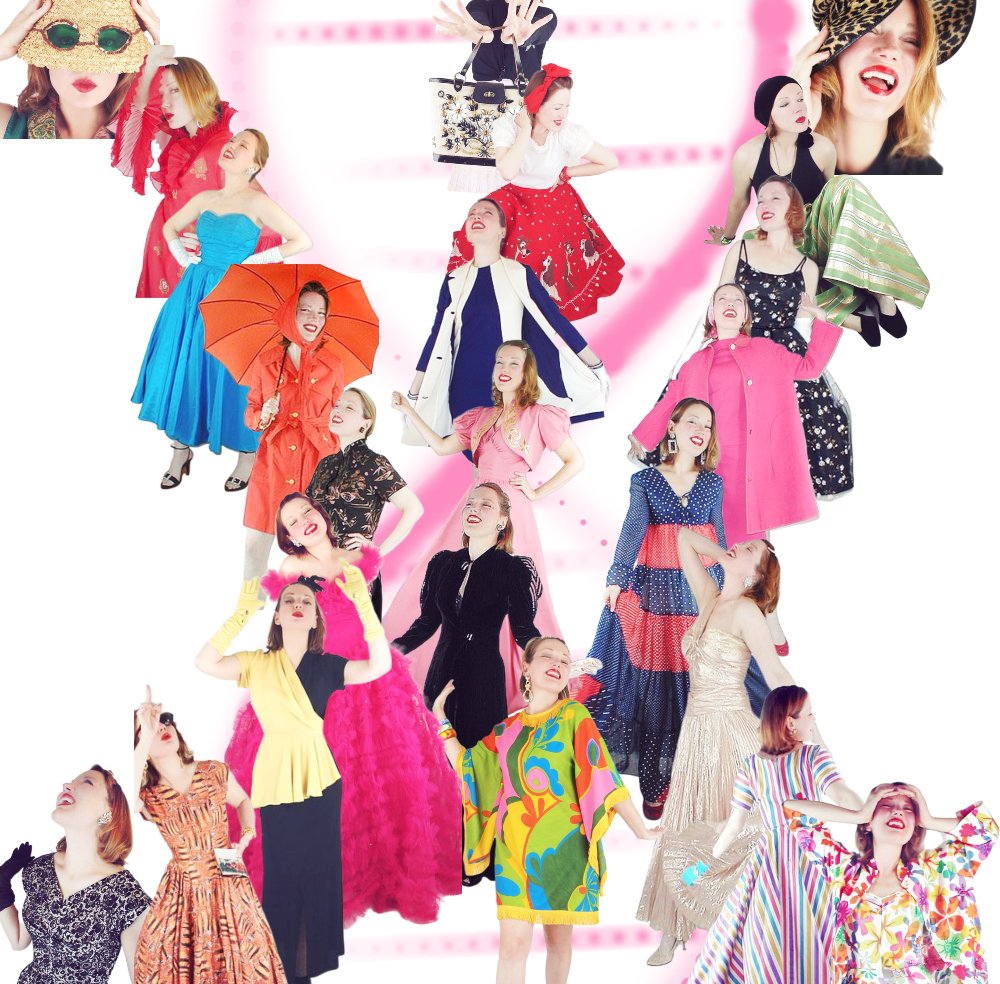
In humans, each cell normally contains 23 pairs of chromosomes—our genes—and since this is denisebrain’s 23rd anniversary, I thought I’d look at the genetic material of this business. I’d like to think it’s colorful, fun, occasionally interesting, good quality, fair and honest. A little eclectic. I admit a bit hammy. Caring. An awful lot of pink.

23rd Anniversary Sale—Everything is 23% off!

Right now, and through Saturday April 23, you can use the promo code DBIS23 at checkout to save (you guessed it!) 23%, or just go to the denisebrain Etsy shop using this link to have the discount automatically applied. The discount is good on absolutely everything (no matter the price) with the only exception being my book. As usual, virtually everything also includes free shipping.

April 22, 1999 is the day I started denisebrain. It is a very happy coincidence that April 22 is also Earth Day. My very favorite thing about vintage fashion is that it is the most beautiful of reuse. That it is wonderful in so many other ways is the icing on the cake.

Photo found here.

And speaking of cake: I’ve got the virtual pink champagne on ice and the virtual pink cupcakes to match. Just do your shopping first, then come back and grab a glass! 💗

Comment

Comment

It's my 16th blogiversary!

It has been 16 years and 2 weeks since I started writing this blog. I’m nothing if not persistent!

Here is the first blog I wrote—on Myspace (anyone even remember that?). At that time I was an eBay seller.


A LITTLE ABOUT ME AND MORE ABOUT YOU

March 25, 2006
by denisebrain

My name is Margaret (some call me Maggie), and I am the seller denisebrain on eBay.


I believe having fun with clothing is one of the great pleasures of being human, and I want what I sell to be a joy to wear and to see walking down the street. I always buy what I would want myself and my taste is broad, so I sell things from late Victorian to nearly modern times.

Why Buy Vintage Clothing to Wear?

1. It looks fabulous!
Vintage clothing is often designed with much more detail than modern clothing, even on the simplest day dress. The fabrics are at the very least different, and at the very most stunningly rich and beautiful. Oh and the colors!...Try a 30s peach, a 40s navy, a 50s combination of blues, purples and olive or a 60s hot pink and riotous orange. Even greys and blacks are different. Then there's the construction, from elaborate darting to finely sewn buttonholes, so often no detail is spared. Whether the fashions were sewn by decently-paid American factory workers or home seamstresses, there is such great quality in vintage!

2. It is recycling!
Why go and buy another new thing (and have you noticed how much new stuff is vintage inspired or washed and treated to look very worn?). Why not just have the real thing, save the raw materials, waste, and energy. And that includes your own! Used is so, so good. So many things are better when worn: Shoes are broken in just enough, leather jackets have character, prairie dresses look like they've seen the prairie...

3. It has karma!
Sometimes it is a wedding announcement in a coat pocket, other times it is just a feeling you have that somehow this dress, this pair of shoes, has been around a dance floor with the handsomest man in Cuba, ca. 1947! It is like wearing history, and sharing someone else's story. So many sweet kisses, sunny days gone by, theater openings, and jobs well done are imbedded in vintage clothes.

4. It might fit you better!
New clothes are cut according to standards that are dictated by the garment industry and fashion sensibilities. But what if you are cut more like Marilyn Monroe than the current trend? Or what if you are as gamine as Audrey Hepburn? There is a time in fashion for you! Look at the measurements on the clothing, they never coincide exactly with modern sizing, and you are likely to find a decade, a cut, and an article of dress that is so YOU darling that it seems like the designer had only you in mind.

5. It is generally a very good bargain!
So often vintage clothing, even in the priciest high-falutin' vintage boutique, is much less expensive than new clothing. If you are looking for brand names, designers, or just good-looking clothing, you will definitely find it for less, and almost always of a better quality, than new clothing ever can be.

6. It is not what everyone else has!
The cool thing is, even if you and all your friends wear vintage, you will all be dressed in unique and totally gorgeous ways. And you will never, I repeat NEVER, run into someone wearing exactly the same clothes. You know you are special, so why dress like someone else?

7. It will remind you of interesting times gone by!
Is it reliving your childhood in penny loafers? Taking a swirl in a swing dress like your mom once wore? Cruising the streets in a local bowling league shirt? Not only is this karma (see 3. above), it is connection to very special people, places and history that you know, love and want. You are living history, not just covering yourself to evade indecency laws!

8. It lets you play new roles!
In a different mood? Want to be someone just a little different today? How about a Mod, a 1930s femme fatale, a suffragette, a USO starlet, a flapper, a New Look untouchable beauty, a hippie, a war bond rationer, a dust bowl prairie girl, a First Lady, a princess, a siren, a punk? Why limit yourself to mere reality and the here and now?

9. Vintage highlights your uniqueness!
Want to go up a notch in the fascination quotient? You will be unique (ain't no one dressing just like you), beautiful (because you have found the just right style of all time for you), sensitive (you're saving the environment after all) and intelligent (look at all the money you have saved).

You are unique, beautiful, sensitive and intelligent and I want to help you dress!

Love, M


You know, I really wouldn’t change a word of that.


Thank you so much to all who have given me a read! 💝

Comment

2 Comments

Sold to Maisel Costumes!

This was fun

I’ve always squinted and rewound and squinted some more to see if any of the items I’ve sold to Maisel Costumes was appearing in a scene from the show. Sometimes I’m honestly not sure, but this time I knew!

Here’s the dress:

…and here’s its film debut:

I really appreciate the fact that the costuming for The Marvelous Mrs. Maisel includes so many authentic vintage items which have been purchased from small businesses such as my own. Here are some other items I sold to Maisel Costumes. Let me know if you see any of these!

2 Comments

Comment

Manatees: Unprecedented need

Can you help manatees with a $5 donation? Please visit my GoFundMe page.

Updated for 2022—with manatees in even greater need.


Last year my friends, colleagues and customers helped me raise a bit over $1000.
Please help me raise an additional $1500 for the Save the Manatee Club for 2022. The cause has never been more urgent.


The fact that March is Seagrass Awareness month has never been more vitally appropriate.

Manatees are creatures of habit, returning to their limited safe havens during the cooler part of the year. In these spots, they rely principally on seagrass to eat and warmer waters to protect them from deadly cold stress. Manatees have very little protective fat—their round shape is due to the bulk of their digestive tract.

The safe havens, because of decades of human-produced pollution, are being choked out by algae blooms leading to a massive loss of seagrass. Marine biologists state that the current tragic die-off of manatees is due to starvation.

More than 1,100 manatees died in 2021. Most of these starved to death. Those that venture along the coast in search of food may die of cold stress or boat strike. This year so far, more than 270 manatees have perished, trending the same as last year, which was the deadliest year on record for these beloved animals.

Rescue crews have been rushing to save as many manatees as they can, but this loss can't be sustained. Manatees were prematurely removed from the Endangered Species List in 2017—prematurely because all the threats that could lead to extinction of this iconic species are still present. This recent death count is proving that.

Manatees have been around for between 30 and 60 million years. We can't let human carelessness and selfishness wipe this gentle and intelligent species off the face of the earth.


Save the Manatee Club has a page showing ways to take action:
https://www.savethemanatee.org/how-to-help/take-action/floridas-algae-blooms/


More information about Save the Manatee Club, Inc.: To protect imperiled manatees and their aquatic habitat for future generations by raising public awareness; fostering education; sponsoring research and rescue, rehabilitation, and release efforts; supporting land acquisition; promoting aquatic habitat protection; advocating for improved protection measures, and funding education and conservation efforts in other countries.

Comment

2 Comments

Incredible Vintage: Skating costume worn by Alan Konrad for the Ice Capades

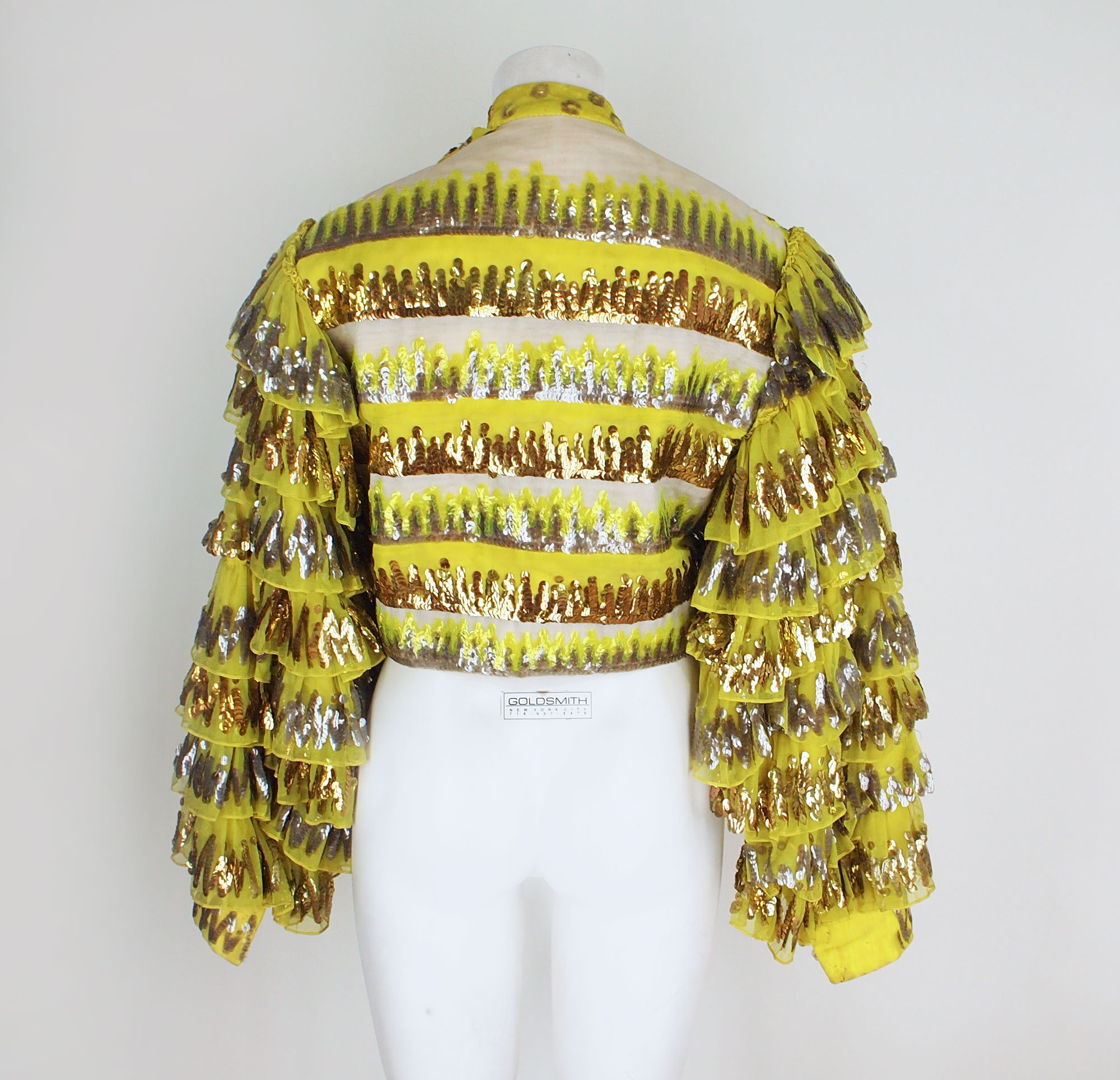
Recently I came into the possession of a flamboyant costume jacket, very well made and very used. It features ruffled sleeves, sequins galore and the color chartreuse. Inside it is labeled Ice Capades Costume Studio, Hollywood, California. The name, written in pen, is KONRAD, referring to Alan Konrad, a star of the Ice Capades from the late 1940s through 1964.

Had to show off those sleeves! The look gives me a Fiesta Mexicana vibe.

The jacket is clearly much used, missing some sequins, and stained with sweat, makeup and even a bit of blood inside. However, the more I look at it, the less I want to clean it, partly because I’m afraid any sort of cleaning could damage it, and partly because the flaws are the mark of honest use by a great performer.

Here is Konrad in 1948, at 3:11 in this film:

Often called jet-propulsion Alan Konrad in the media, he was known for his death-defying leaps, strength and speed.

From 1950

From 1955

From 1955

From 1960

From 1962

Here’s a clip from the Ice Capades in 1964, which seems to have been his last year performing. Konrad is the skater at the beginning.

Alan Konrad died in 2014.

I found a brief tribute in Ice Capades the Blade written shortly after his passing. I’ve edited this lightly for clarity.

Alan Konrad died at 2:00 am on April 15, 2014. He was 86. He had been suffering with dementia for the past 15 years and then on December 12, 2013, he fell in the street in New York and was taken to the hospital. He recovered enough to be sent to a nursing home, but then developed a kidney infection and he eventually passed away on April 15th . He was cremated and the plan is to sprinkle his ashes near the skating rink in Central Park.

Young 15-year old Alan had more determination than skating ability when he journeyed from his home in South River, New Jersey to New York City to audition. He was accepted and served his apprenticeship in Ice Capades. He was dubbed the ‘Ghost of the Arenas’ because of his determination and constant application to practicing. Alan’s eagerness to perfect his exciting technique has won for him recognition among the ‘greats’ of the ice world. He will be missed.

Although there are many Ice Capades alumni, it seems to be difficult if not impossible to find anyone of Konrad’s era.

I’ve reached out to a number of people about this amazing jacket. I do not know why it was found in Spokane, so far from Konrad’s New York/New Jersey area home. Was it given to a family member or friend? Purchased as a theatrical costume?

All I really want for the jacket is a place of honor, perhaps a museum or collection of ice skating history. In the meantime, I will admire it for the wonderful piece of skating history it is.

2 Comments

Comment

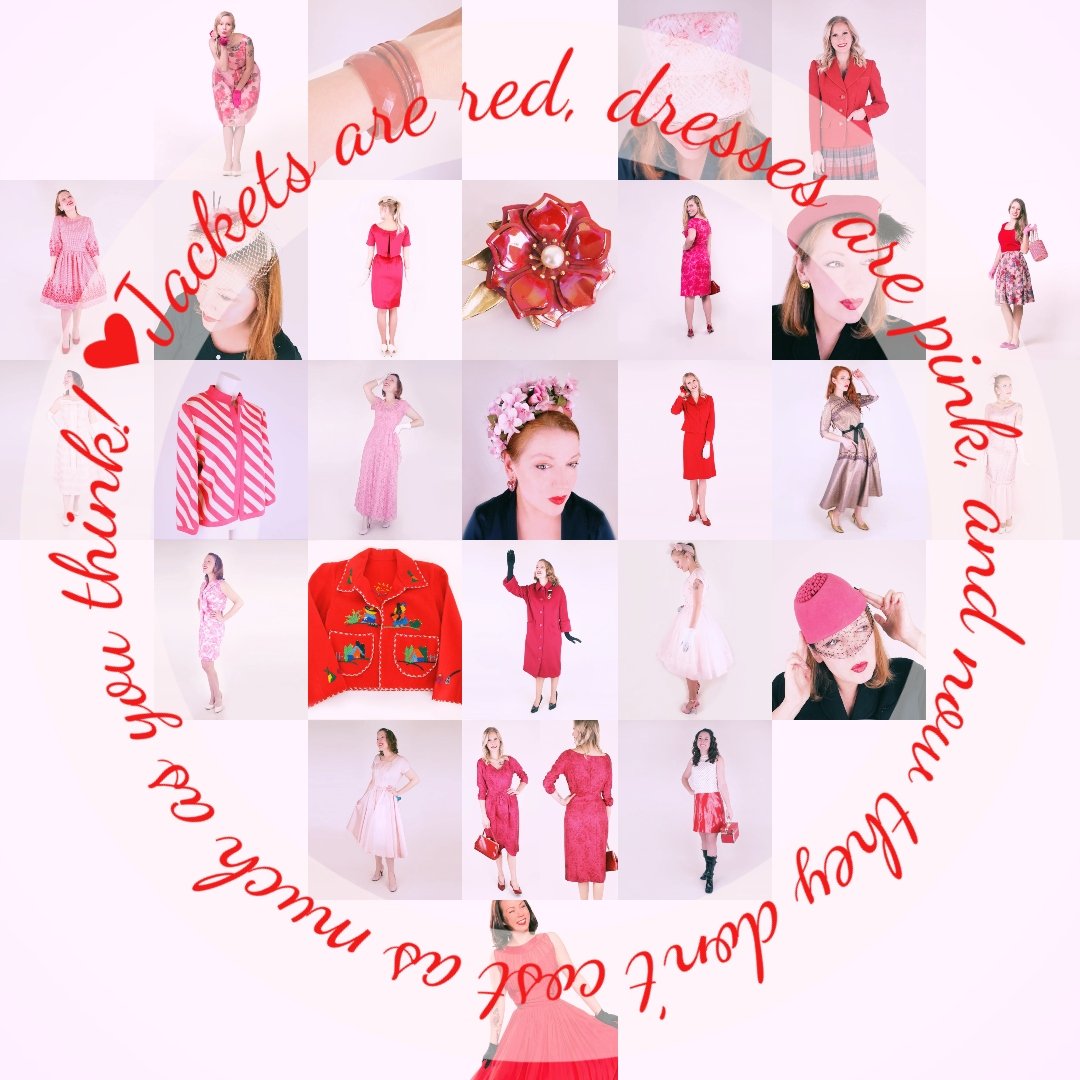
It’s a red and pink vintage fashion sale!


It's the Red & Pink Sale! Now through Valentine's Day, you can save 20% on anything in my Etsy shop that is primarily red, or primarily pink. No coupon code needed, the prices are already marked down. The shop is here. And to see just the discounted items, click on the on sale section of my shop. Oh, and shipping on most items is free within the U.S.—all the time.

As ever: Even with the items marked down, I donate 100% of the sales from the Pink Heart Shop of my Etsy store to @dressforsuccess and 10% of all other sales support the @savethemanateeclub. Finally, a tree is planted via @onetreeplanted for every sale.


💗 Find something beautiful in red or pink
💗 Save 20%
💗 Help great causes


Sounds like a win-win-win to me!

Comment

Incredible Vintage: The Matrix outfit designed and worn for the 2000 Academy Awards

Comment

Incredible Vintage: The Matrix outfit designed and worn for the 2000 Academy Awards

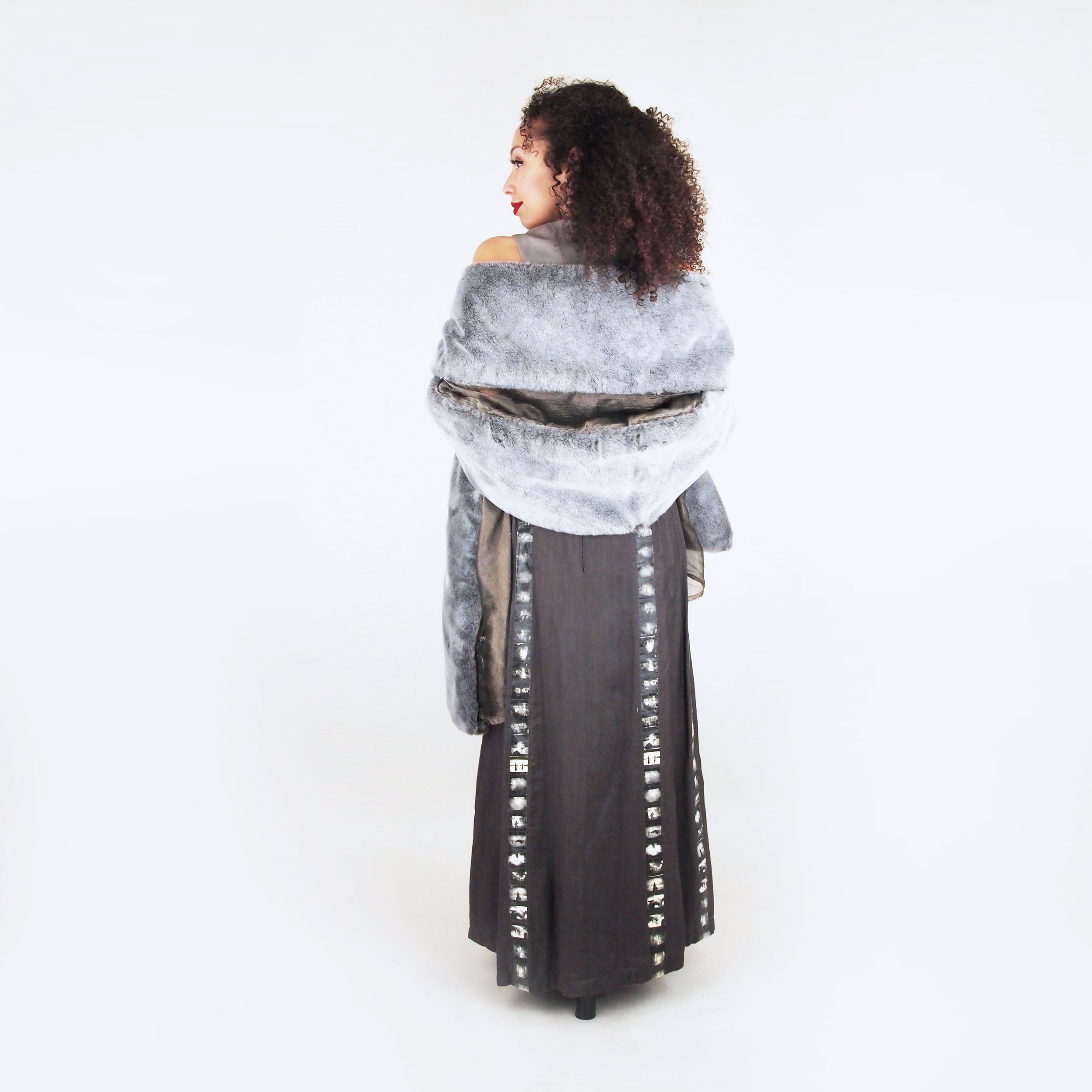
The original owner of this outfit had it custom-designed for her to wear to the 2000 Academy Awards ceremony, the year The Matrix was nominated, and won four Oscars. The designer was Scott Tallenger (https://www.buildinstitute.org/alumni/scott-tallenger/). Now, with The Matrix Resurrections out, someone needs to resurrect this stunning slice of the late 1990s—this piece of cinema history.

In Matrix-y shades of gray, the outfit consists of a boned corset top with back lacings, a flaring long skirt, and an extravagant wrap. The luminous dark gray skirt has stills from The Matrix made into distressed fabric strips, decorating the skirt in vertical stripes all around. The wrap was designed to be worn with the faux fur bands held together. The woman who originally wore the outfit explained it this way: "The wrap was based on something Rita Hayworth wore in Pal Joey, the fur parts kind of went together with the organza showing anywhere it naturally gapped." However you choose to wear it, the wrap is gorgeous. The organza sparkles with golden metallic threads.

The outfit is in my Etsy shop here: Academy Awards Matrix Outfit - Corset Top, Skirt with Photo Print Fabric & Faux Fur Wrap by Scott Tallenger

Comment