
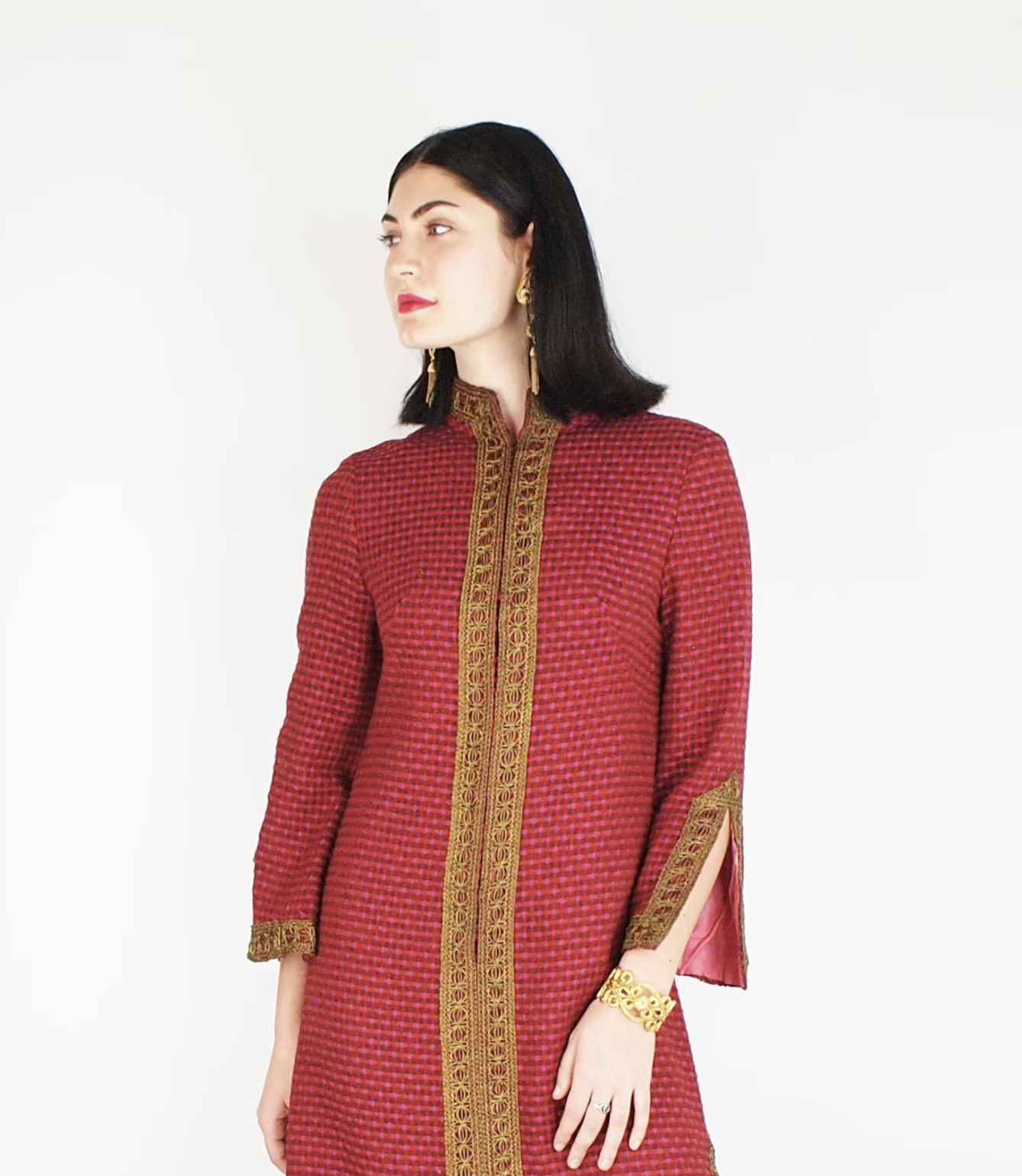
Dress by Susan Locke. denisebrain photo.
I sell vintage clothing hoping each piece finds a loving home, a new custodian to cherish its past. That's a good day. But sometimes, magic happens. Real, almost unbelievable magic. This is one of those stories.
Recently I sold a 1970s Susan Locke tunic dress — a beautifully made piece in a pink-red-brown check with ornate trim — to a buyer named Rob in the UK. Shortly after purchasing, he sent me a message that stopped me in my tracks:
Looking forward to getting it… it would be great to get it as soon as possible as I will be seeing the very same Susan Locke on Thursday the 21st. She’s my partner’s aunt!
I had assumed the dress was simply heading to a new wardrobe. Instead, it was going to be seen by its original designer.
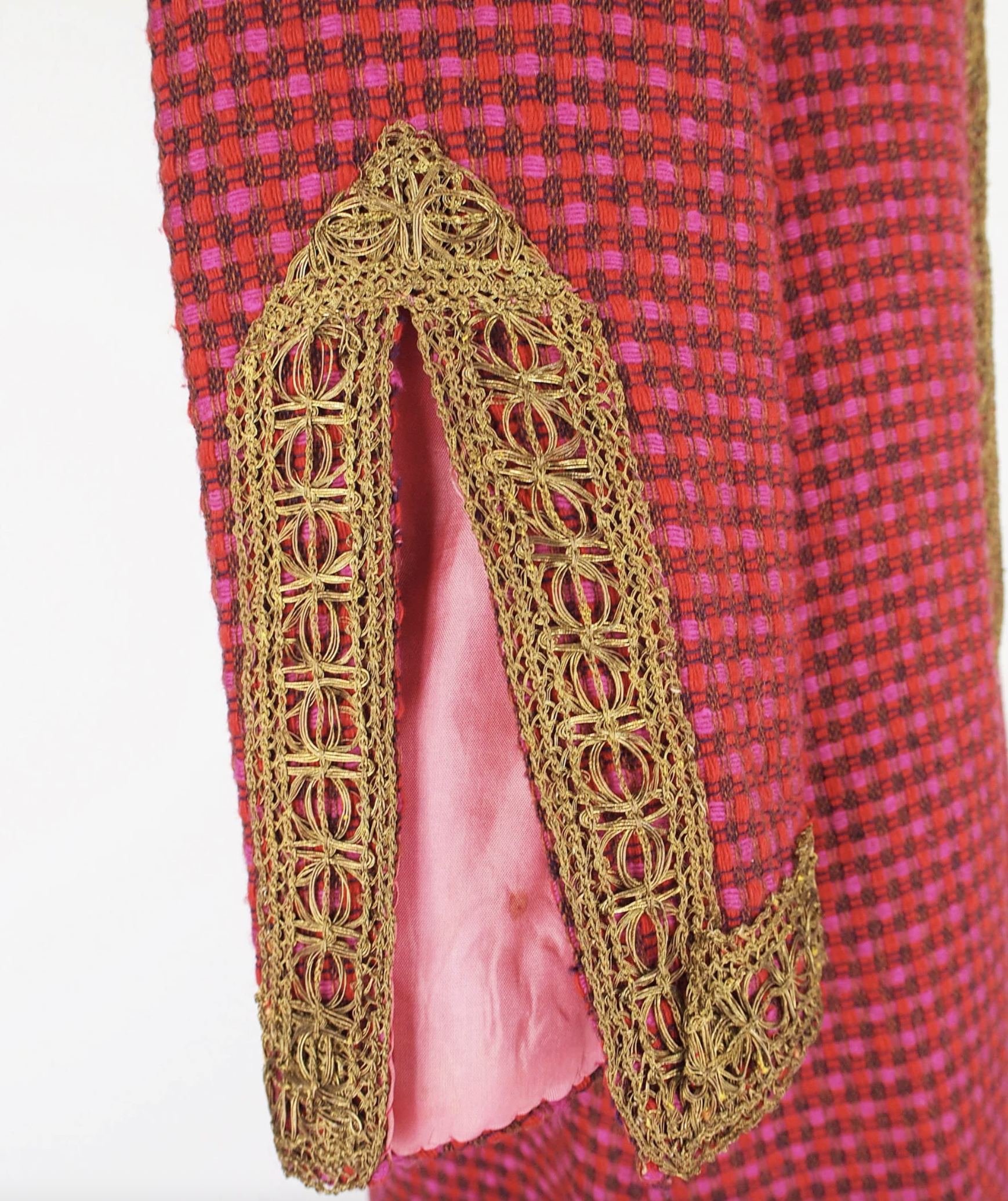
Sleeve detail of dress by Susan Locke, c. 1970. Photo by denisebrain.
I packed it with extra care, running my hand over the textured wool and the golden braid that had pulled me the moment I saw the dress.
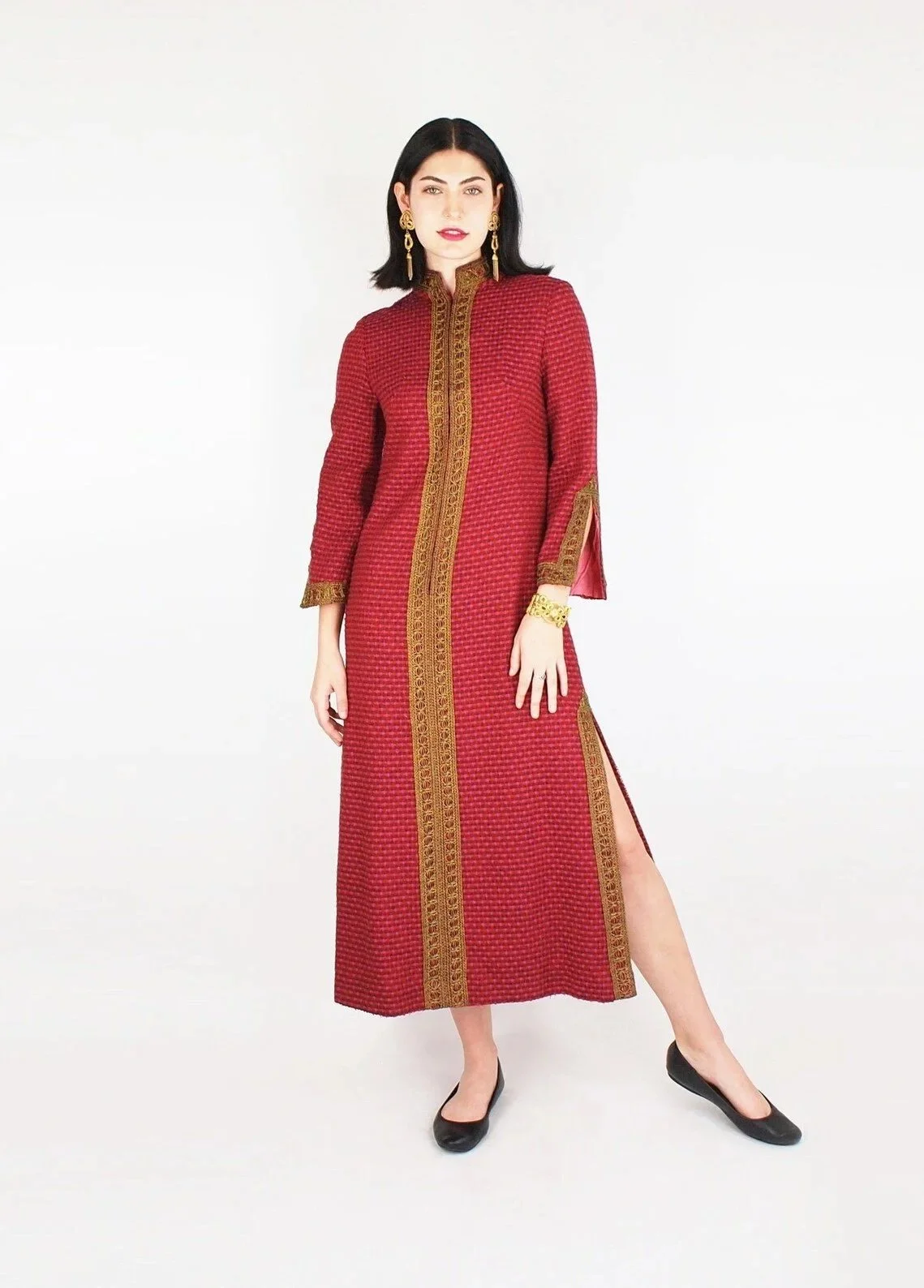
Dress by Susan Locke, c. 1970. Photo by denisebrain.
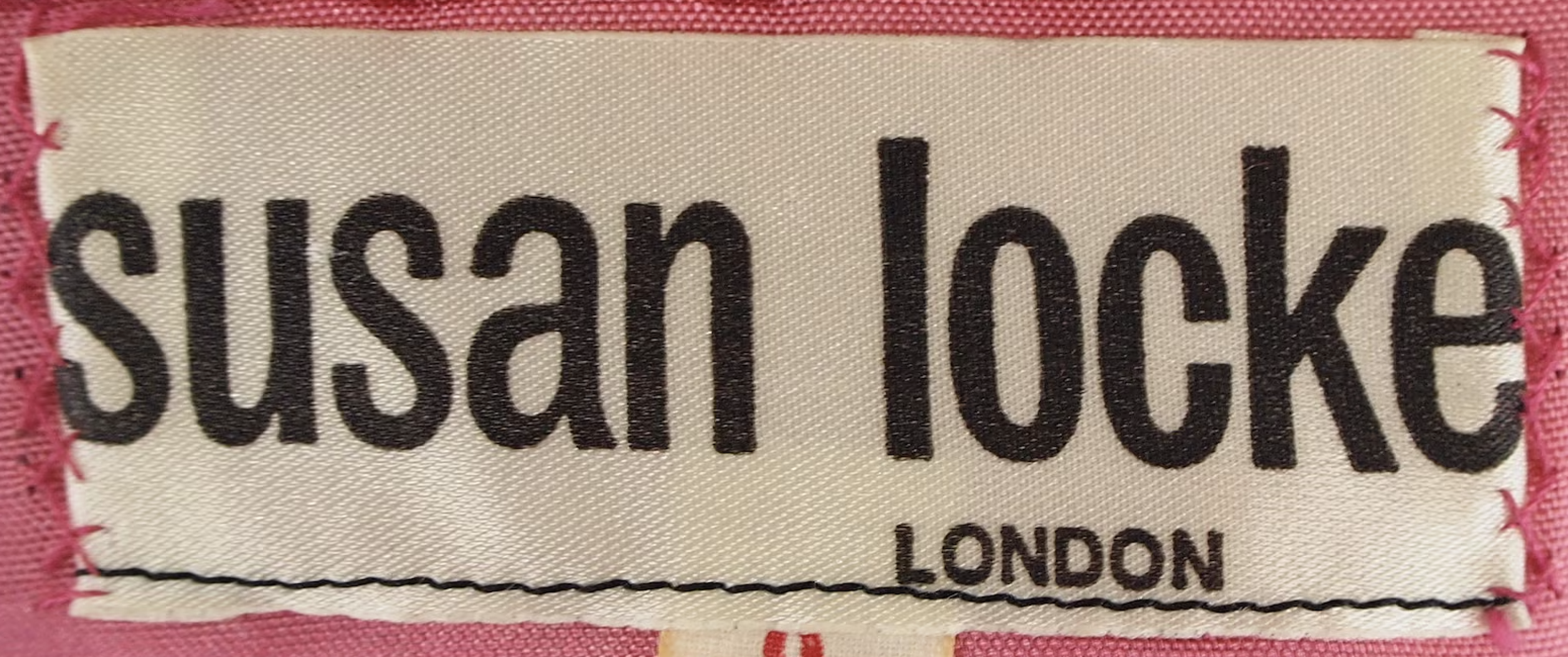
Susan Locke London label, c. 1970 dress. denisebrain photo.
I found it in a small shop 4,700 miles away from London. Who made this lovely dress? I said to myself, and, why is it here?
A little while later, another message arrived — along with photos. Susan Locke had been reunited with her dress. Rob wrote that she was delighted and amazed that it was still in such good condition after all these years.
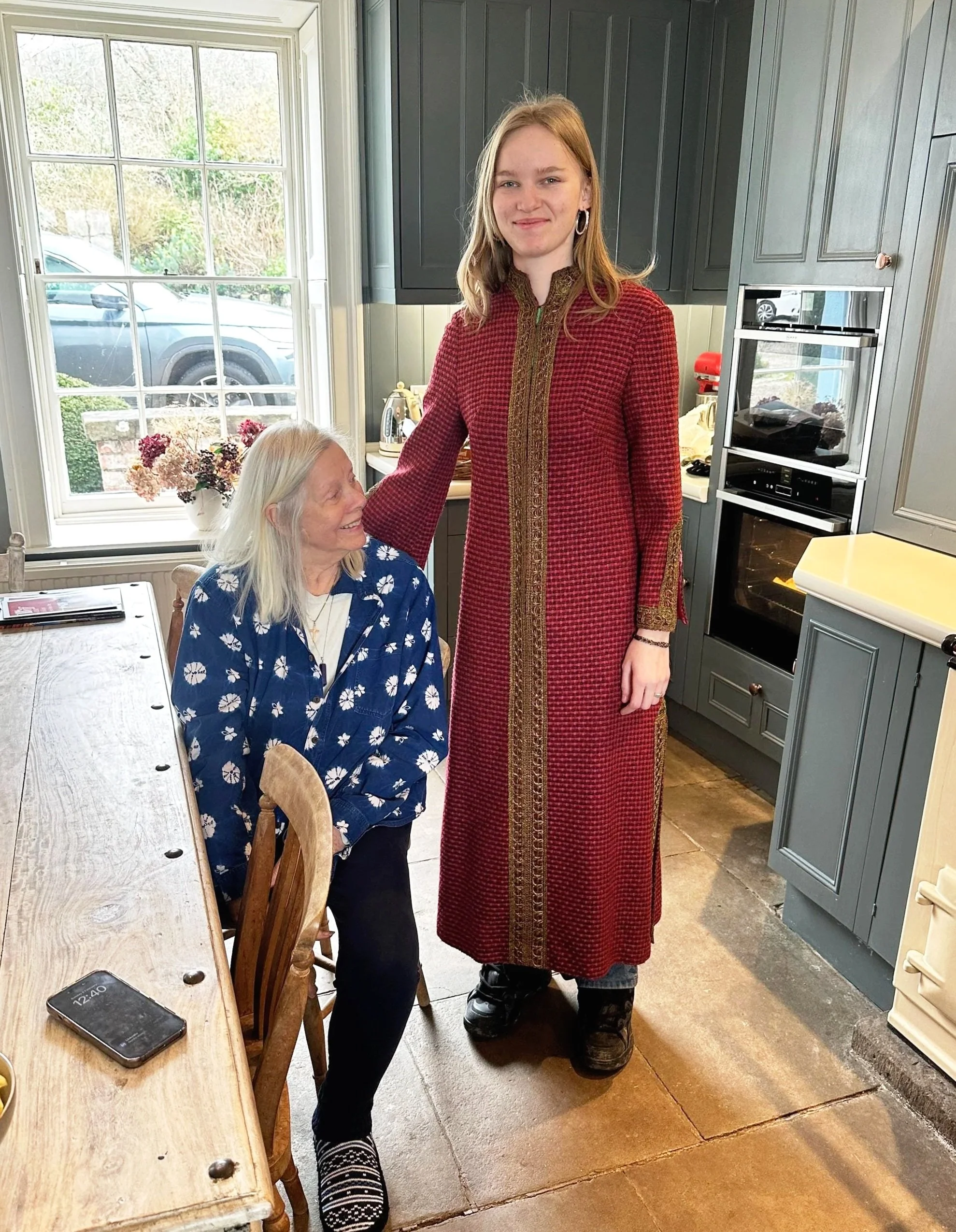
Designer Susan Locke with her great niece Bea Freyer, reunited with the dress. Used by permission.
Moments like this are very rare, and they move me.
Vintage clothing is often discussed in terms of era, style, fabric, and construction — all things I care about greatly — but at heart, these garments were made by people and worn by people. They lived real lives before they reached our racks and closets. Occasionally, those lives and stories reconnect in the present.
To see a designer encounter her own work decades later — preserved, wearable, appreciated — feels like witnessing a circle close.
It also says something important about craftsmanship. Well-made garments endure. They travel through time not just physically, but emotionally as well.
I’m very grateful to Rob for sharing the photographs and allowing me to tell this story. It was, in his words, “a lovely moment all round.”
And it really was. A moment that reaffirmed why I love what I do – connecting the past to the present, one stitch at a time. To witness such a joyful reunion is a privilege.
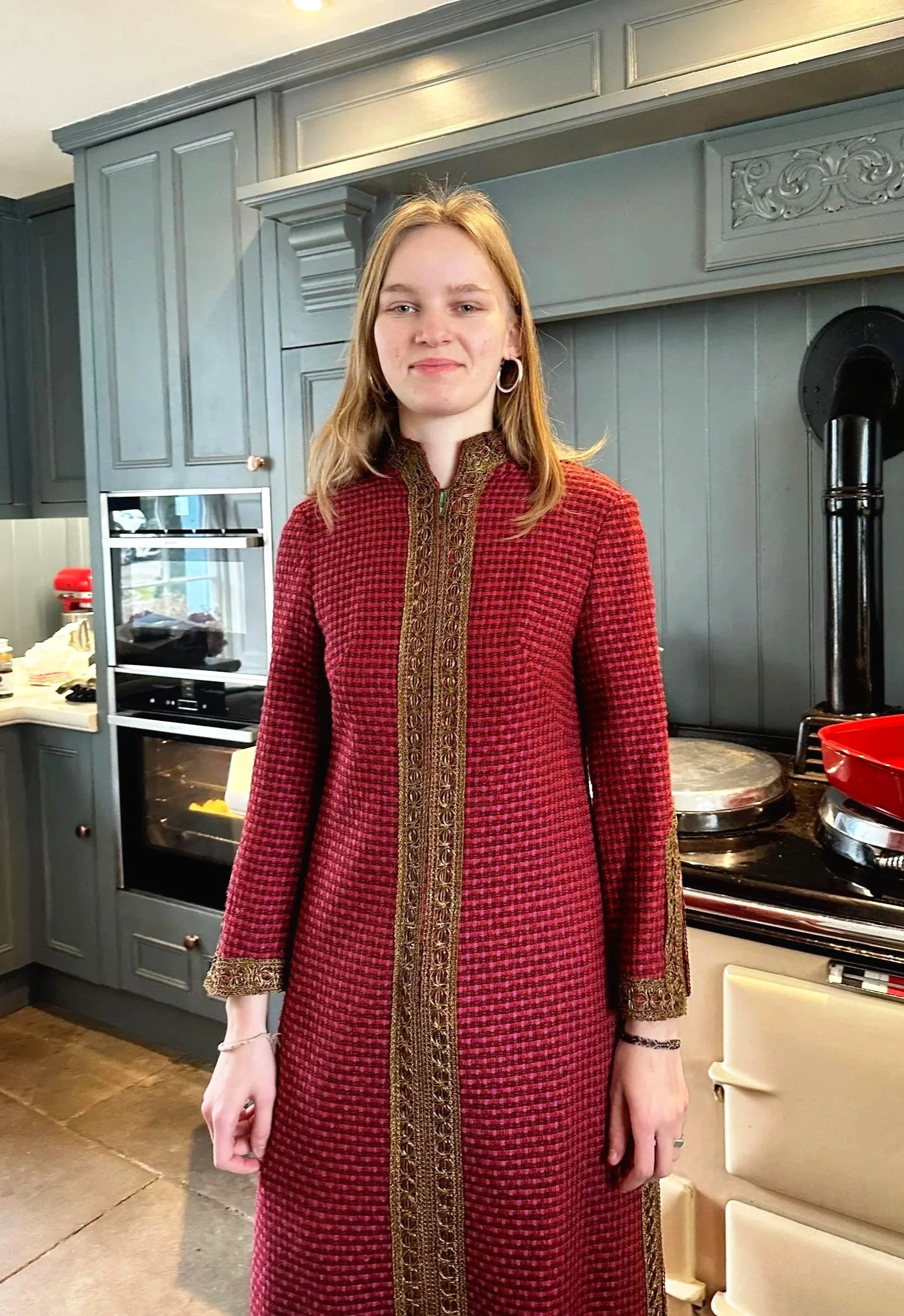
Bea Freyer looking like she was born to wear her great-aunt’s dress. Used by permission
I doubt I will ever know how the dress surfaced in Spokane, Washington, but I now know much more about the designer, Susan Locke.
Susan Locke: King’s Road Designer
Susan Locke was a London fashion designer and boutique owner active from the mid-1960s through the early 1970s, during the years when King’s Road in Chelsea became one of the most closely watched fashion streets of the period. Contemporary newspaper coverage from the period describes her as a young designer who opened a boutique at 414 King’s Road (World’s End), SW10, where she designed and sold her own garments.
Press features from the time show that her shop quickly drew attention. She produced and retailed her own designs, including dresses, trouser suits, and tailored separates, and was mentioned repeatedly in London newspaper fashion reporting. Articles name customers such as Susannah York, Pattie Boyd and Jean Shrimpton, and note that she worked with textiles associated with Miki Sekers, with some designs reaching wider retail through Selfridges.
One particularly interesting period report notes that her boutique was an early stockist of shoes by a then-emerging designer, Terry de Havilland — a detail that places her shop within the active King’s Road fashion network at the time. Later coverage in the early 1970s describes the boutique continuing in business and undergoing updates. A 1973 newspaper advertisement announced a closing-down sale at the King’s Road address under her name.
Taken together, the surviving press coverage shows Susan Locke as part of the independent boutique movement of 1960s London — a designer-retailer creating her own work, running her own shop, and contributing to the distinctive character of King’s Road style.
Sources: Contemporary newspaper coverage 1965–1973 via Newspapers.com archive.